

Nop Sreymao / Khmer Times
Synopsis: NGO distributes bicycles and learning materials to help poor households in underserved communities to keep their kids in school.
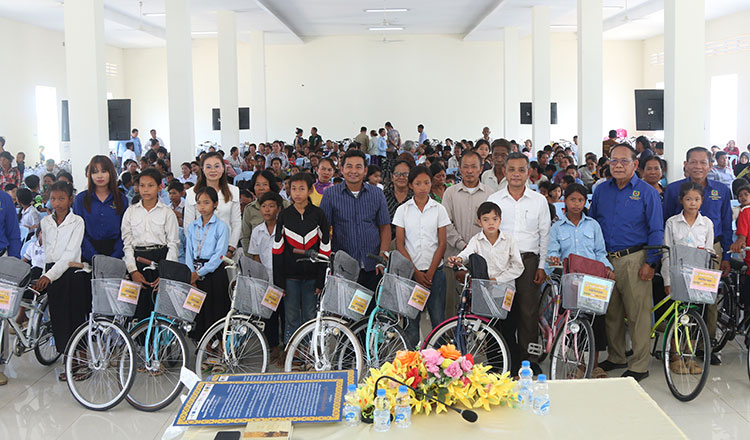
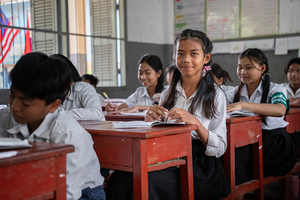
As Cambodia strives to improve educational access, vulnerable families are gaining crucial support to enable their children to pursue learning opportunities.
The 7th mandate government has made education a national priority, with ongoing reforms led by the Ministry of Education, Youth and Sport aimed at improving school infrastructure, enhancing teacher capacity, and ensuring equal opportunities for students across the country.
Efforts include the implementation of the Education Strategic Plan, which emphasises quality, equity, and lifelong learning, particularly in rural and underserved areas.
In support of this mission, Aide et Action (AEA) Cambodia—an organisation dedicated to promoting inclusive and quality education for vulnerable and marginalised groups—and its partners have stepped in to assist families who face barriers keeping their children in school.
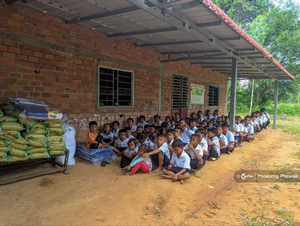
In its latest initiative, it presented 666 bicycles—making it to 22,666 bikes given away in total since phase one of distribution—and school supplies to the Pursat province team for distribution among underprivileged children living at least 4 kilometres from their schools.
The organisation provides targeted support such as scholarships, school materials, and family outreach, ensuring that children from disadvantaged backgrounds can attend school regularly and complete their studies.
“Many parents want to send their children to school, but poverty often forces them to choose between education and survival,” said AEA Country Director Vorn Samphors. “Our role is to help remove those barriers.”
Discover more
Cambodia travel guides
Cambodian business news
Khmer Times subscription
These initiatives, Samphors added, will help reduce school dropout rates nationwide, supporting the government’s broader educational objectives.
“A nation will continue to develop only if its people are educated,” he emphasised. “I personally believe that the support can really lower the chances that children have to drop out of school.”
Initiatives under the Ministry of Education have aimed to raise enrolment rates, enhance teacher training, improve school infrastructure, and promote inclusive education, especially for children from rural and disadvantaged backgrounds.
Using a grassroots approach, AEA also works closely with teachers and local authorities to identify at-risk students and offer timely interventions. This collaboration has proven critical in preventing dropouts and fostering a culture that values education.
As Cambodia’s education system continues to evolve, partnerships between government agencies and civil society are seen as essential to achieving long-term success. For thousands of Cambodian children, this combined effort is not just about access to classrooms—it’s about building a path to a better future
These collective efforts are narrowing the gap in access to quality education and fostering a more equitable and empowered future for Cambodian youth.
Ou Channavy, a Pursat’s Kandieng district resident, said support from the government and NGOs has had an impact on the community.
“It helps relieve some of our financial burdens a lot, especially us – who lack economic opportunities and barely get by,” she said. “I am really glad that we are not overlooked. The support like this means so much to us.”
Speaking with hope, she acknowledged the importance of education for every child’s future. “I believe if they are educated, their futures will be better than mine. So I am really committed to sacrificing whatever it takes to ensure that my children get the quality education they need,” she said.
Jade McCulloch is director of engagement at Educate A Child programme of Education Above All Foundation.
Sopheak SREY is communication and partnership manager at Action Education in Cambodia.
Education Above All Foundation, with its partner Action Education, supports efforts to ensure displaced children have access to quality education.
Disclaimer: This article was first published on the Cambodianess News website and is reproduced here with permission. Click here to access the original post.