

By: Chhuon Kongieng
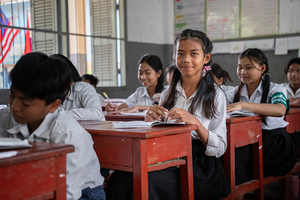
PHNOM PENH — More than 100 schools remain closed and 25 have been damaged following border clashes, prompting experts to warn that displaced children need sustained mental health support and educational supplies to continue learning in makeshift classrooms.
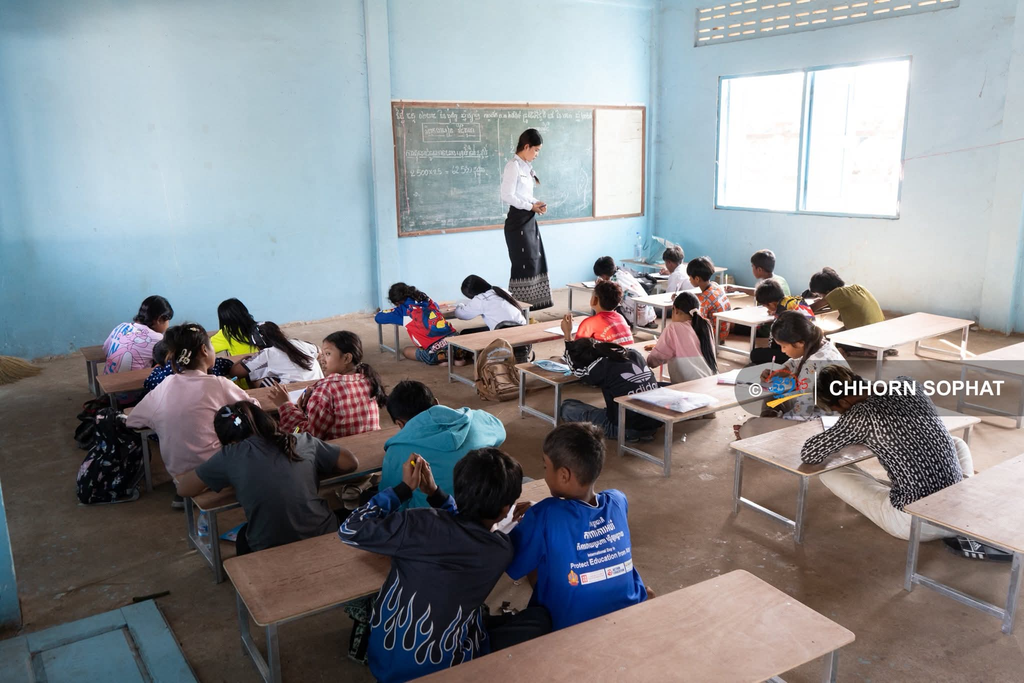
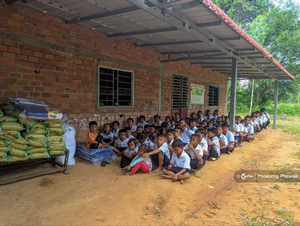
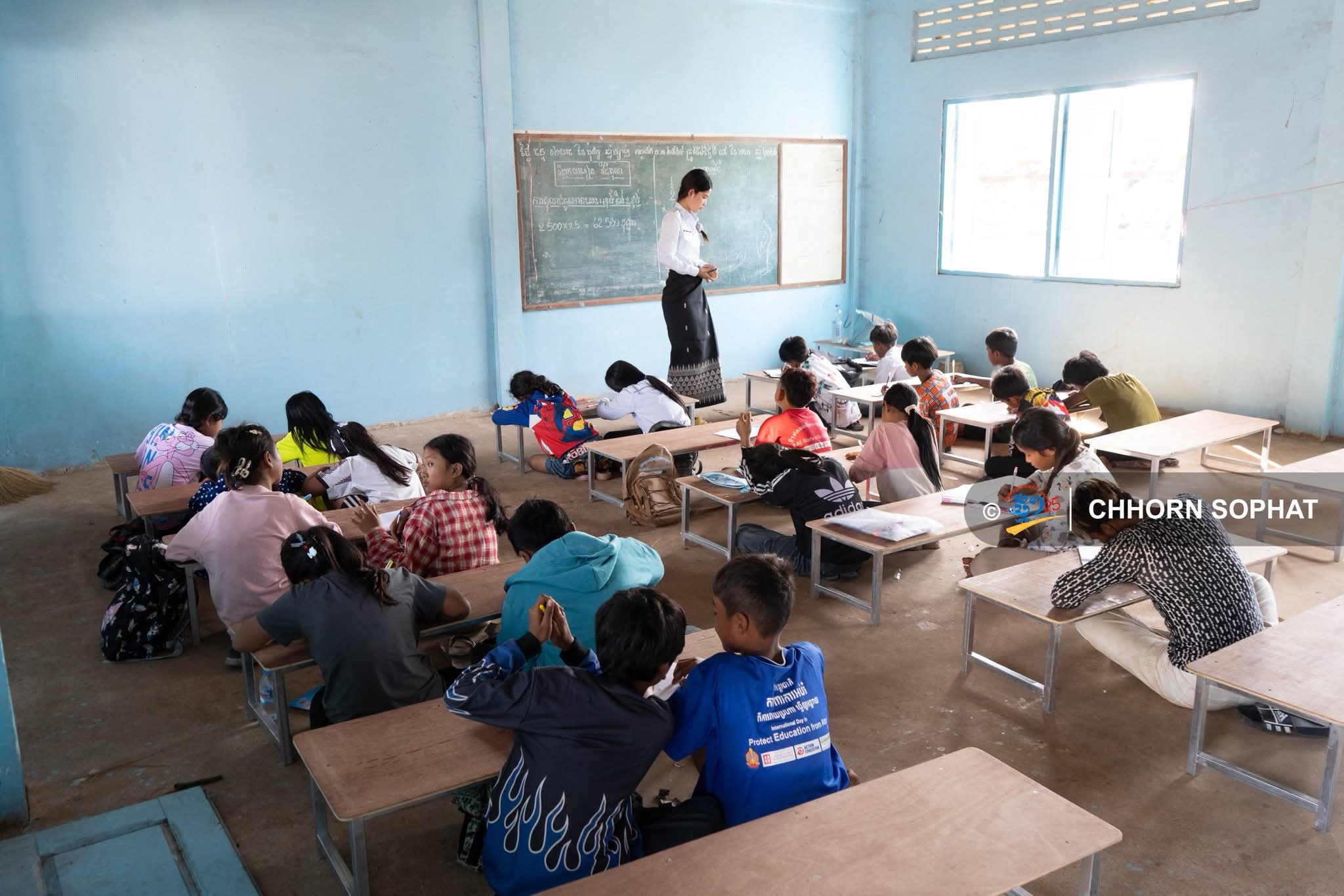
Students resume classes for the first time in a temporary multi-purpose classroom at the shelter in Chan Si Pagoda, Banteay Meanchey, after a month-long suspension. Photo: Chhorn Sophat
Out of 1,311 schools affected, 113 remain closed in Banteay Meanchey, Preah Vihear, Oddar Meanchey, and Pursat provinces as of January 8, according to the Ministry of Education, Youth, and Sport.
Vorn Samphors, country director of Aide et Action, said the gradual reopening of schools reflects the government’s strong commitment to education despite ongoing challenges.
He said the organization will continue its work in the border provinces for as long as possible and has not faced major challenges in carrying out its mission.
“The border clashes destroyed classrooms and severely impacted the future of displaced children and teachers,” Samphors said. “The suffering of soldiers, displaced students, and teachers has been immense.”
He warned of long-term consequences, noting that many children lost access to education and continue to feel unsafe.
Samphors said Aide et Action will keep supporting school reopening efforts and maintaining makeshift classrooms, particularly for children unable to return to villages designated as red zones.
Support includes the distribution of books, clothes, and food to temporary learning spaces. The organization is also providing scholarships to help students continue their education, along with learning materials for teachers and students.
“To help reopen schools in border areas, we are supporting both soft and hard infrastructure,” he said. “Resources will also be provided to schools that remain closed and are operating makeshift classrooms.”
Hard infrastructure support includes repairing schools damaged during the clashes, while soft infrastructure focuses on training and services that promote the mental and physical well-being of teachers and students to improve learning outcomes.
Samphors also urged parents to send their children back to school and called for additional support to ease the hardships faced by families and children of frontline soldiers.
He added the need for greater investment in education to build a responsible and skilled workforce.
“The current border conflict between Cambodia and Thailand can strengthen young students’ determination to study hard and contribute to building a strong nation,” he said.
Aide et Action has supported the establishment of makeshift classrooms and provided study materials, food, and clothing to around 300 schools in border provinces.
The 21-day conflict disrupted 1,311 schools, affecting 15,035 teachers and 322,103 students across Preah Vihear, Oddar Meanchey, Banteay Meanchey, Koh Kong, Pursat, Battambang, and Siem Reap provinces.
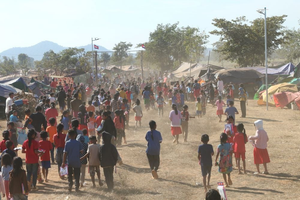
As of January 8, nearly 470,000 people had returned home, while 173,107 remained displaced, including 90,795 women and 56,757 children, according to the Ministry of Interior.
The Cambodia Humanitarian Response Forum’s Situation Report 13 noted that children in displacement sites are showing signs of fatigue, anxiety, and psychosocial distress, though humanitarian organizations are providing support to address these challenges.
UNICEF has supported seven affected provinces by establishing 130 temporary learning spaces, benefiting about 12,000 children, including 3,600 aged three to five.
World Vision has also supported 50 learning spaces for approximately 14,000 children in Preah Vihear, Siem Reap, and Banteay Meanchey provinces.
These learning spaces are managed by community facilitators who provide daily lessons and organize child-friendly activities to support children’s education and well-being.
Jade McCulloch is director of engagement at Educate A Child programme of Education Above All Foundation.
Sopheak SREY is communication and partnership manager at Action Education in Cambodia.
Education Above All Foundation, with its partner Action Education, supports efforts to ensure displaced children have access to quality education.
Disclaimer: This article was first published on the Cambodianess News website and is reproduced here with permission. Click here to access the original post.