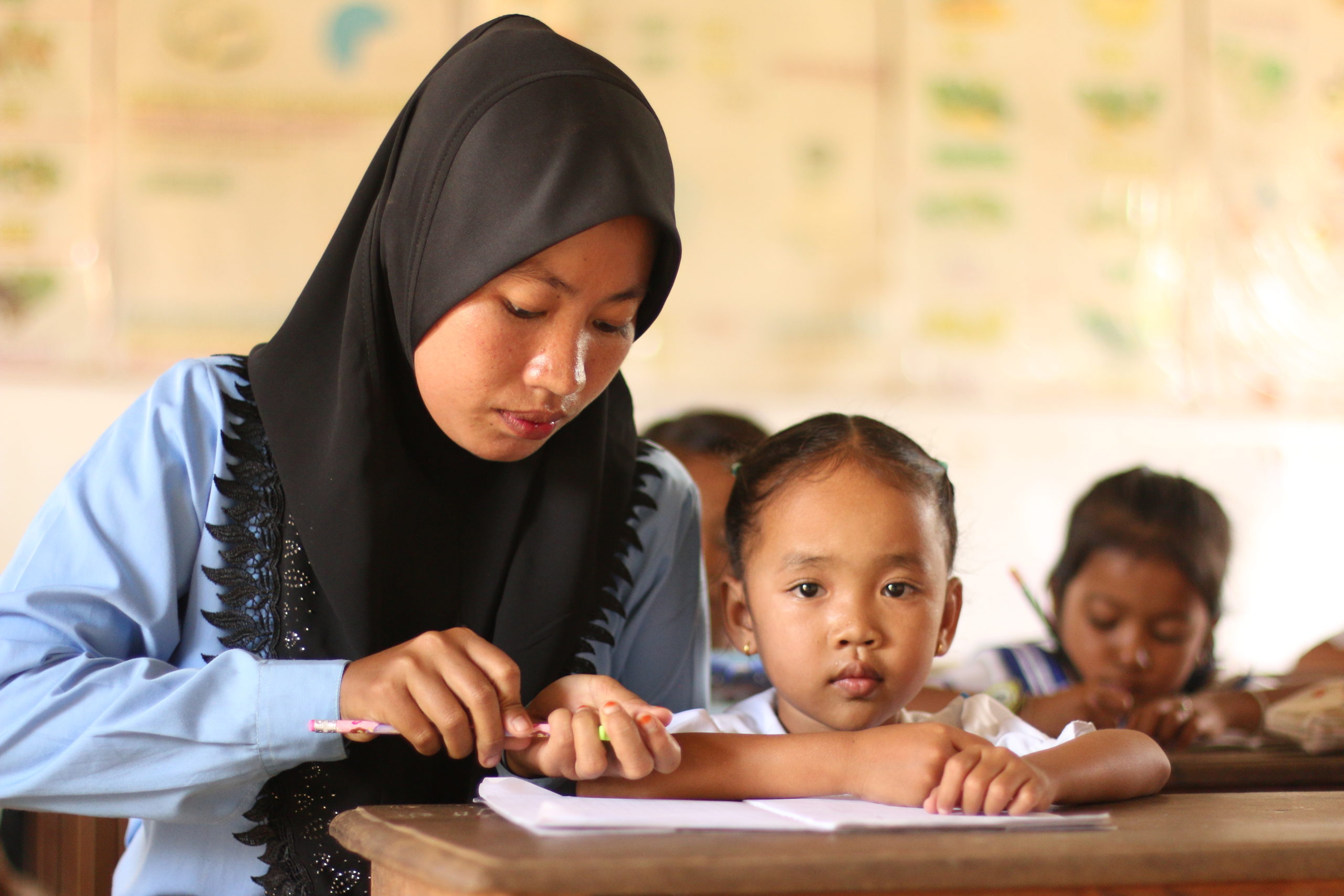

In Kampong Cham province there are many Cham (Khmer Islam) communities that are attempting to preserve their own traditional cultures. Commonly, Cham children face tremendous obstacles when they start to attend primary school because they do not understand the national Khmer language. Teachers also face challenges because they can not make themselves understood by the children, and there are no supplementary materials for them to provide education to Cham students who do not understand the lessons. To tackle this problem, a Bilingual Classroom Assistant (BCA) program by dispatching a teaching assistant who can speak both Cham and Khmer in the classroom to assist Cham students to catch up with Khmer lessons. Teaching assistants got trained by the POE with support from the Cambodian Consortium for Out of School Children (CCOSC) and its member, KHEMARA. They work as volunteers to support Cham students in the classroom. In addition, they play a key role in communicating with schools and Cham communities by delivering information and explaining culturally sensitive issues between the two, such as the practice of Ramadan among Cham students.
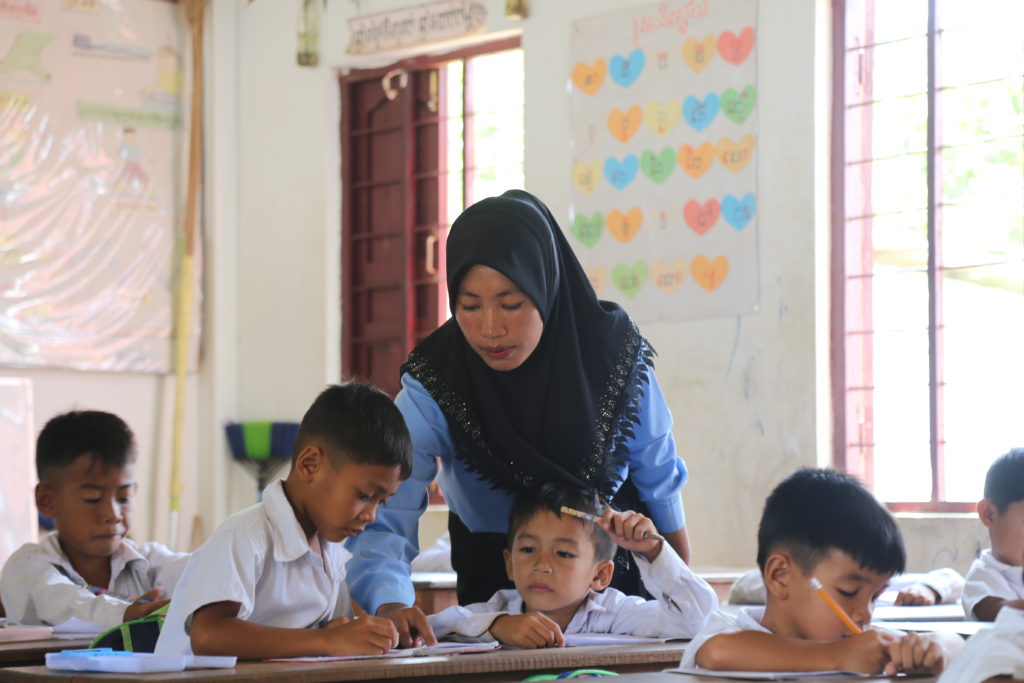
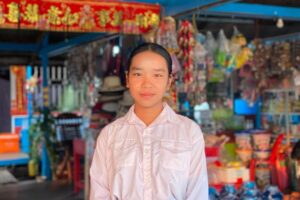
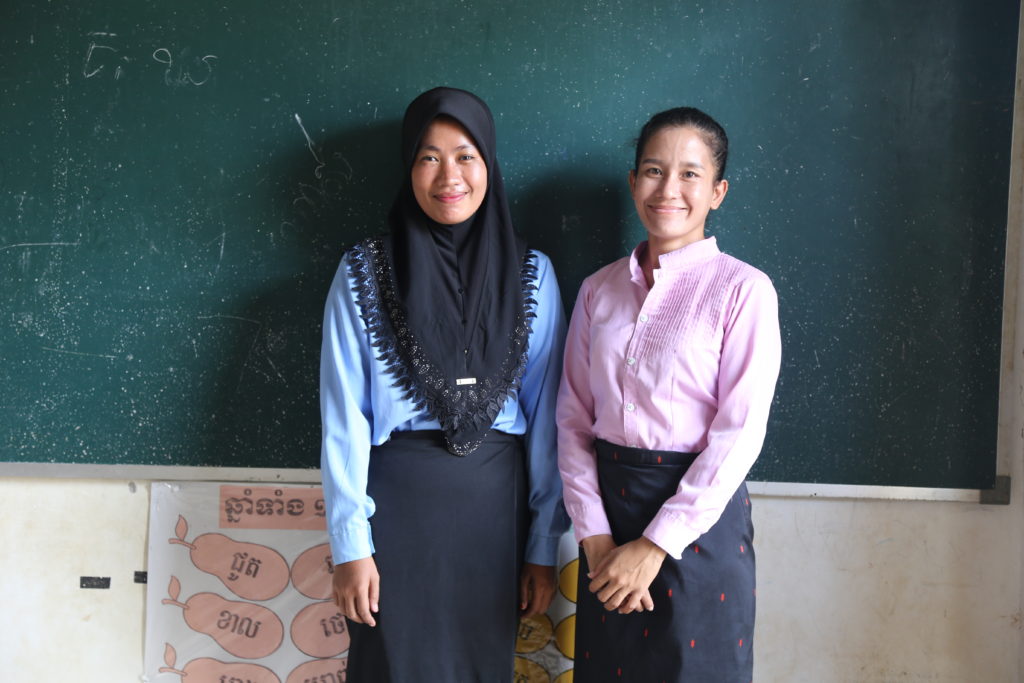
Mary, a Khmer-Cham woman, 30 years old, teaches at Khliv Primary School. She married in 2016 and has a 6-year-old kid. As a housewife, she always brought her daughter to school and spent her entire day there helping her daughter and other kids learn Khmer.
“There is only Cham in my village, and most of the small Islam students couldn’t speak or understand Khmer.” “Some of them drop out on their own,” Mary explained. “Some students told me they needed to pee, but they couldn’t tell the Khmer teacher because they couldn’t speak Khmer yet.”
In September 2022, a KHEMARA Program Officer met and negotiated with Mary to join the Bilingual Classroom Assistant (BCA) program. She is overjoyed to have been hired and has consented to begin working as a teaching assistant with a two-year contract for interpretation in Cham and Khmer. Mary can supplement her monthly income through her compensation and community contributions.
“Sometimes, my new students and I are unable to communicate because we speak different languages, Khmer and Cham, so a teaching assistant is essential for improving class activities and lessons.” “Without an assistant, I asked senior students in grade 6 to help interpret our conversation in grade 1,” says Phai Mom, a Khmer teacher at Khliv Primary School.
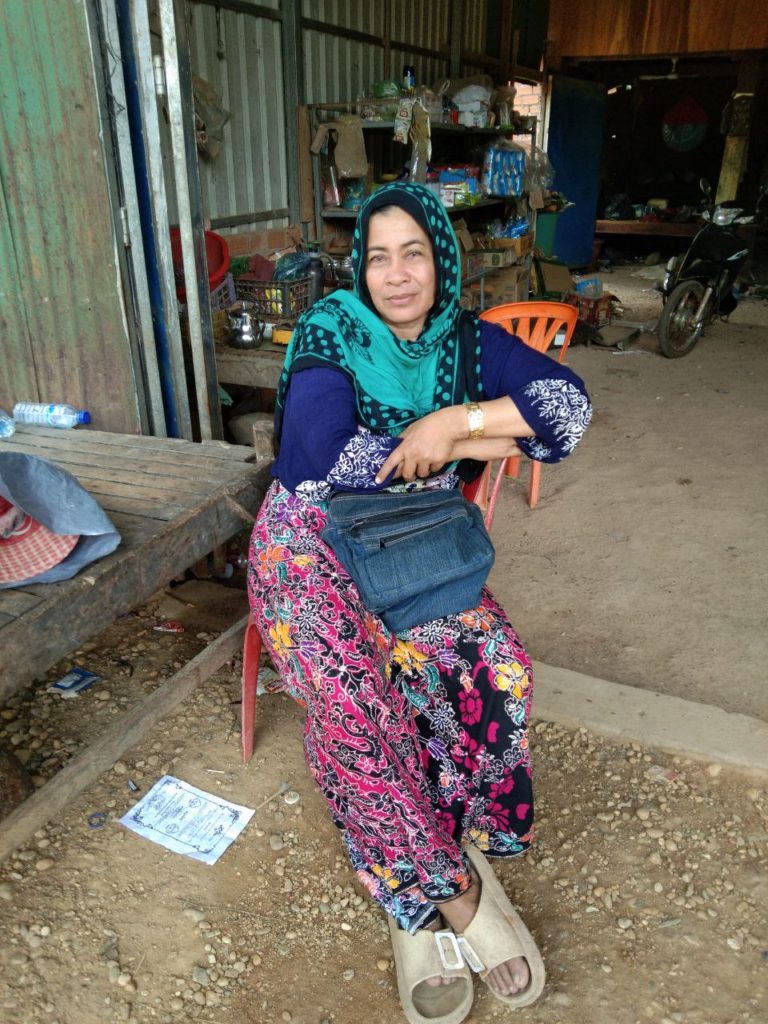
Sman ESas, 45 years, grandchildren of a student at Khliv Primary School said, “I am pleased with teacher Mary’s task, I noticed that my grandchild got an understanding of Khmer better after studying with teacher Mary for a few months.”
The Khliv Primary School is in the town of Baray, in the commune of Chhouk, in the district of Krouch Chhmar, in the province of Tbong Khmum. There are 157 students at Khliv Primary School, 72 of whom are girls. More than 90% of the students are Khmer-Cham ethnic. CCOOSC focused on Multilingual education along with other interventions such as WASH (Water, Sanitation, and Hygiene), and an in-kind study support or scholarship program in this particular area. Before Mary was an aid to the teacher, she was taught how to do her job. In grade 1, there are two teachers. One teaches in Khmer, and Mary translates for the Cham teacher.
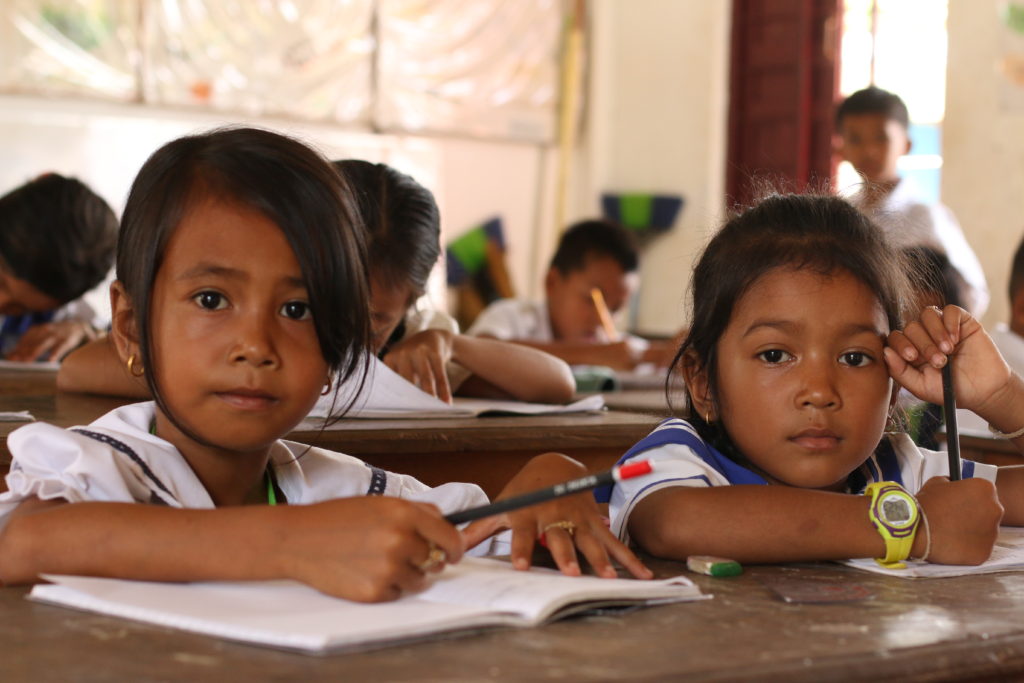
“My main goal is for the Khmer-Cham kids in my village to be able to speak Khmer, Cham, and Arabic, among other languages,” Mary said.