
By learning to protect their environment and safeguard their livelihoods, Cambodia’s coastal communities are adapting to a changing climate while strengthening local food security.
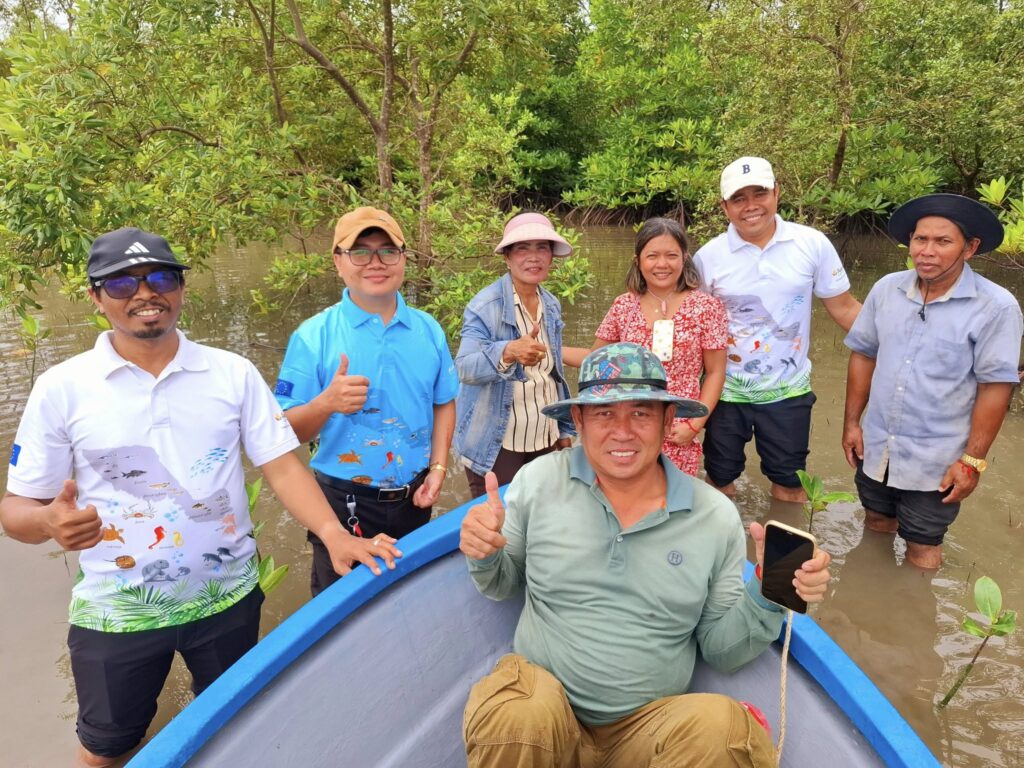
At Chrouy Svay, an eco-tourism and fishery community in Koh Kong, we take a boat to visit the fish farms. The gentle lapping of water against the hull is accompanied by the quiet hum of a community building its future through sustainable practices.
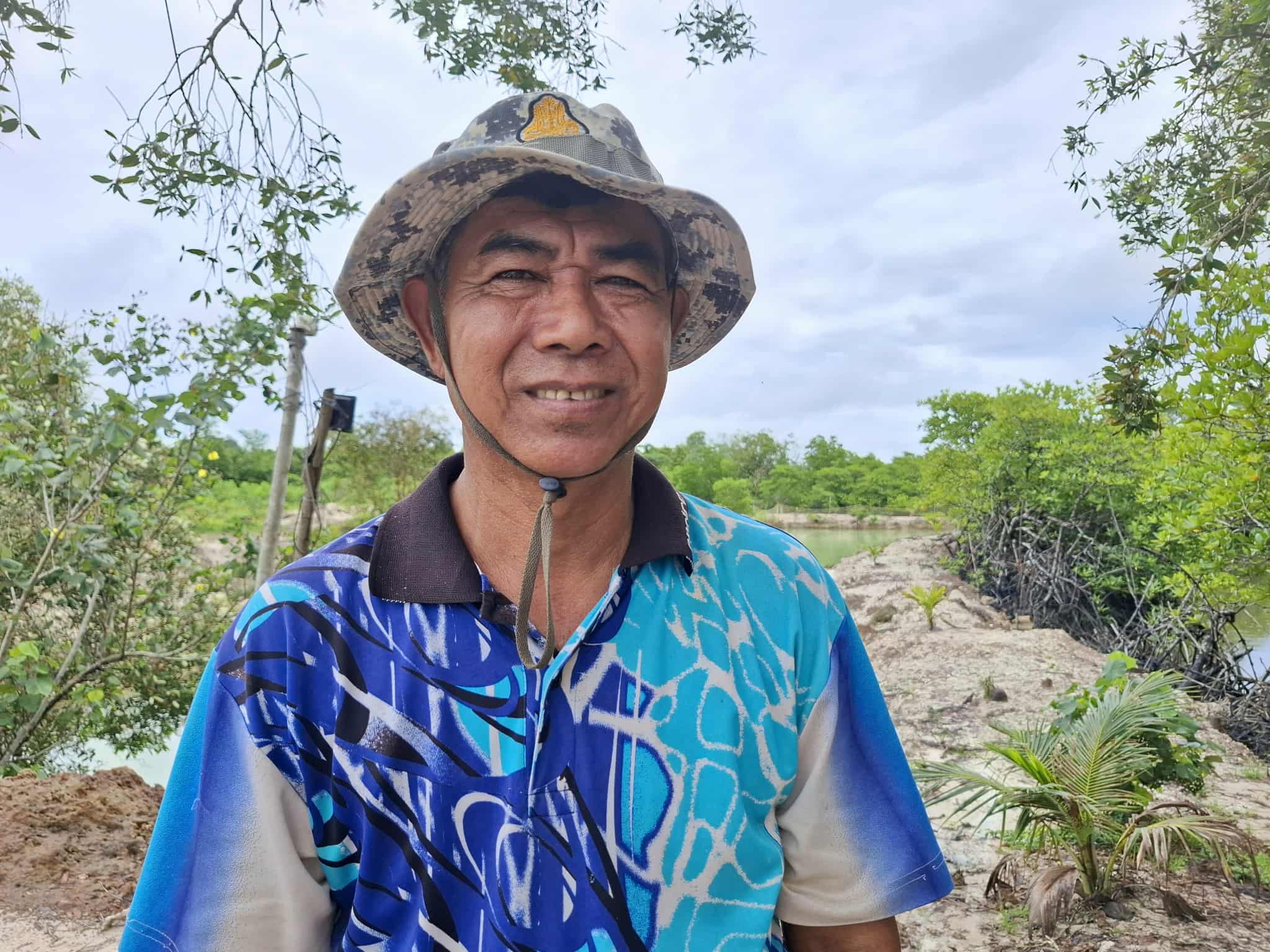
Kun Hok, a local fish farmer, greets us at one of the ponds. “We have six ponds and 14,000 fish,” he says proudly, moving his hands over the water to feed them.
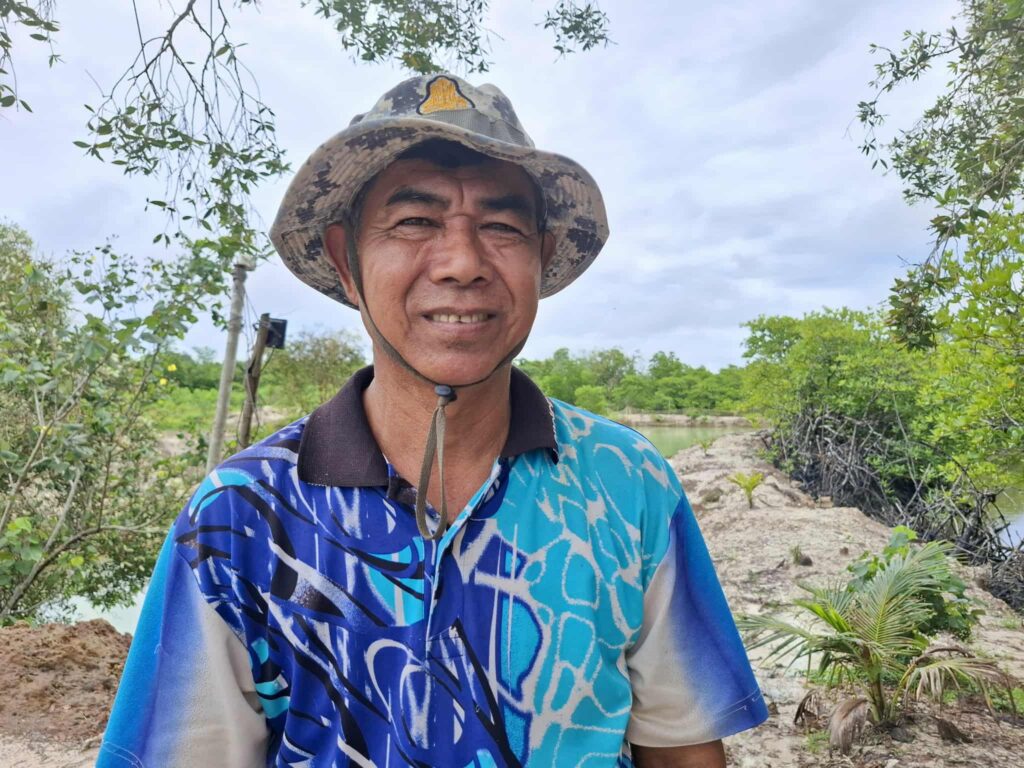
These fish are more than food — they are livelihoods, resilience, and a vital source of protein for coastal families.
Sustainable aquaculture provides a stable, nutritious food supply while supporting poverty reduction, climate action, and the blue economy. The ponds create alternative livelihoods, giving families income even when the sea is rough or catches are low.
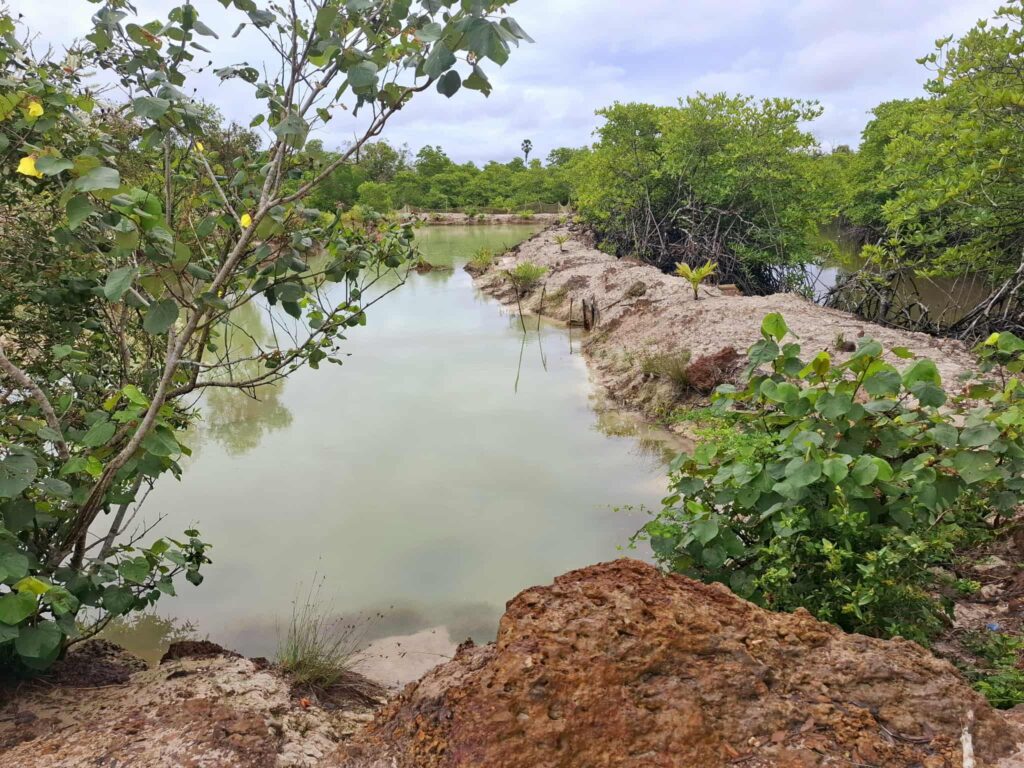
And beyond supporting households, fish farms ease pressure on overfished stocks and protect coastal habitats — proving that strong livelihoods and healthy ecosystems can thrive together.
Eco-Tourism: Climate Adaptation & Community Resilience
Coastal areas face rising seas, storms, and salinity intrusion, and communities are finding ways to adapt. By diversifying incomes and developing eco-tourism, residents at Chrouy Svay are protecting their environment while safeguarding livelihoods.
Here, visitors can enjoy seaviews from kiosks, plant trees, release fish into the wild, or take boat tours through mangroves and fish farms.
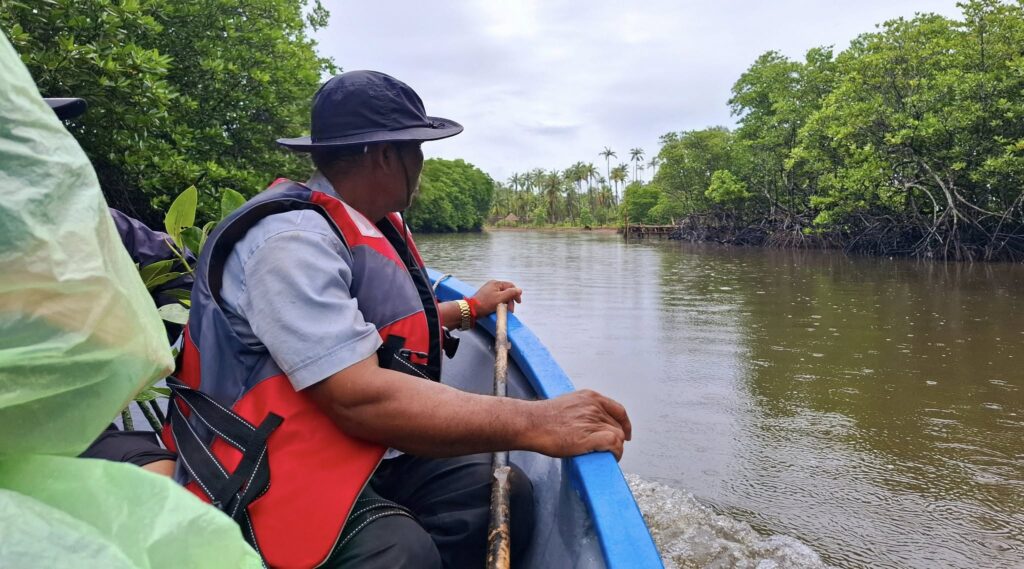
Khieu Narith, community member and a former fisherman living with his five children explains the impact of Action Education / Aide et Action (AEA) through the CO-SAVED project, co-funded by the European Union: “AEA has supported our community a lot.”
“They installed 20 kiosks, built a wooden bridge, contributed to a dam, and supported seven homestays. They helped dig waterways to protect mangroves and are currently supporting a terrace and a fish farm.”
He recalls: “We’ve also released 35 kilograms of fish, buying them from local fishermen and returning them to the wild. Marine conservation is attractive to tourists, who can buy and release fish and also visit our protected area.”
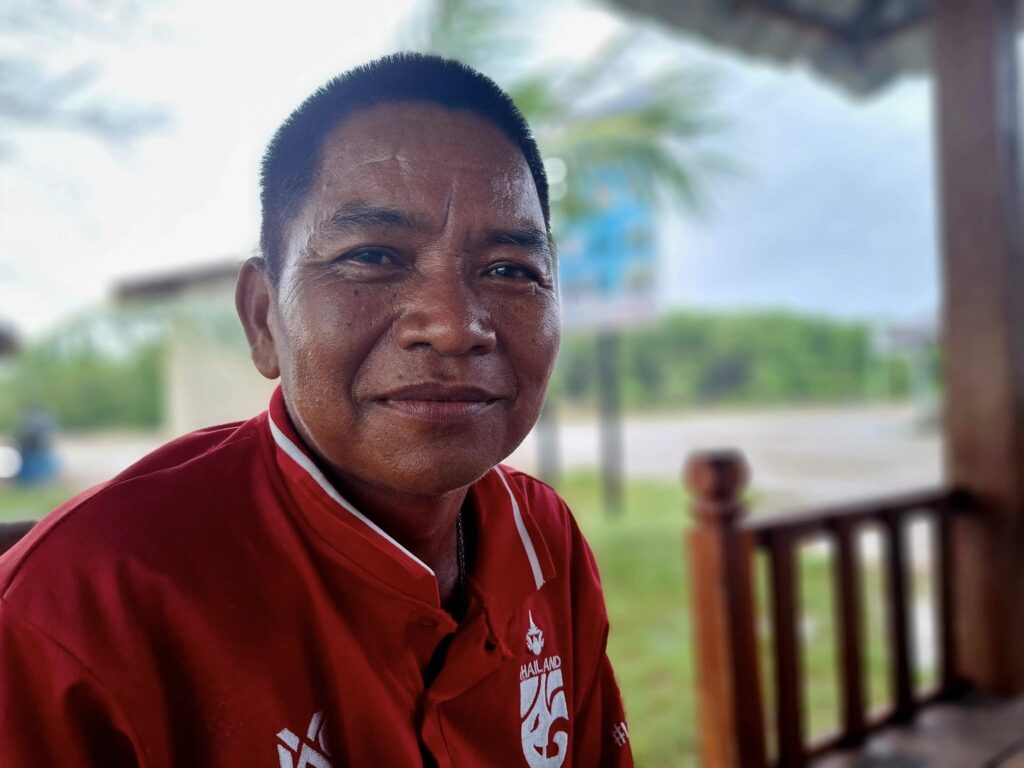
Khieu Narith highlights the importance of skills and capacity building: “AEA gave us hospitality training and organised study tours. This matters because 80% of our community are fishermen. I was a fisherman ten years ago, but now I am the cashier for the community.”
Through these initiatives, Chrouy Svay is enhancing livelihoods, tourism, marine conservation, and community resilience in the face of climate change.