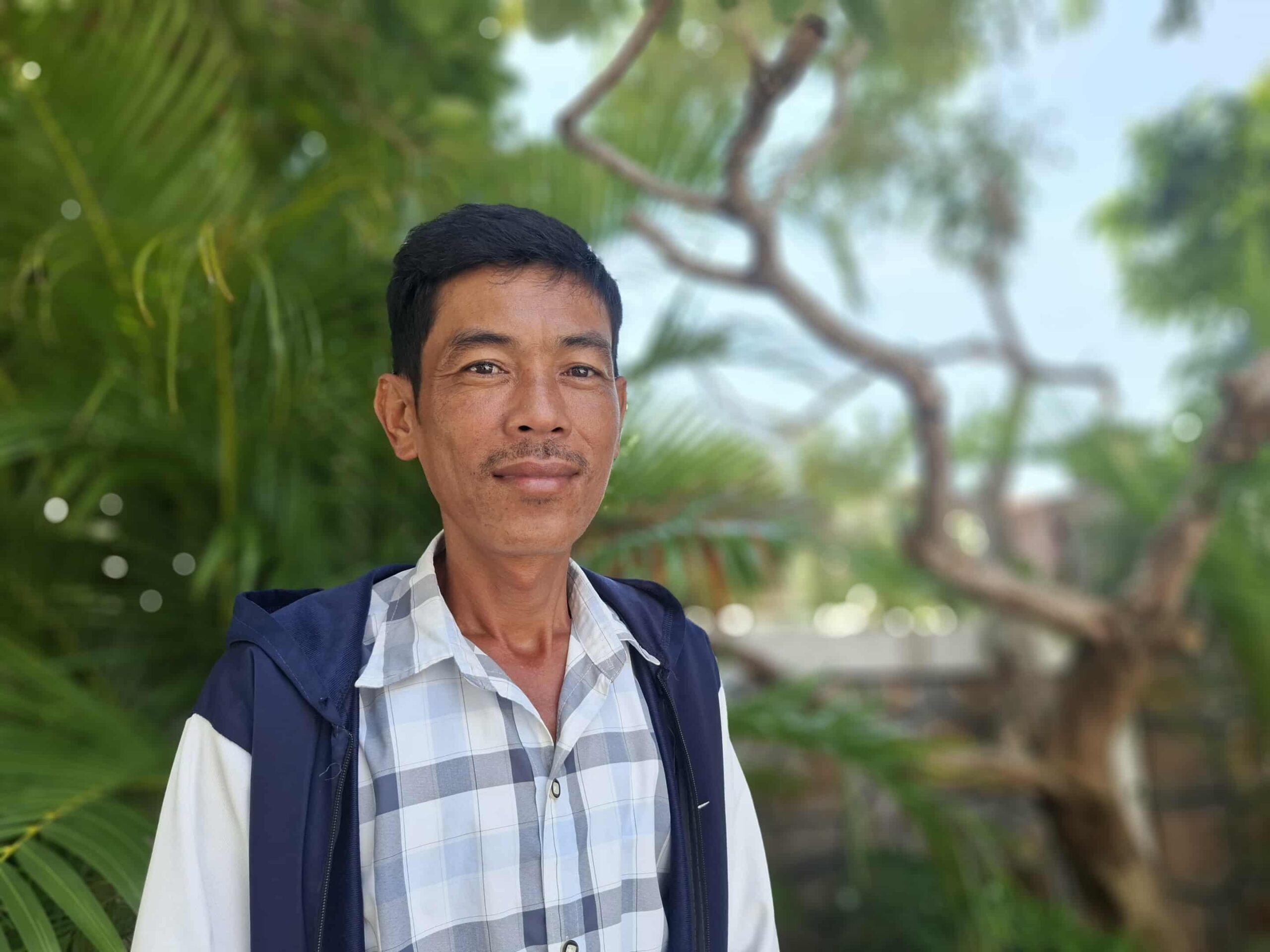

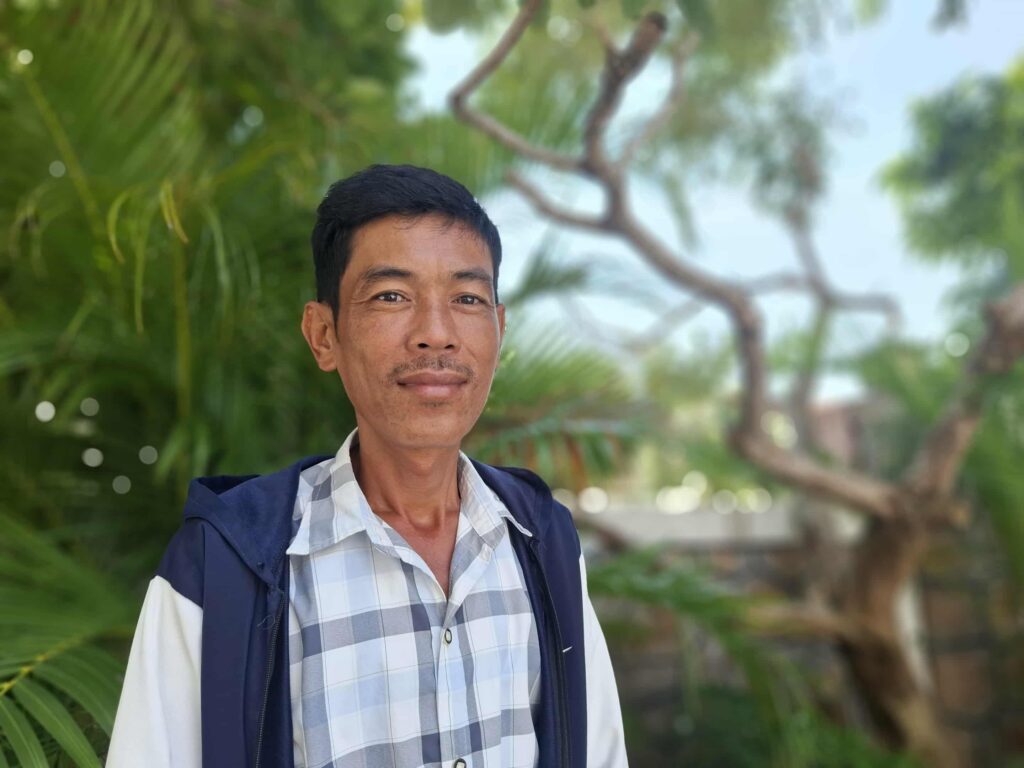
Noun Sopheak, member of the O’Krasar Fishery Community, shares how his community in Kep embraces sustainable aquaculture to secure both livelihoods and the marine environment.
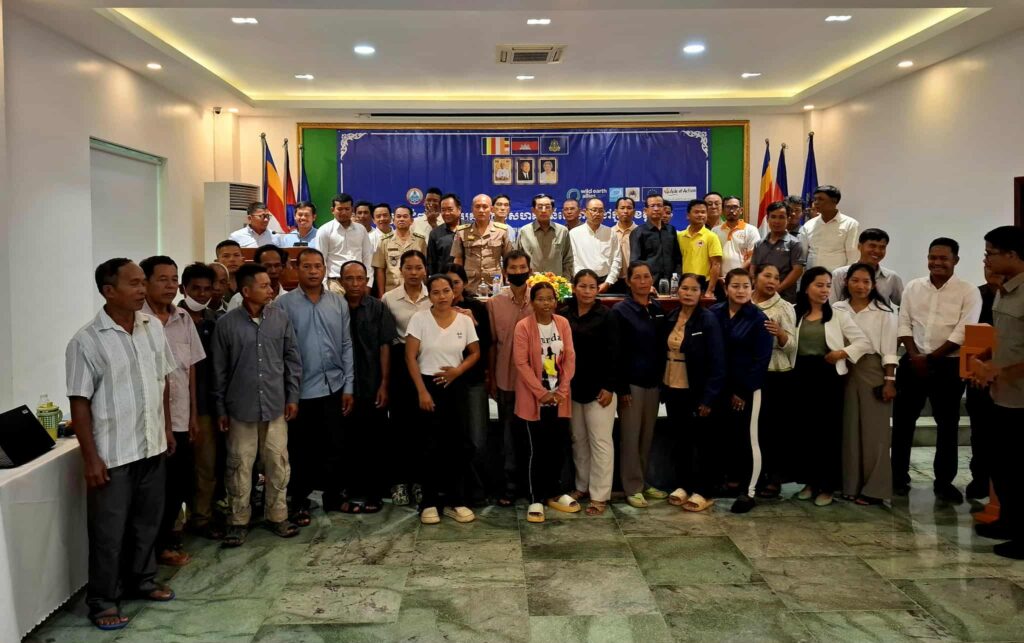
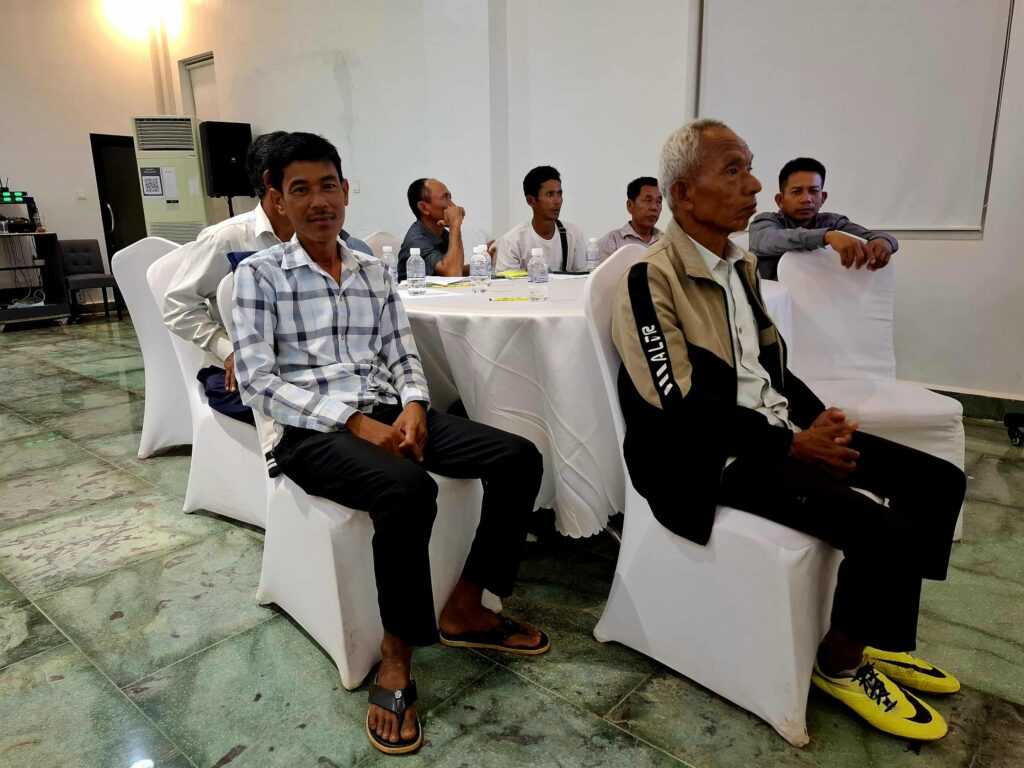
At the “Meeting on Strengthening Community Fisheries Management in Kep” on 3 October 2025, Sopheak introduced his community: “There are 236 members, including 107 women and girls.”
He explained how the O’Krasar community is turning environmental and economic challenges into opportunities for long-term sustainability. “Our committee is involved in patrolling, planting mangroves, and organising clean-ups.”
Overfishing, limited access to resources, and environmental degradation require solutions not only to protect the coast but also to reimagine how to make a living.
Patrolling fishing areas prevents illegal practices, planting mangroves protects breeding grounds, fish and crab raising supplements traditional fishing, and eco-tourism is opening new pathways to diversify income.
Aquaculture: Combining Conservation with Livelihoods
“Four families work in fish raising. We have 12 fish cages, and they can earn an income. They sell seafood to guests and locals every day,” Sopheak said.
Fish raising strengthens the resilience of local livelihoods. Along the shore, fishers continue traditional practices, while aquaculture provides an alternative income that is less dependent on tides or seasonal catches.
“Our plan is to keep these fisheries running, and we also dream of a new site to involve seven more families in aquaculture,” he added softly.
Eco-Tourism: A Sustainable Future by the Sea
“We’ve just started with eco-tourism, but now visitors come every day. They can do boat tours, enjoy seafood, or come fishing with us,” Sopheak explains with enthusiasm. “There is also a place to sit, where visitors can rent spaces to relax and enjoy.”
O’Krasar community — supported by Action Education / Aide et Action (AEA) through its CO-SAVED project, co-funded by the European Union — is proving that economic development and environmental protection can grow hand in hand.
“Recently, we have involved 20 additional members in our committee,” Sopheak noted.
O’Krasar is a living example of resilience, where conservation, aquaculture, and eco-tourism thrive together. Together, we can empower local families to lead, innovate, and protect their coastal ecosystem. Let’s stand for a future where livelihoods and nature grow hand in hand — a future shaped by those who live by the sea.