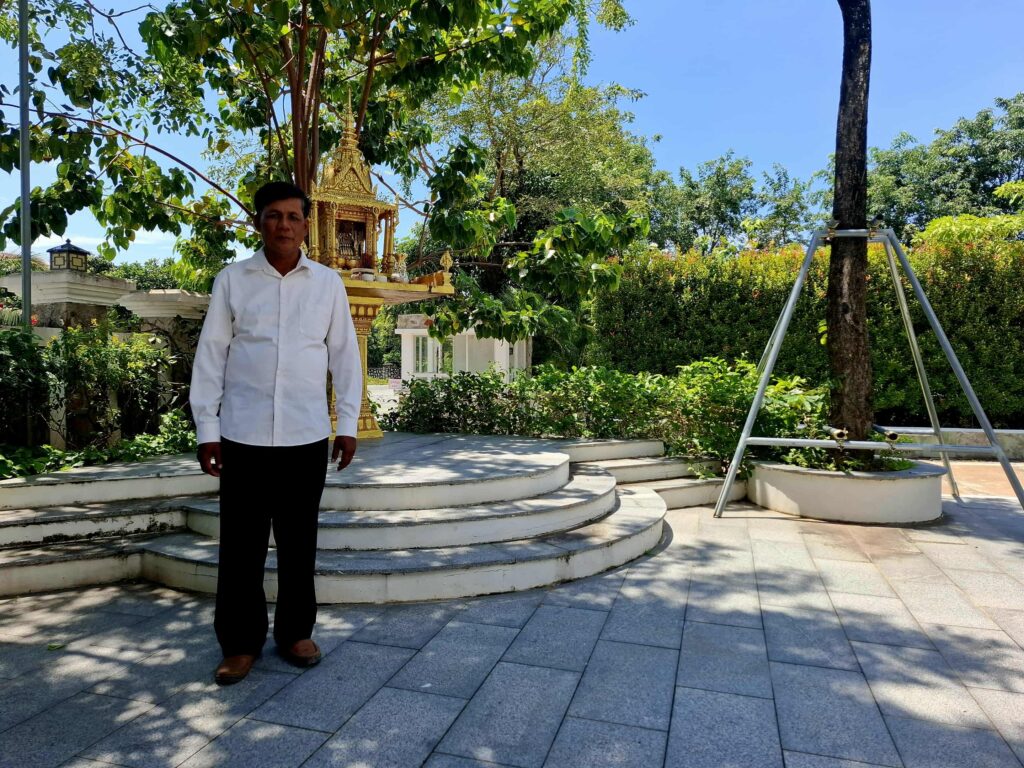
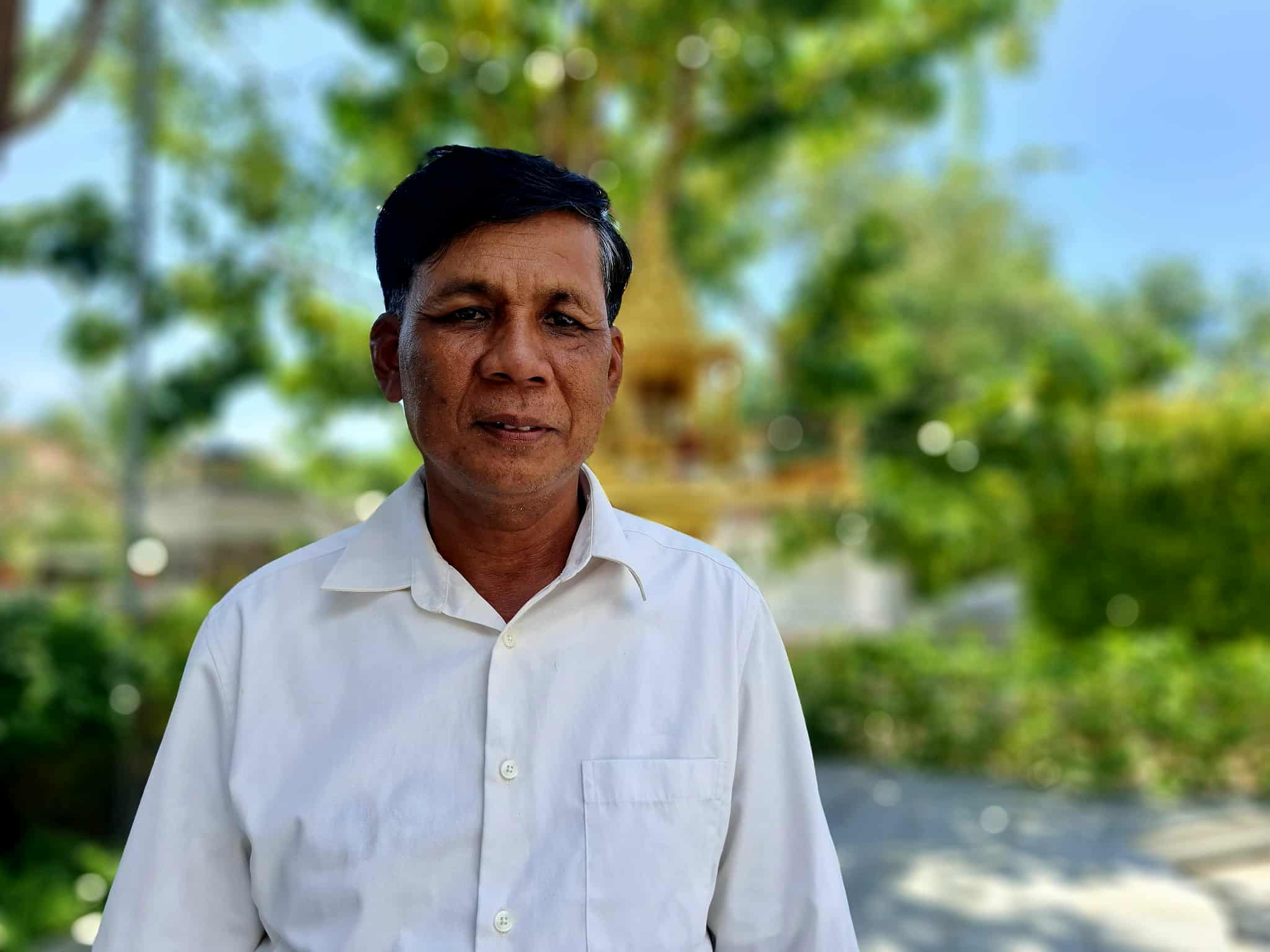

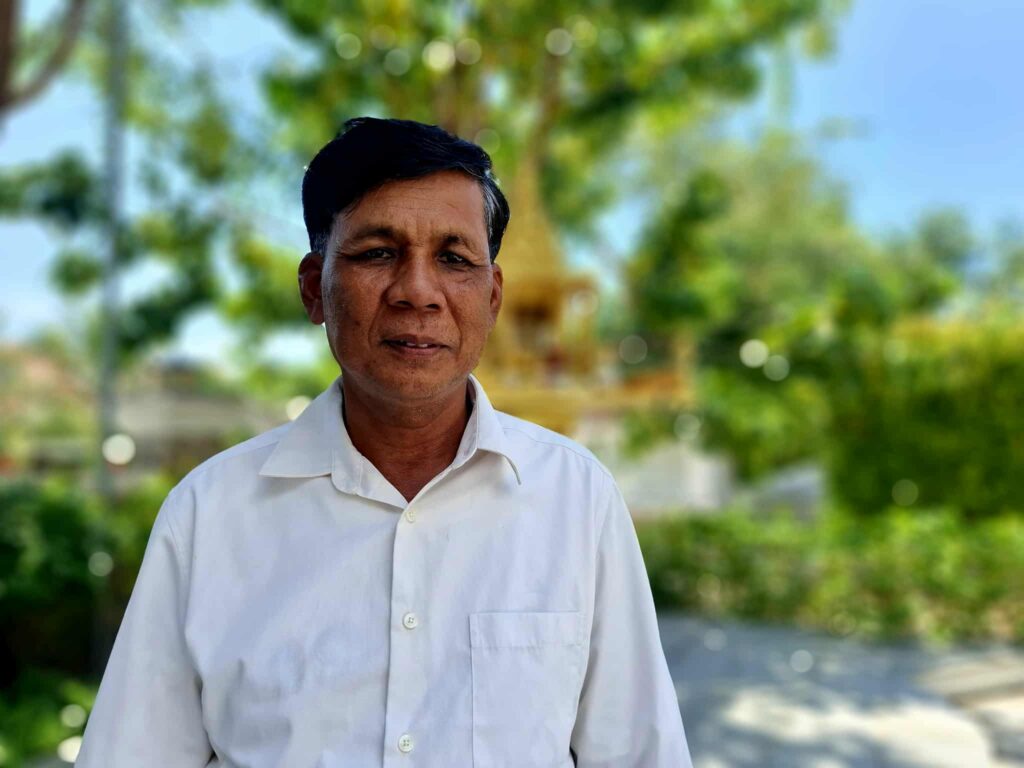
Ourng An, Deputy Chief of the Angkol Fishery Community in Kep, speaks about how his community is transforming challenges into opportunities. His words tell a story of local action — one that begins not in offices or large cities, but among the tangled roots and rising tides of Angkol’s mangrove forests.
At a meeting on strengthening community fisheries management in Kep on 3 October 2025, Ourng An explained: “In our community, we are patrolling, planting mangroves, and building a wooden bridge. In marine conservation, we continue to release pregnant crabs.”
This work is vital.
Releasing pregnant crabs allows them to reproduce and sustain their populations, preserving a healthy and balanced marine ecosystem for generations to come.
For the fishers of Angkol, protecting the sea is a way of life.
Every patrol through the mangroves, every pregnant crab safely returned to the water, every seedling planted, keeps the ecosystem in balance. These everyday acts of care preserve not only biodiversity but also the community’s lifeline, their livelihoods, and their future.
From Mud to Hope: Bridging Challenges and Change
There is more work ahead.
“We plan to build more — the bridge, a meeting hall, toilets, and the road. For now, there is no proper road to the Angkol mangrove area. We also want to do fish raising and clam raising.”
Infrastructure remains a major challenge, with limited access to Angkol’s mangroves, especially during the rainy season. Yet the community is not waiting for change — they are building it. The wooden bridge they construct is more than a passage over mud and water; it is a symbol of resilience. The planned meeting hall will become a hub of learning, decision-making, and collaboration — a place where the community’s vision can take root and grow.
Thriving with the Tide: Livelihoods Rooted in Sustainability
Alongside conservation and infrastructure, Angkol’s fishers are experimenting with sustainable livelihoods. Plans for fish and clam raising are developing as alternative income sources that complement conservation efforts. Each initiative — however small — strengthens the community’s capacity to adapt, innovate, and thrive in harmony with nature.
Through its EU co-funded CO-SAVED project, Action Education / Aide et Action (AEA) supports Angkol’s efforts so that community leadership can drive environmental protection and socio-economic resilience.
For Ourng An and his community, sustainability is not an abstract concept — it is the bridge they are building with their own hands, the mangroves they plant, and the crabs they release back into the sea.