
In the village of Andong Thmor, Preynob district, Preah Sihanouk province, a fresh, eco-conscious vision of farming is taking root. Because when farmers learn, communities thrive — and knowledge is the seed of resilience.
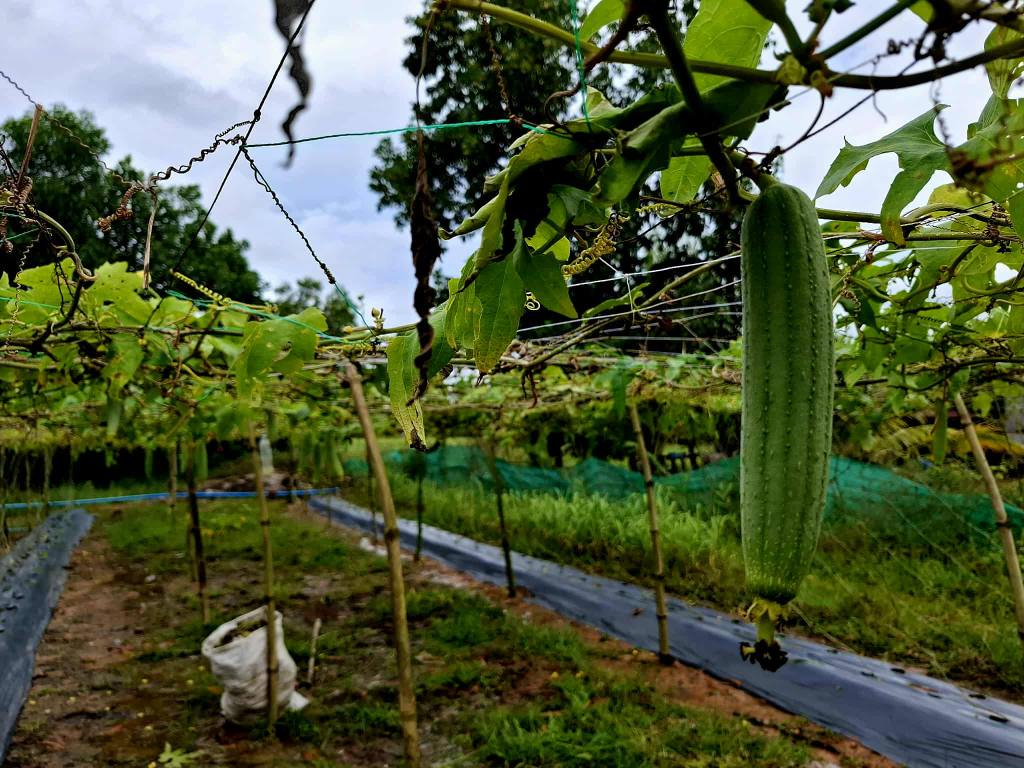
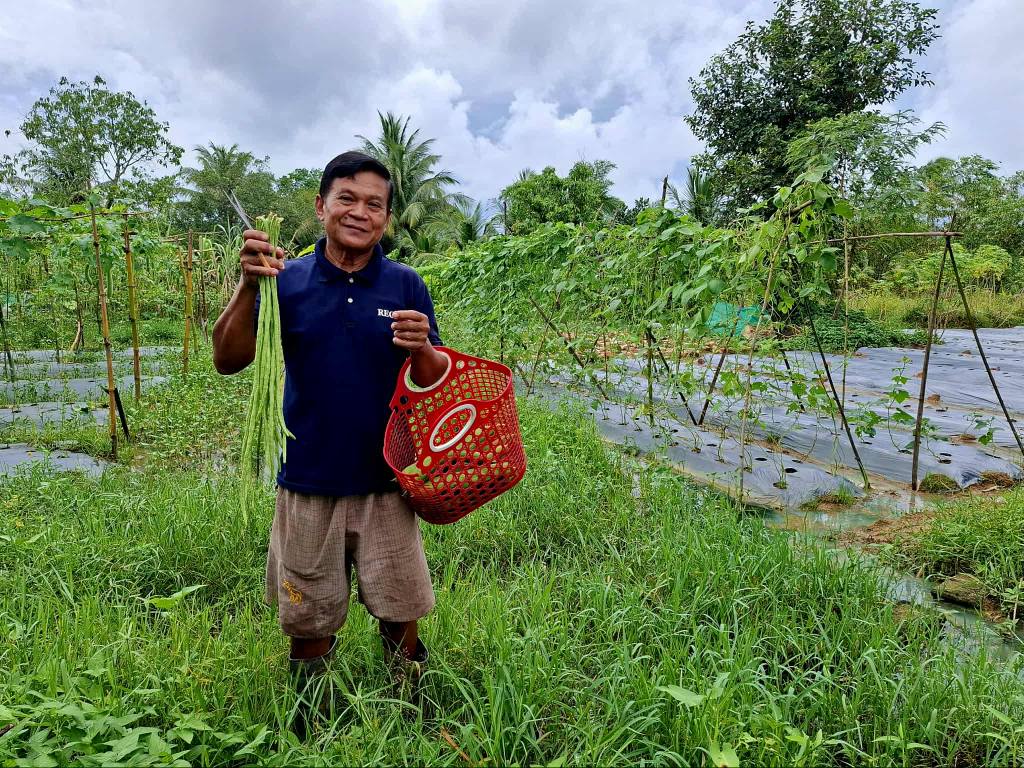
Amid climate uncertainty and shifting seasons, local farmer Din Samrithsakorns stands proudly by his small yet flourishing plot. “I learnt the techniques to use seeds and fertilisers,” he says. “I use a small plot of land but I got high yields.”
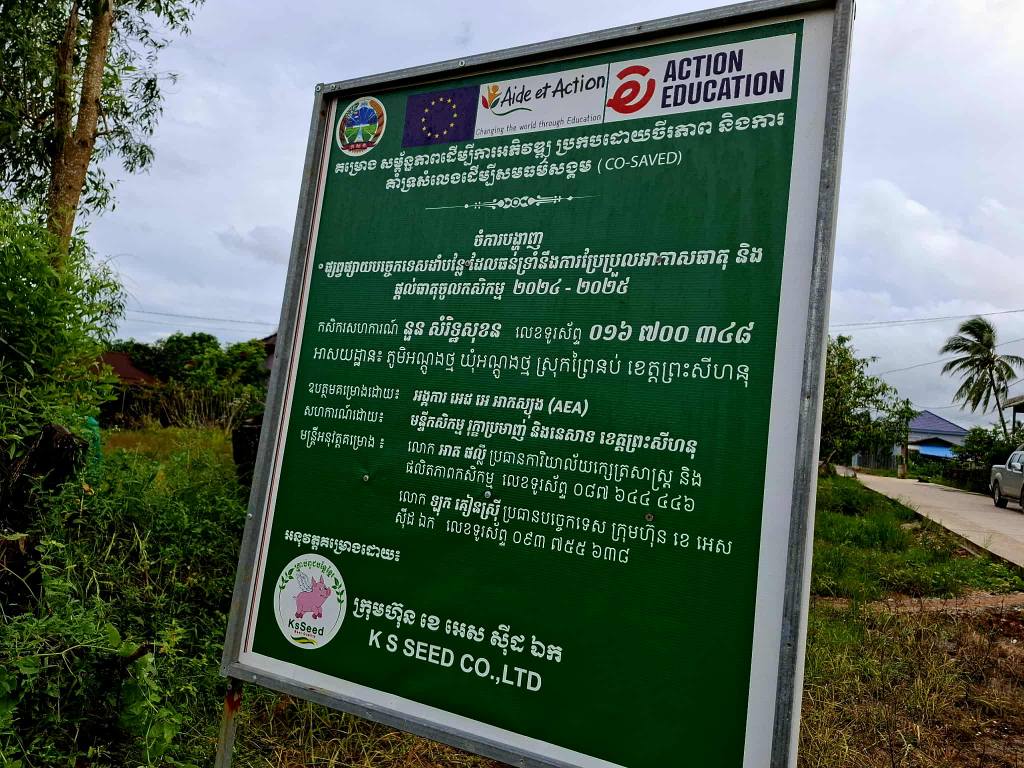
Behind Din’s success lies a project that places training, resilience, and sustainability at its core. Through CO-SAVED, which is co-funded by the European Union, Action Education / Aide et Action, in partnership with KS Seeds, is equipping farmers with the knowledge and skills they need to embrace climate-smart techniques.
Building the capacity of Cambodia’s coastal communities is essential if they are to withstand the growing impacts of climate change.
And Din’s journey shows just how powerful learning can be. “I learnt new techniques to grow vegetables during both the rainy and dry season. I use seeds that can grow despite climate change,” he continues, his plot of land now transformed into a living model of adaptation.
Healthy Food: Care, Compost & Community Spirit
The results are as nourishing as they are inspiring. In fields once reliant on chemicals, natural fertilisers now restore the soil and regenerate life.
Walking through the rows of vegetables, Lok Keansry, CEO of KS Seeds, reflects: “This product is very natural because the farmers do not use chemicals or anything. They only use faeces and compost fertiliser to apply here. It’s free of chemicals.”
He smiles, adding: “Yes, you can eat.”
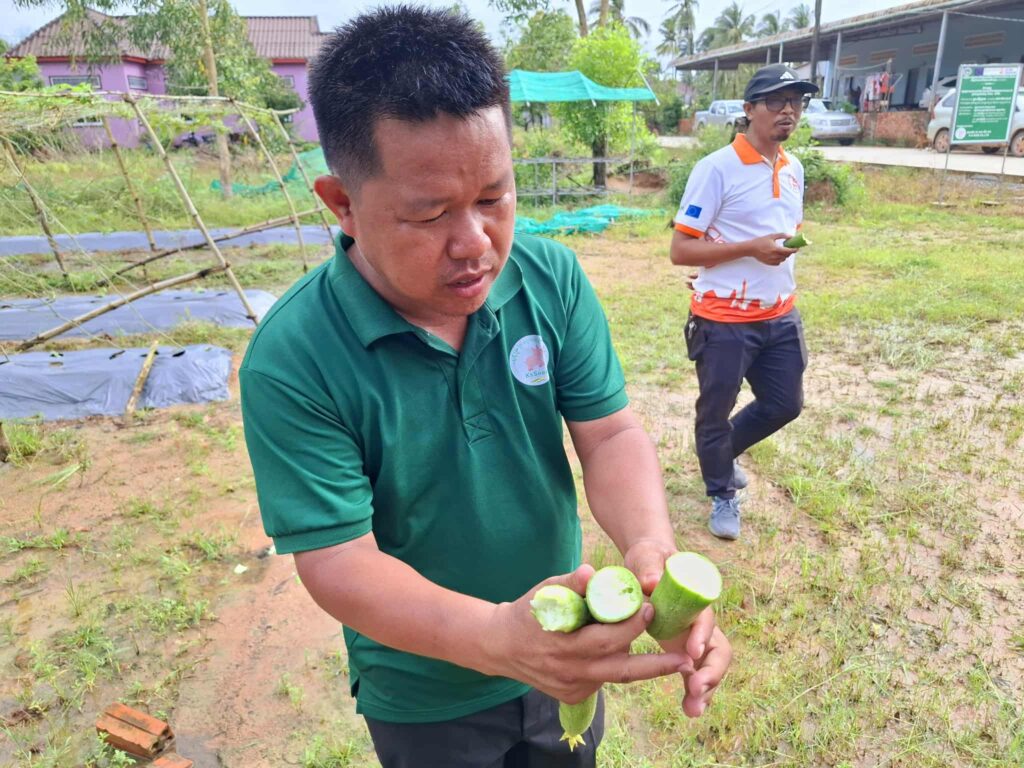
The move towards climate-resilient, eco-conscious farming is not only about survival — it is about wellbeing, wellness, and healthier living. For farming families, this means more than just food on the table — it means food that heals. Food that strengthens communities without harming the earth. Food that empowers farmers with knowledge and skills.
A Collective Effort: Stronger Skills for Stronger Harvests
What begins in one farmer’s field ripples outwards across the community. Din’s achievements are not his alone: they have become a story of shared knowledge, empowerment, and resilience. “I earn more income for my wife. And every villager supports me in growing chemical-free vegetables,” he says.
This ripple effect is deliberate. Training lies at the very heart of the project. “Din just started on 11 May. His training started in April and finished in May, on 10 May,” explains Keansry. “In Preah Sihanouk, we met local authorities and we were told to encourage people to grow healthy vegetables.”
He adds: “We trained 18 volunteer farmers who are now able to plant during the rainy season.” Eighteen farmers may seem like a small number, but they represent the rise of sustainable farming that spreads through training and builds resilience across communities.
With the support of the European Union, Action Education / Aide et Action with KS Seeds is planting seeds of knowledge.
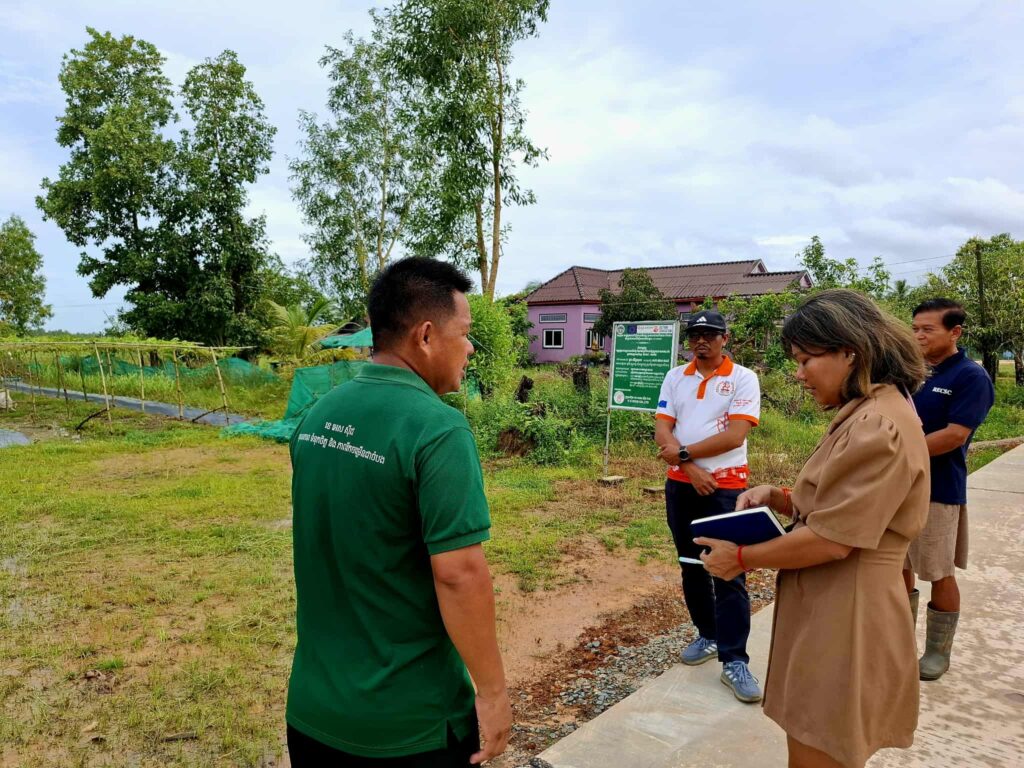
Because when farmers gain knowledge, they do more than protect their crops — they protect their families, their communities, and their future. Training empowers them to adapt. Capacity building enables them to thrive. And shared learning strengthens their resilience.
Climate adaptation starts with capacity building.