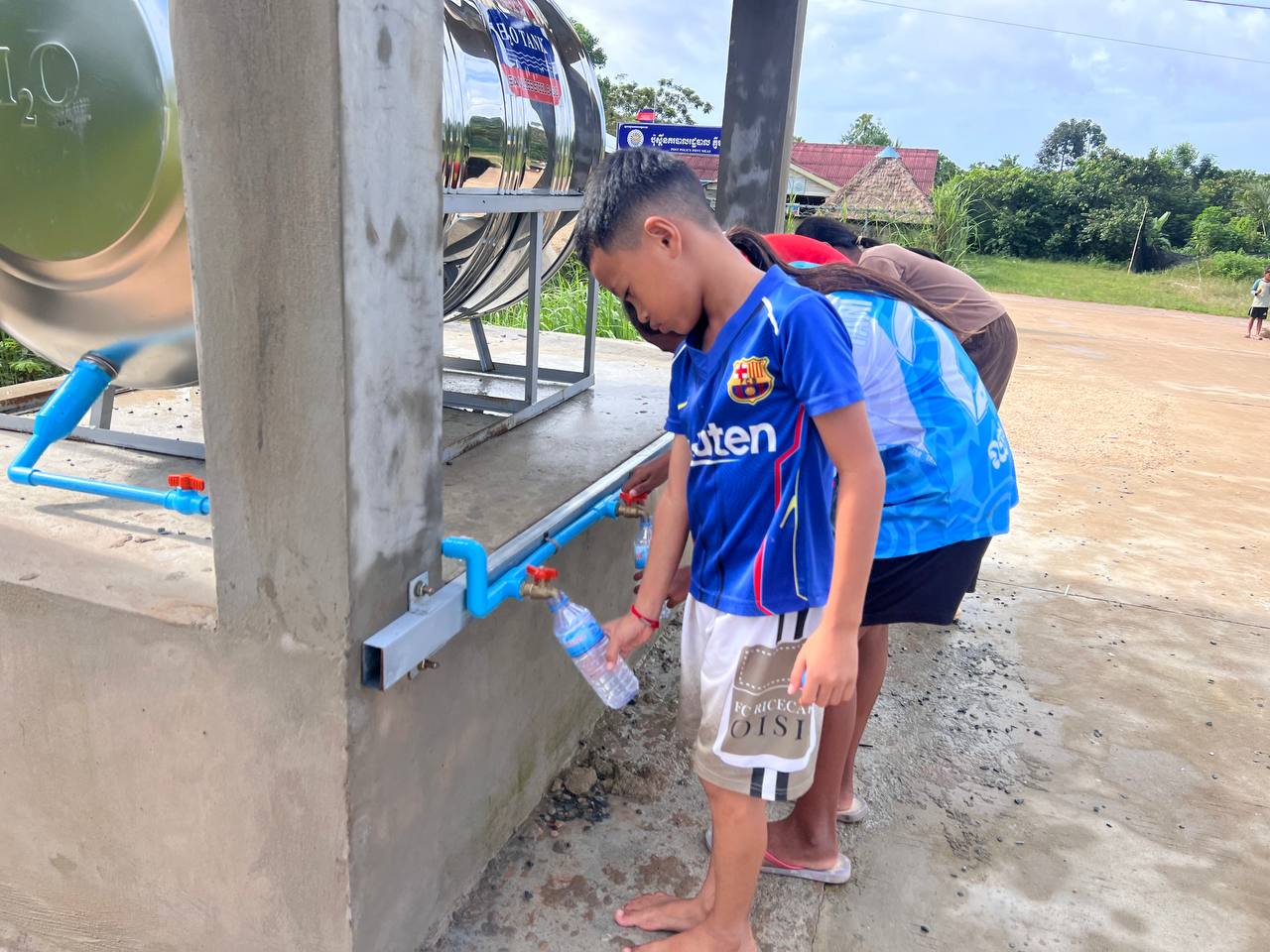

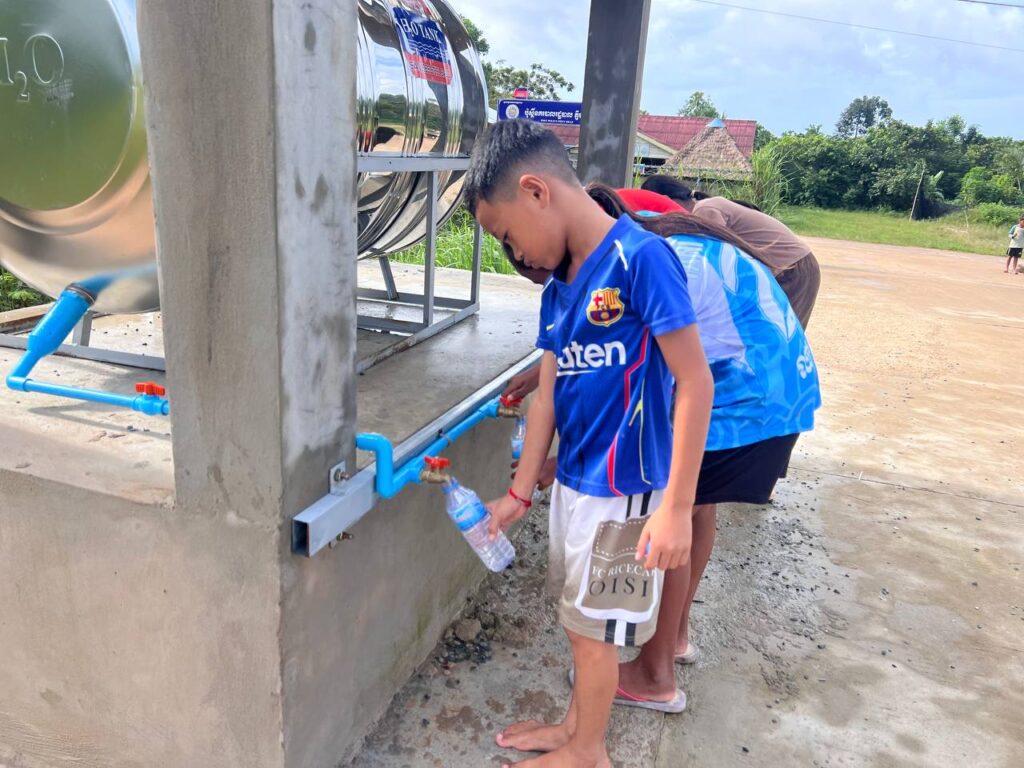
In the rural areas of Kampot, Cambodia, children gather around a water system at Tani Primary School. With bottles in hand, they take turns filling them at the taps connected to a stainless-steel tank. They no longer have to carry heavy water from home or rely on unsafe sources. What may seem like a small, everyday action in some parts of the world is, here, significant: the school community has a reliable source of clean water.
This simple act in Kampot tells a bigger story. Across the globe, access to safe water remains deeply unequal.
While for many households in wealthier countries, clean water flows with a turn of the tap, communities here continue to struggle with limited infrastructure. In parts of the Global North—such as France—over 98% of rural communities enjoy safely managed drinking water. In Global South countries—such as Cambodia—only 29% of the population has such access.
In Cambodia’s coastal and rural regions, children often depend on unsafe sources or must carry water from home — barriers that directly impact their health and education.
These inequalities are not accidents of geography but consequences of systemic imbalances in resources, investment and global priorities, revealing an opportunity for solidarity across borders.
Equity in Action: Water, Climate and Justice
Through the CO-SAVED project, co-funded by the European Union, Action Education / Aide et Action (AEA) is working to reduce water inequities. At Tani Primary School in Kampot, a community water system has been constructed: an elevated tower with large storage tanks and multiple taps.
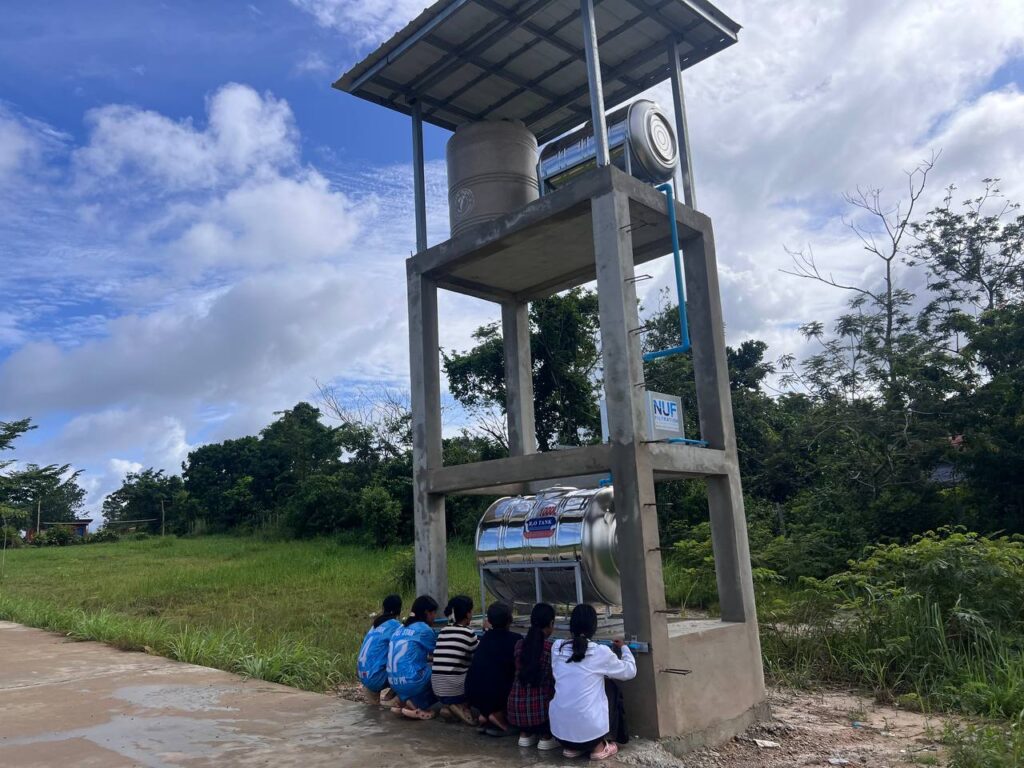
Tani is just one of 297 schools benefiting from our water, hygiene and sanitation (WASH) activities. Across Cambodia’s four coastal provinces, we have installed 244 handwashing stations, refurbished 100 latrines, and provided safe drinking water filters to 46 schools. Beyond schools, co-investments with local water operators have extended 76 kilometres of pipeline, delivering safe water to 2,877 households in 13 villages across Kampot and Preah Sihanouk.
More than infrastructure, this investment represents a commitment to justice — challenging the legacies of inequality and ensuring that communities historically left behind can now claim their fair share of a resource essential to life.
Safe water is not a privilege but a universal human right too often denied. Ensuring equitable access to clean water is essential to health, dignity and sustainable development. With our partners, we work to reduce inequalities and uphold the right to safe water for all.
Co-Impact: When Water Opens the Door to Learning
Students can now drink safely, wash and stay hydrated during the school day. They can focus on lessons instead of worrying about water. Teachers will see fewer disruptions caused by illness, and families nearby can also benefit from this shared source of clean water.
These changes may appear modest, yet they strike at the heart of inequality: when children no longer need to worry about water, they can concentrate on learning.
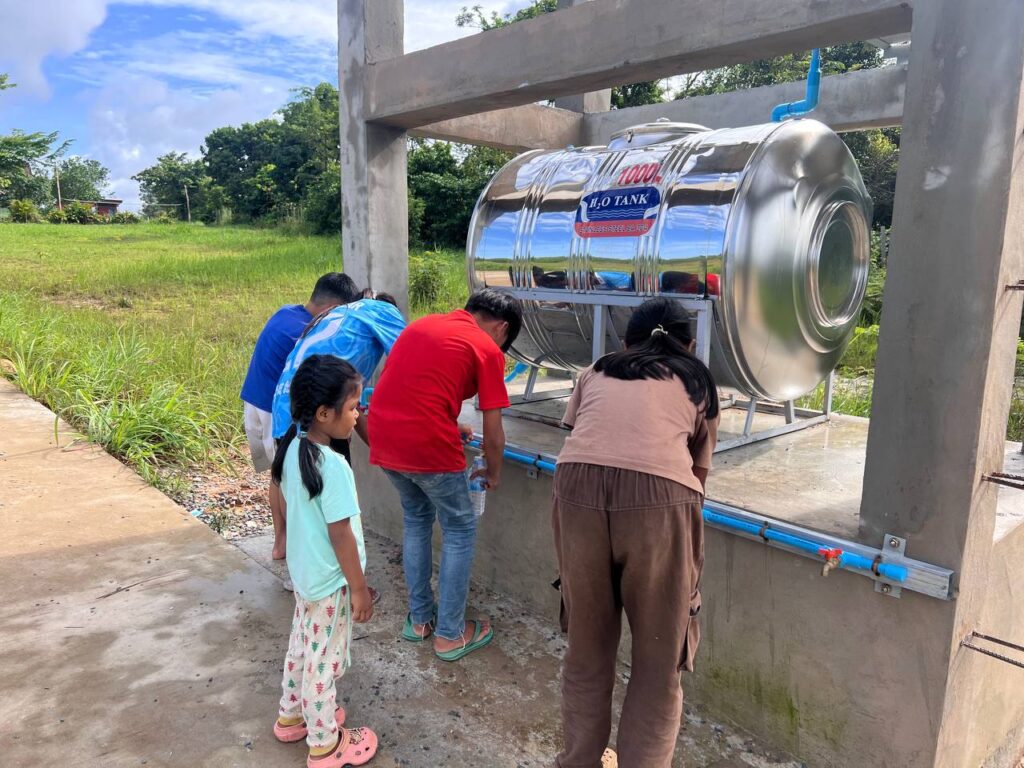
Water justice is about more than pipes and tanks — it is about fairness, dignity and shared responsibility. It is also about climate justice. As droughts, floods and scarcity intensify, the most vulnerable — like rural communities in Cambodia — pay the highest price, despite contributing the least to the crisis.
In total, nearly 300 villages and 4,271 households have gained access to safe water through the CO-SAVED project — progress made possible only through collective action. We also underline a stark truth: until global disparities in water access are addressed, until every child has equal access to safe water, the journey to sustainable development remains unfulfilled.
The struggle for water is not only local — it is global. And we call on all of us to stand in solidarity.
WATER: WATCH OUR VIDEOS