
While clean water is taken for granted in Europe, it remains out of reach for millions around the world. In rural Cambodia, one in three people still depend on unsafe or unreliable sources such as rivers, ponds, or shallow wells. But today, clean water is finally flowing in 13 remote villages — a relief amid growing climate disruption.
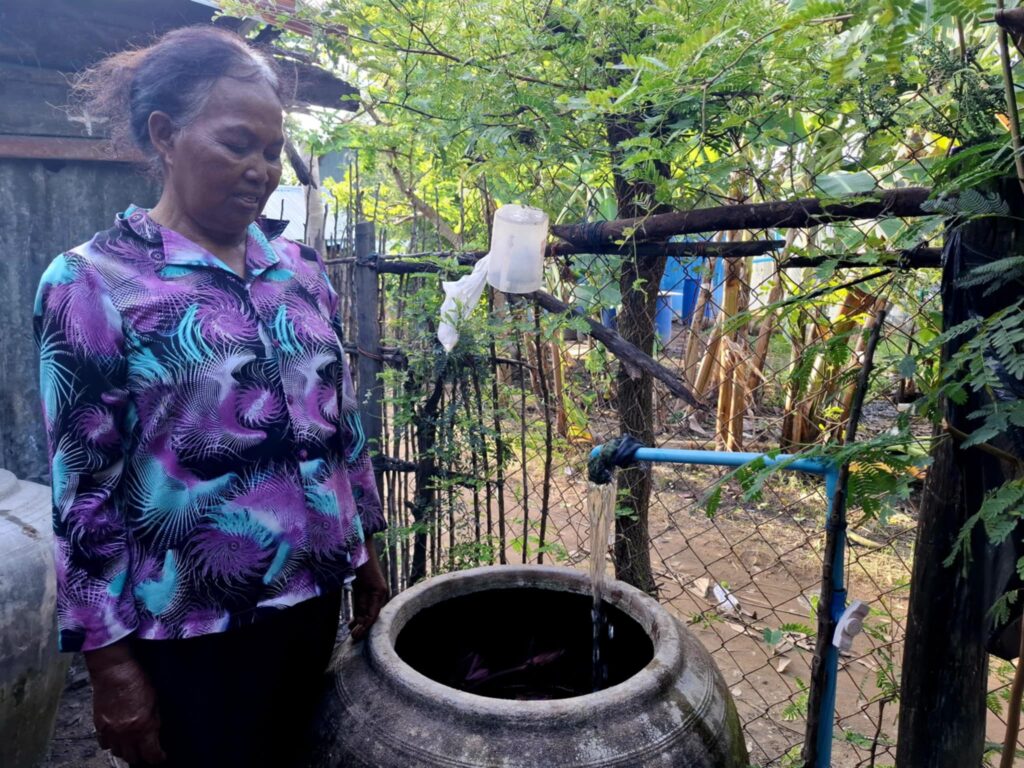
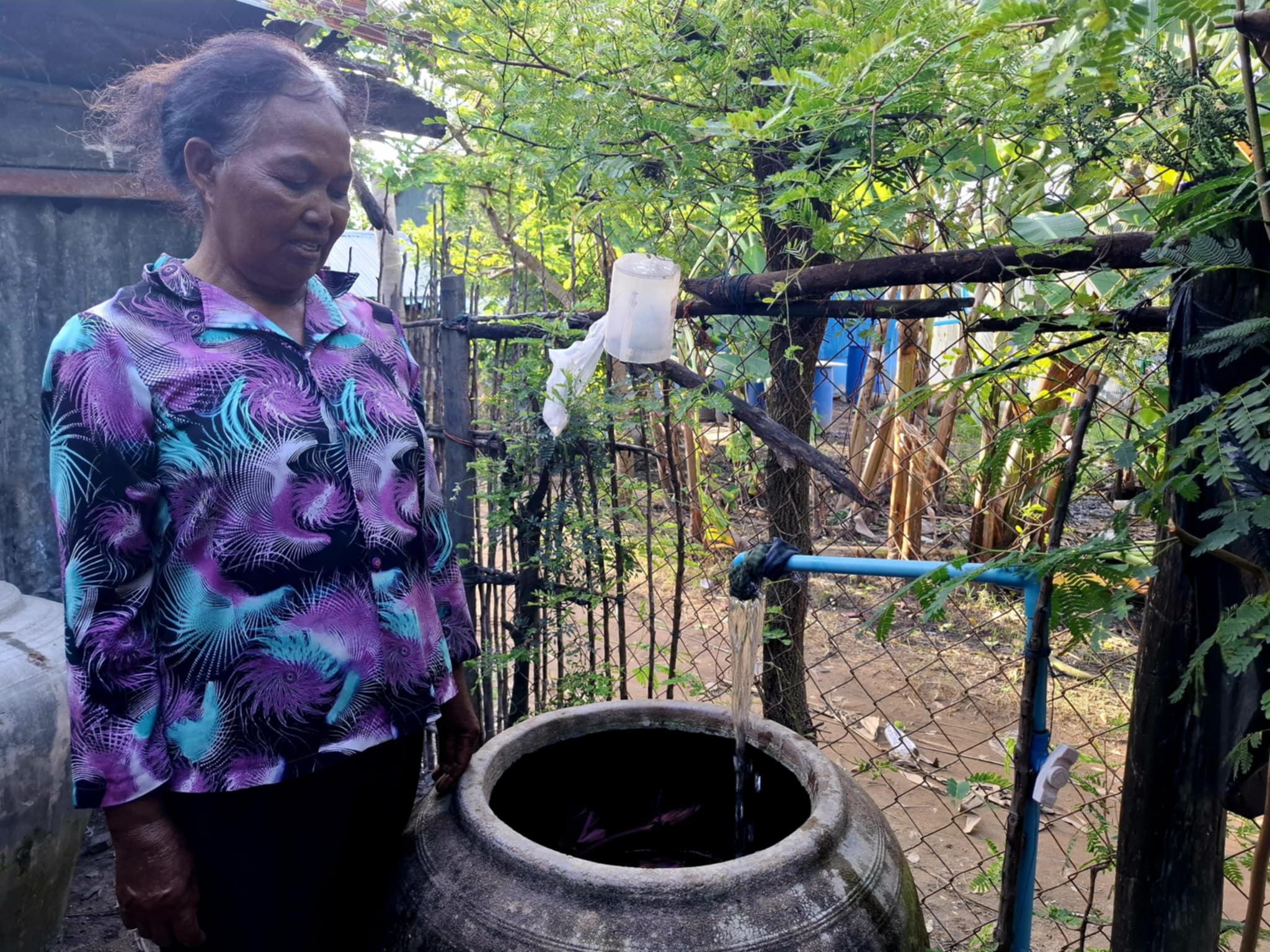
In the quiet village of Koh Krishna, tucked away in a remote corner of Kampot province, a simple clay jar sits beneath a tap in the back garden of a wooden house. For En, a former seafood seller, this tap has been life-changing — it means health, safety, and dignity.
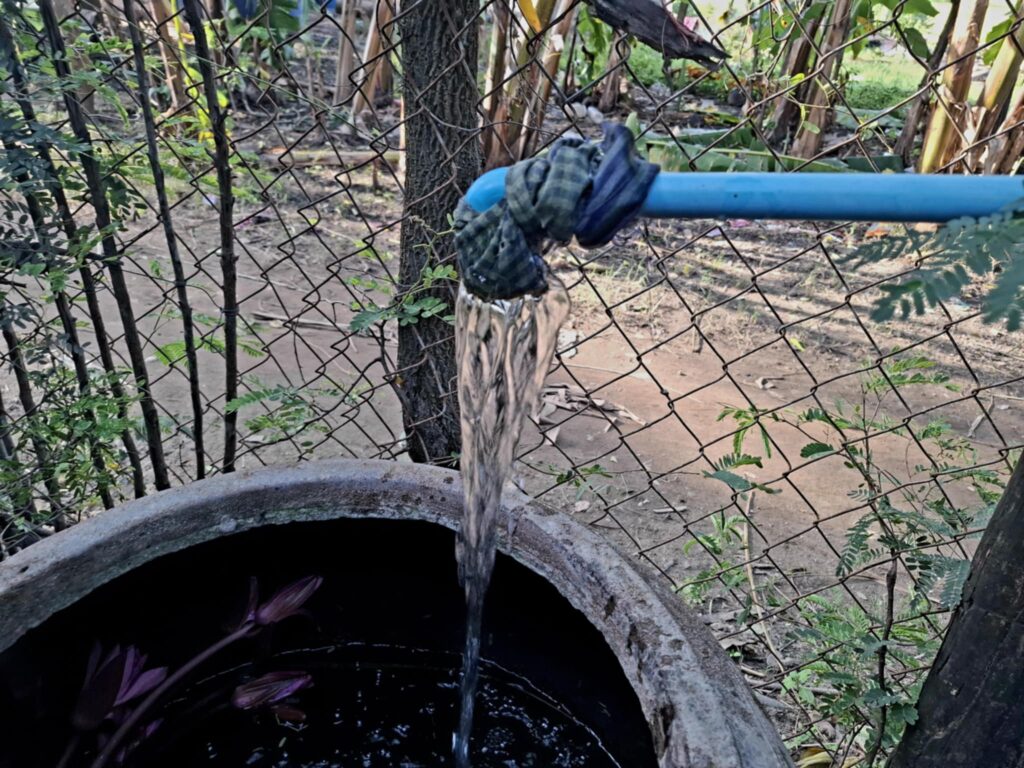
“I don’t work anymore,” En says gently. “I stay home now. I used to sell seafood in the market, but those days are behind me. I don’t have children, but I live here with my husband.”
For most of her life, clean water wasn’t something she could rely on.
Like many in her village, she collected rainwater or fetched water from a nearby well — both unreliable and often unsafe due to shifting climate patterns. Rain no longer comes as it used to. Climate change has made the seasons unpredictable: rains are less frequent, dry spells longer, and water sources increasingly scarce.
For families like En’s, the pressures are growing — especially when illness strikes.
“Before, we had to store rainwater or get water from the well. It wasn’t always clean. Sometimes, we got sick,” she recalls.
From Rainwater to Resilience
“When we are sick, we don’t have enough money for medical care,” En says.
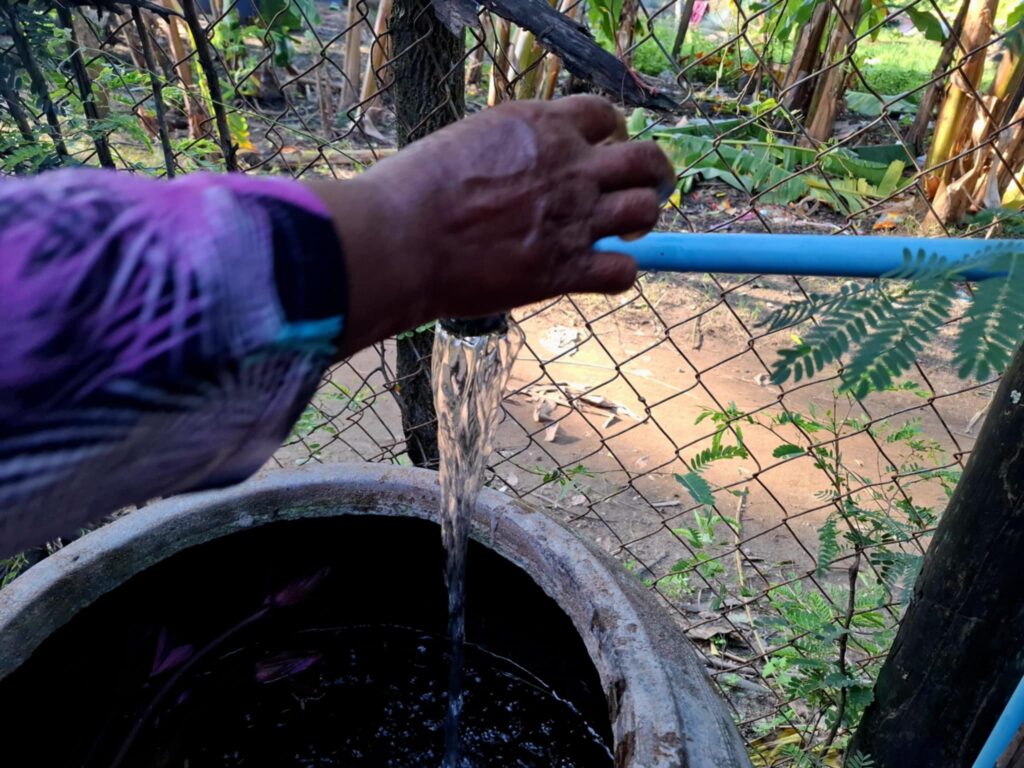
In places where climate shocks and poverty collide, clean water is a vital protection. Contaminated water spreads disease, and for the most vulnerable, a preventable illness can carry devastating consequences. Clean water is a cost-efficient, high-impact solution — restoring health, safety, and peace of mind.
En smiles: “That’s why I’m so happy to have this tap. It’s easy to use — and better for our health.”
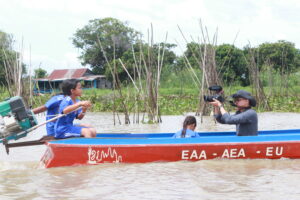
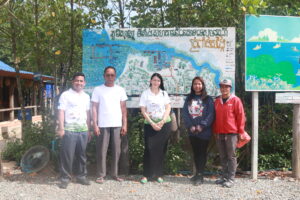
Thanks to the CO-SAVED project, co-funded by the European Union, Action Education / Aide et Action has supported the construction of 76 kilometres of water pipelines — delivering nearly 2,800 household connections to remote communities in Kampot and Sihanoukville.
In Koh Krishna, households — and even the primary school — are now connected to the Phnom Meas Water Station, delivering to families like En’s a steady supply of safe water, right where they live.
Infrastructure like this builds long-term resilience, strengthening communities against climate change. It changes lives through real pipelines and working taps. It empowers local communities to stand strong in the face of environmental stress and inequity — a step toward water justice, ensuring access to safe water for all.
For En, one simple tap has changed everything.