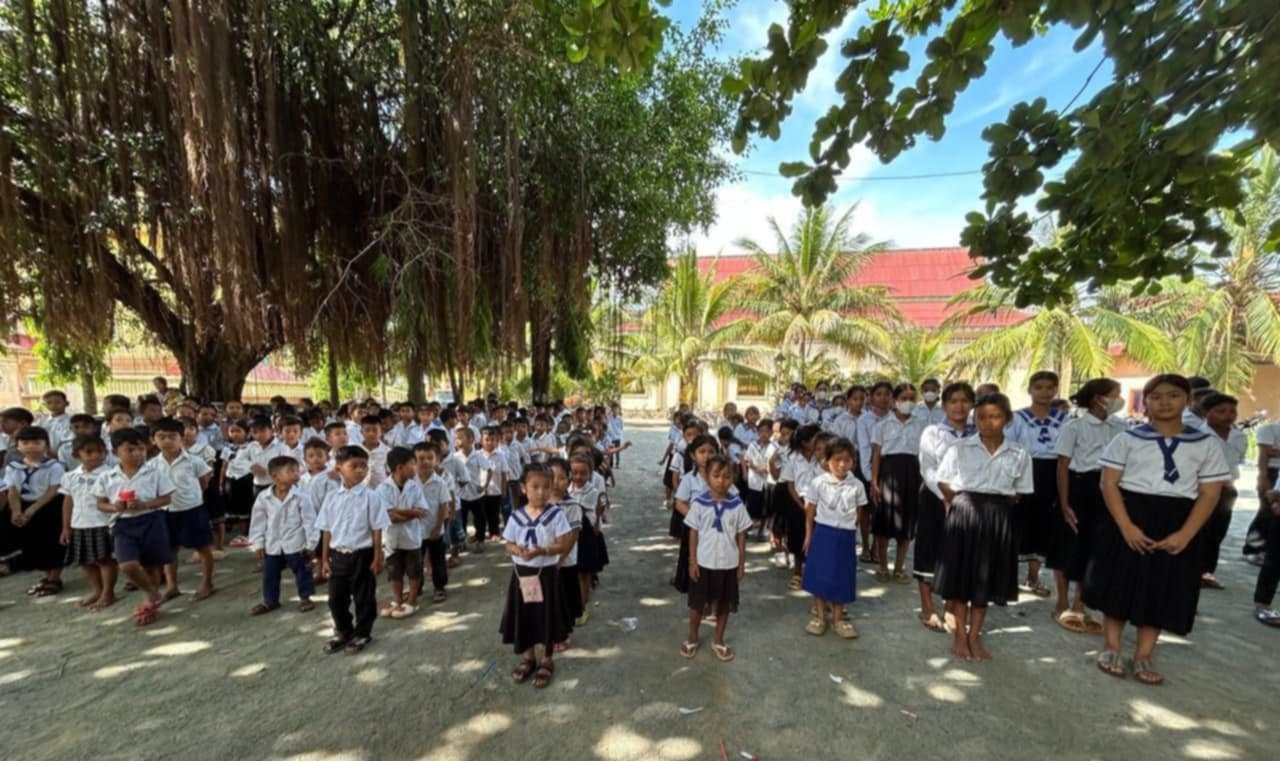

In Cambodia, Kampot’s postcard-perfect coastline, natural beauty, and luxury resorts paint a glittering image for global tourists. But behind the scenes lies a far more disturbing truth: many communities—especially schoolchildren—are being left behind in the most basic of human rights: access to clean water.
Around the world, over 2 billion people lack access to safely managed drinking water. [1] This global inequity is magnified in regions like Kampot, where infrastructure development often favours foreign investment over local needs.
While international travellers enjoy pristine pools in high-end resorts, many Cambodian children in rural schools must rely on contaminated water sources—such as rivers, ponds, and unprotected wells—for drinking, cooking, and sanitation. [2]
This isn’t just a health issue—it’s an injustice. And it’s happening in plain sight.
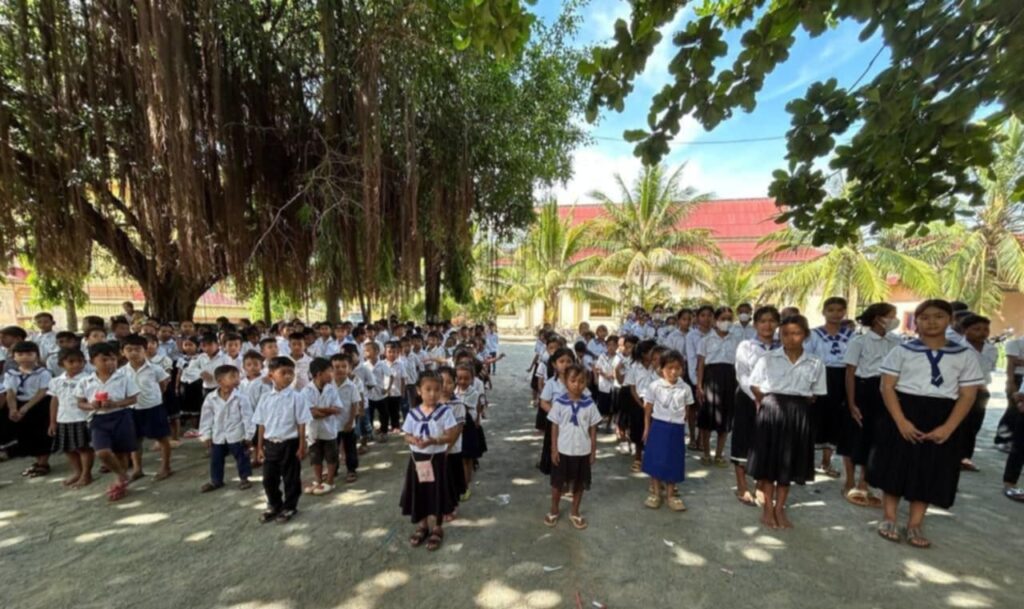
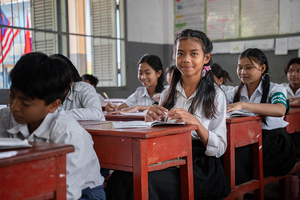
Photo: Children attending a health session at Russei Srok Primary School, Kampot
Who Pays The Price? Tourism and Water Stress
In Cambodia, water access remains an urgent issue in rural areas. Who profits when a vital resource is siphoned off to fill luxury pools, tropical gardens, and jacuzzis at “charming boutique hotels,” while nearby villages are left without clean water?
The rapid expansion of the tourism industry—often seen as a driver of economic growth—has unfortunately contributed to worsening disparities. Large resorts and commercial developments in and around Kampot are placing immense strain on local water supplies, diverting resources that could support underserved communities. [3] [4] [5]
In Kampot, luxury resorts have significantly increased demand for water, often drilling deep wells or securing access to nearby water sources—sometimes at the expense of neighbouring villages. These practices, although legal, frequently ignore the long-term consequences for local communities. [3] And as resorts expand, so does untreated waste. In areas with little to no wastewater treatment infrastructure, tourism runoff seeps into rivers and ponds—contaminating the very sources families rely on for washing, drinking, and cooking. [5]
The consequences? Waterborne diseases, missed school days, and irreversible environmental degradation. This situation reflects a broader trend of environmental injustice, where the benefits of tourism development are reaped by a few, while the costs are borne by the many.
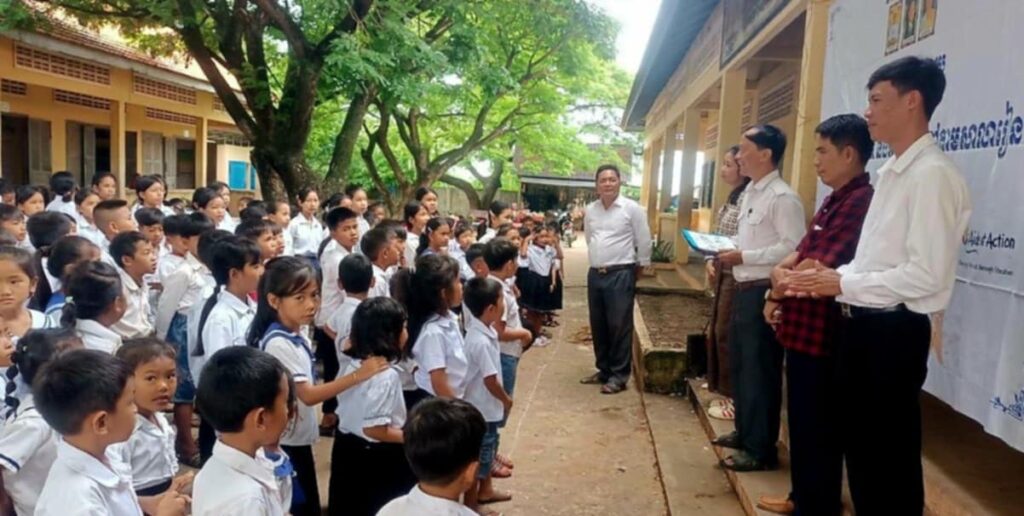
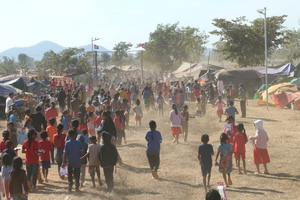
Photo: A health session at Phum Thkov Primary School, Kampot
Our Response: Addressing Water Inequity
Action Education / Aide et Action refuses to accept this inequity as inevitable. Under the Consortium for Sustainable Alternatives and Voice for Equitable Development (CO-SAVED), which is co-funded by the European Union, we work with local leaders, schools, and communities. To protect the right to water, we are:
- Building a clean water pipeline to reach remote villages;
- Providing water filtration systems;
- Supporting school campaigns to educate and empower.
Health sessions conducted in Kampot’s primary schools during May and June 2025 reached hundreds of students, teachers, and families, focusing on safe drinking water education and personal hygiene practices.
Under the theme “Clean Drinking, Clean Eating, and Clean Living”, students at Svay Tong and Thma Baek Primary Schools participated in interactive sessions promoting everyday hygiene habits on 28 May 2025. Campaigns at Wat Prek Kres and Phum Chres Primary Schools were led by local champions such as Mr Han Taek and Mr Lim Heang.
Don Bunoy, Damnak, Koh Kresna, and Russei Srok Primary Schools hosted events that emphasised clean lifestyles and the prevention of waterborne illnesses. Finally, Lok, Thkov, Svay Ph’aem, and Phum Thkov Primary Schools reinforced the power of early education to change behaviours and safeguard health.
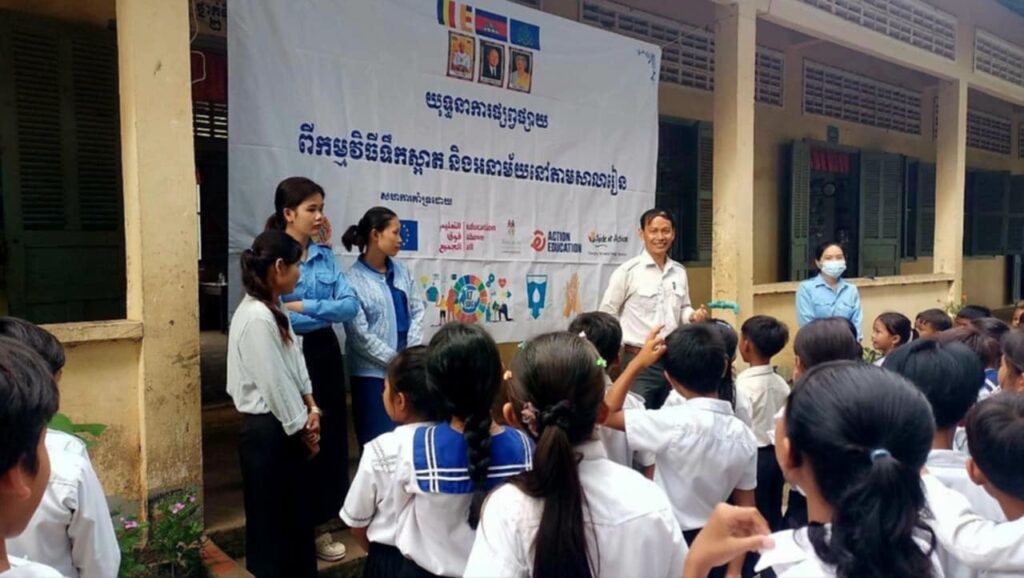
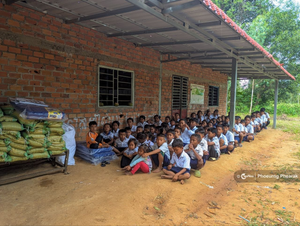
Photo: A health session at Phum Thkov Primary School, Kampot
A Call for Accountability and Equitable Development
Our work in Kampot highlights a critical need: equitable water management must become a central focus in Cambodia’s development strategy—especially in tourist-heavy regions. The voices of rural communities—too often overshadowed—must be prioritised in conversations around water rights and sustainability.
As tourism in Kampot grows, so must our commitment to inclusive development. We urge policymakers, developers, and travellers alike to consider the hidden cost of luxury and to support initiatives that bring clean water and dignity to all.
Be The Change: How You Can Help
- Educate yourself and others on water equity and environmental justice.
- Travel ethically: choose Kampot’s local eco-resorts like Kampong Samaky and Trapeang Sangkae.
- Donate or partner with grassroots organisations working on water access and hygiene.
Without clean water, nothing else works—health, education, dignity. Clean water shouldn’t be a privilege. It’s a basic human right.
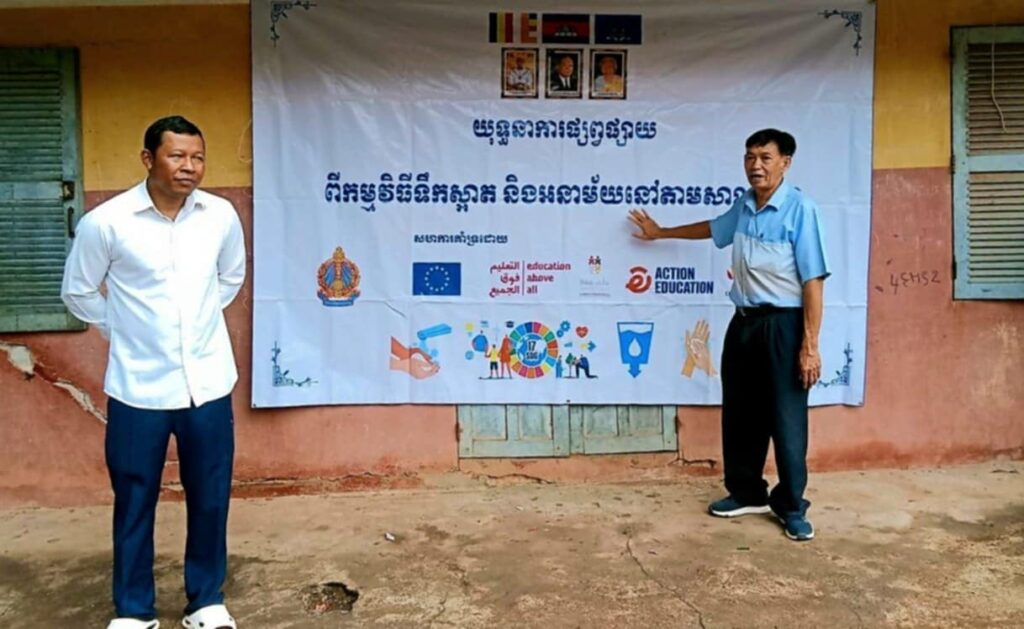
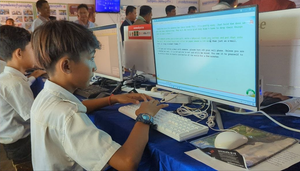
Photo: Presenting a health session at Wat Prek Kres Primary School, Kampot
REFERENCES AND SOURCES
[1] According to the United Nations (WHO/UNICEF), in 2022 approximately 2.2 billion people worldwide lacked access to safely managed drinking water services.
[2] According to UNICEF, seven in ten pre primary schools do not have access to WASH facilities in Cambodia and, many children in rural areas rely on unprotected sources—rivers, wells, and ponds—that are contaminated with pollutants.
[3] An FAO analysis of Cambodia’s groundwater use notes extensive drilling of deep wells. This heavy reliance on deep drilling, often by private developments (e.g., luxury resorts), places pressure on groundwater inventories that rural wells and communities depend on.
[4] An ActionAid report outlines significant risks from coastal development projects—such as artificial islands, ports, and resort expansions—in Kampot. It warns of sedimentation, pollution, and destruction of marine ecosystems, affecting both environment and community livelihoods. The report underscores ecosystem stress from large-scale tourism infrastructure.
[5] According to UNDP, a dramatic 62% loss of mangrove cover in Kampot was linked to construction, tourism, and land-grabbing. Given that mangroves are vital for groundwater recharge, coastal protection, and water filtration, their loss directly signals stress on freshwater systems and local water availability—impacting both quality and supply.