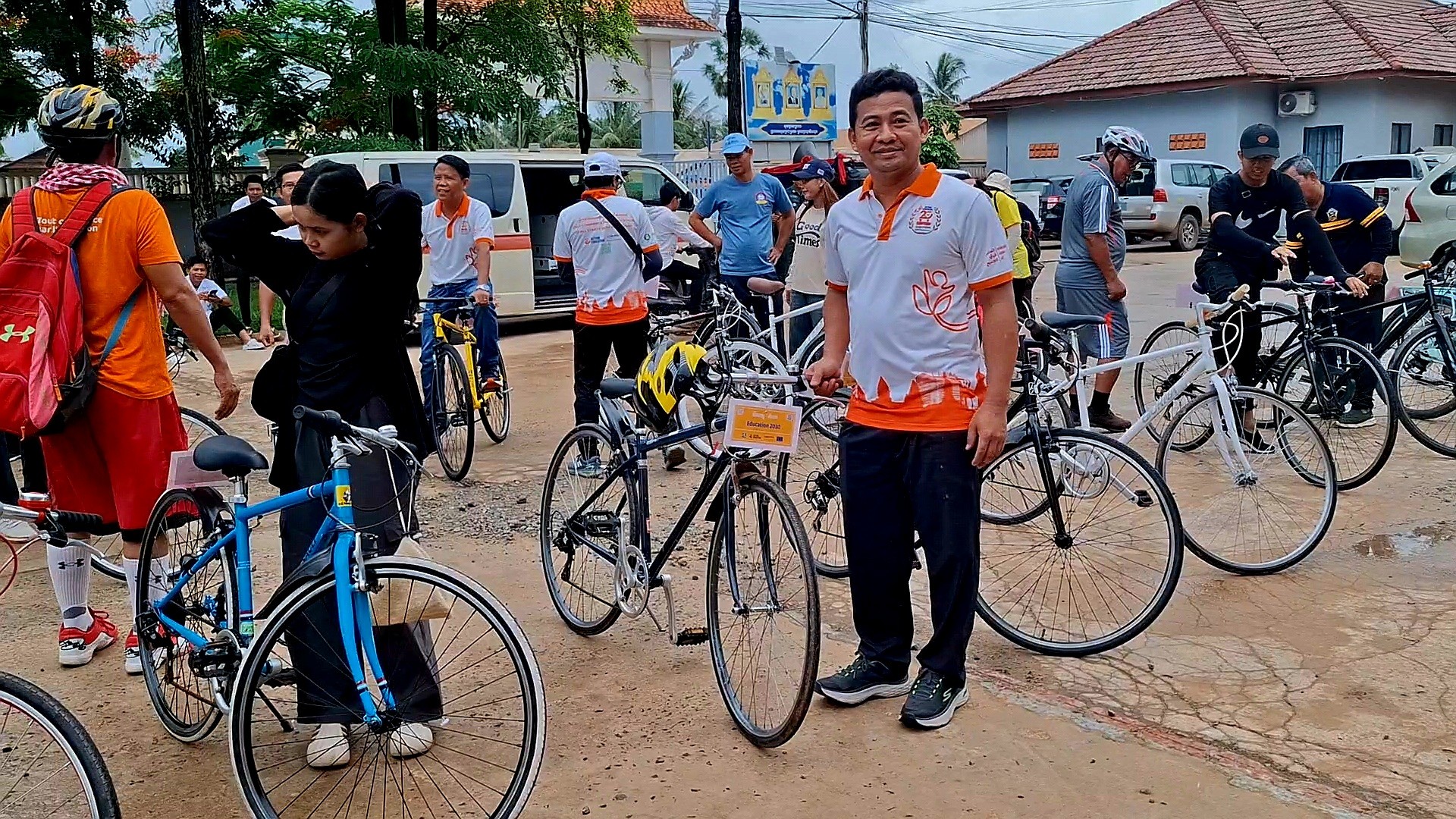

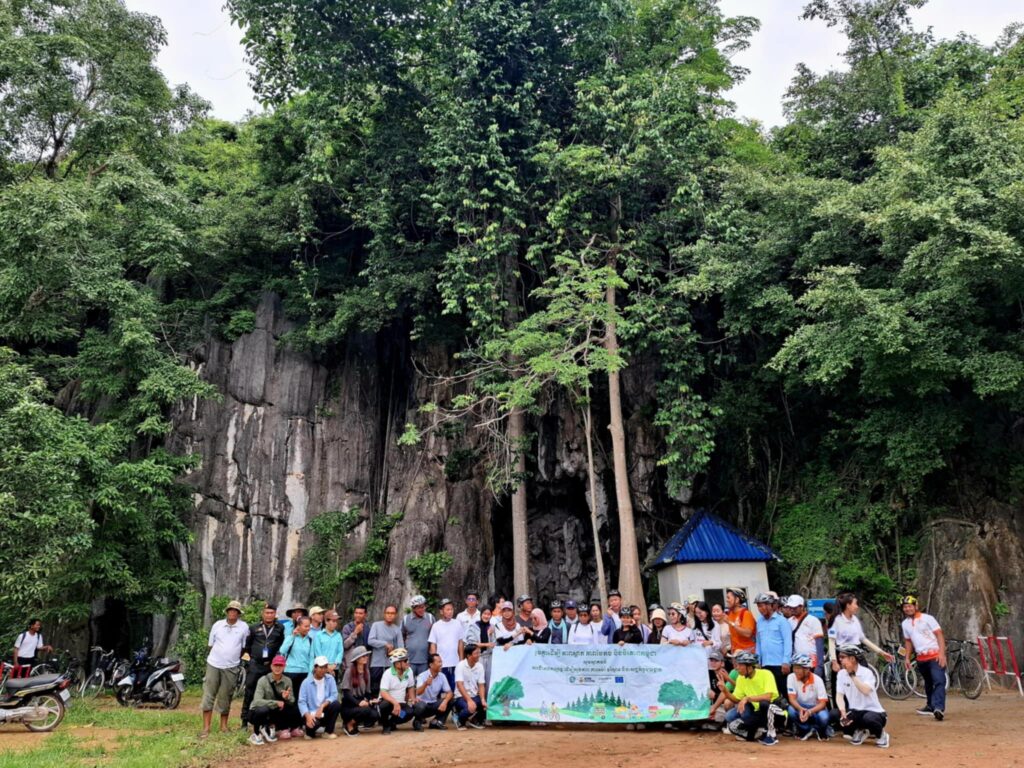
Against the lush backdrop of Kampot’s natural beauty, over 70 passionate participants—including local youth, students, farmers, tourists, and officials such as the Governor of Teuk Chhou district—came together yesterday to cycle for a greener, healthier, and more inclusive future.
Organised by Action Education / Aide et Action (AEA) Cambodia, this day-long event marked World Environment Day with a powerful message: sustainable development starts where livelihoods, the environment, and education meet.
“This isn’t just a bike ride,” said Samphors Vorn, AEA Country Director, highlighting the organisation’s holistic approach to development. “Today, our purpose is to spotlight the deep connections between employment, ecology, education, and, of course, eco-tourism.”
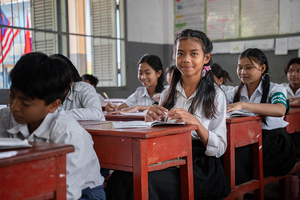
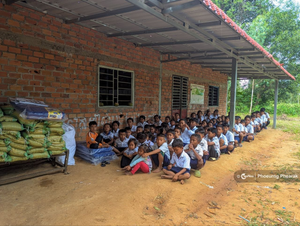
Strengthening livelihoods means families can afford to keep their children in school. AEA also supports around 50 schools in Kampot through scholarships and teacher training, amongst other activities. Beyond the classroom, our impact extends to water and nutrition, with colossal projects such as a clean water pipeline reaching remote villages.
The Journey Begins: 1, 2, 3… Go!
“Today we donated 50 bicycles to the district,” Samphors shared enthusiastically. “This will help students and tourists explore the area in a green way.” These bicycles are more than a means of transport—they are vehicles for empowerment, sustainability, and local economic growth.
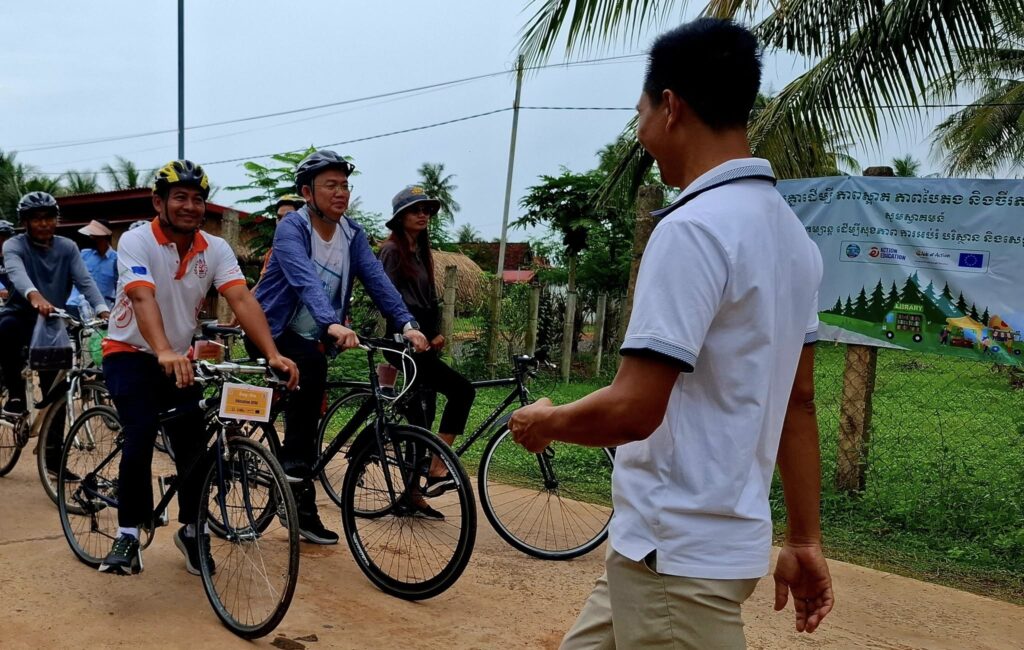
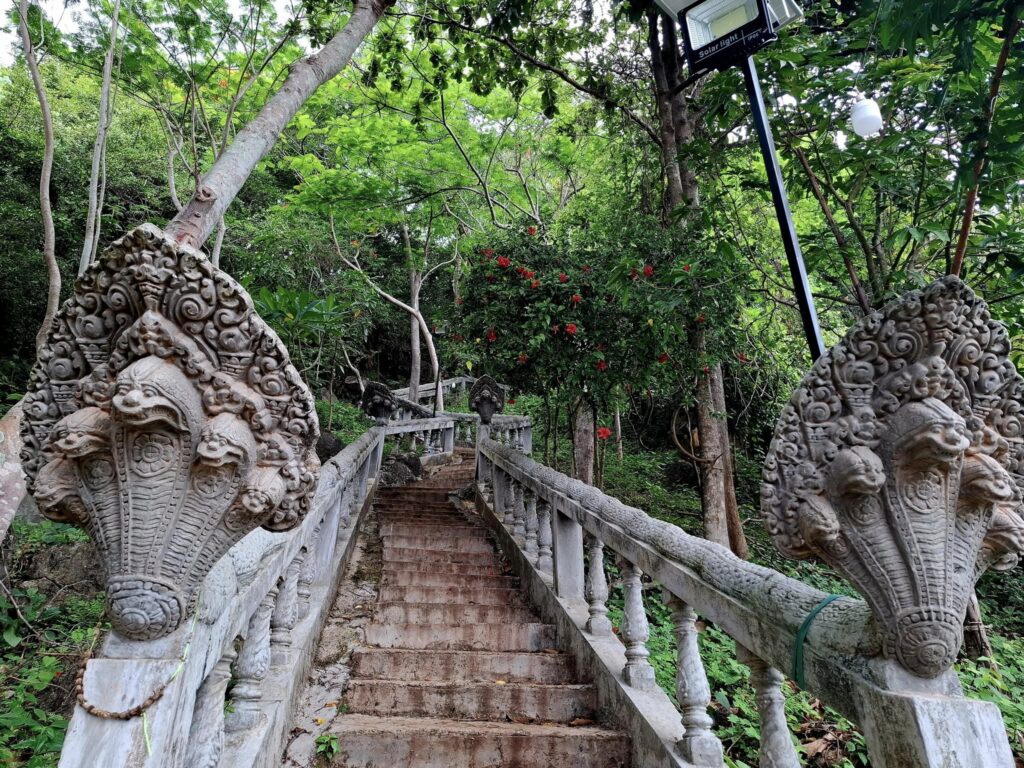
Covering several kilometers from Teuk Chhou to historical sites like Phnom Chngok Cave and Brateak Krola, also known as the Secret Lake, the cycling event served to promote Kampot’s spiritual heritage and natural beauty—all while raising environmental awareness, promoting local products and services, as well as the health benefits of cycling.
As riders passed by local businesses, they inspired wider public support for eco-tourism and rural livelihoods through social media.
Farm to Forest: The Twin Pillars of Sustainable Tourism
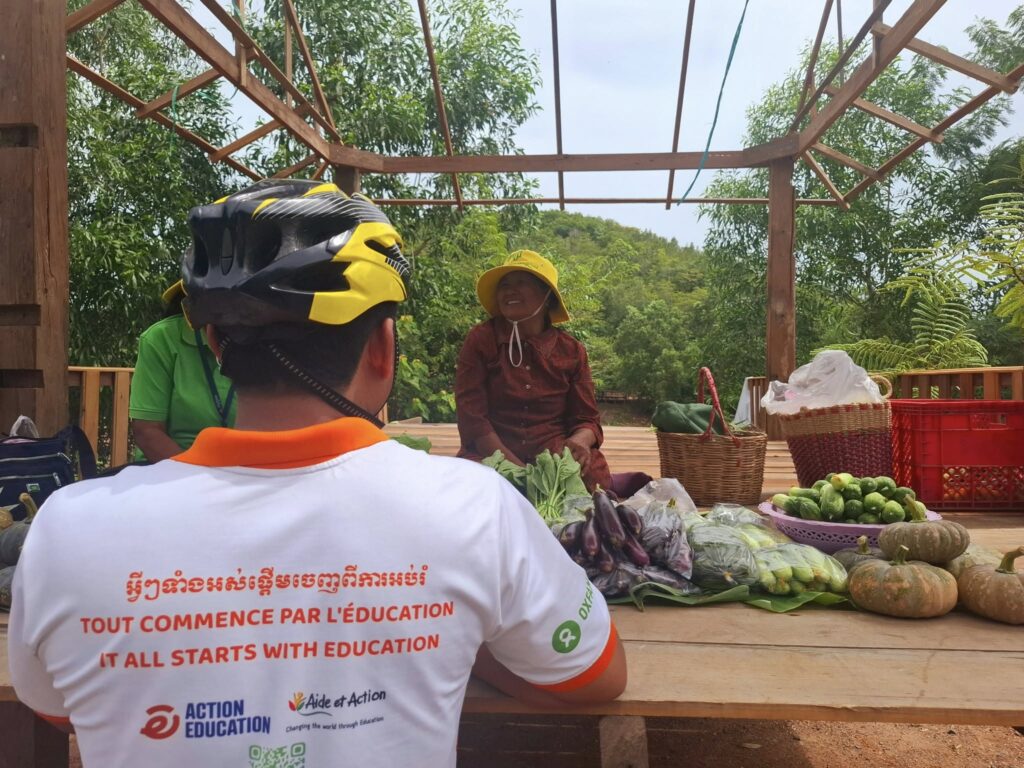
“We also promote sustainable farming,” Samphors explained, pausing at Ing Sarun’s pop-up stall.
“Thanks to AEA, I learnt new techniques. I use no pesticides, no chemicals—only natural compost,” she said proudly. “We reach about 100 families,” Samphors added, “and we want to expand our technical and material support to more farmers.”
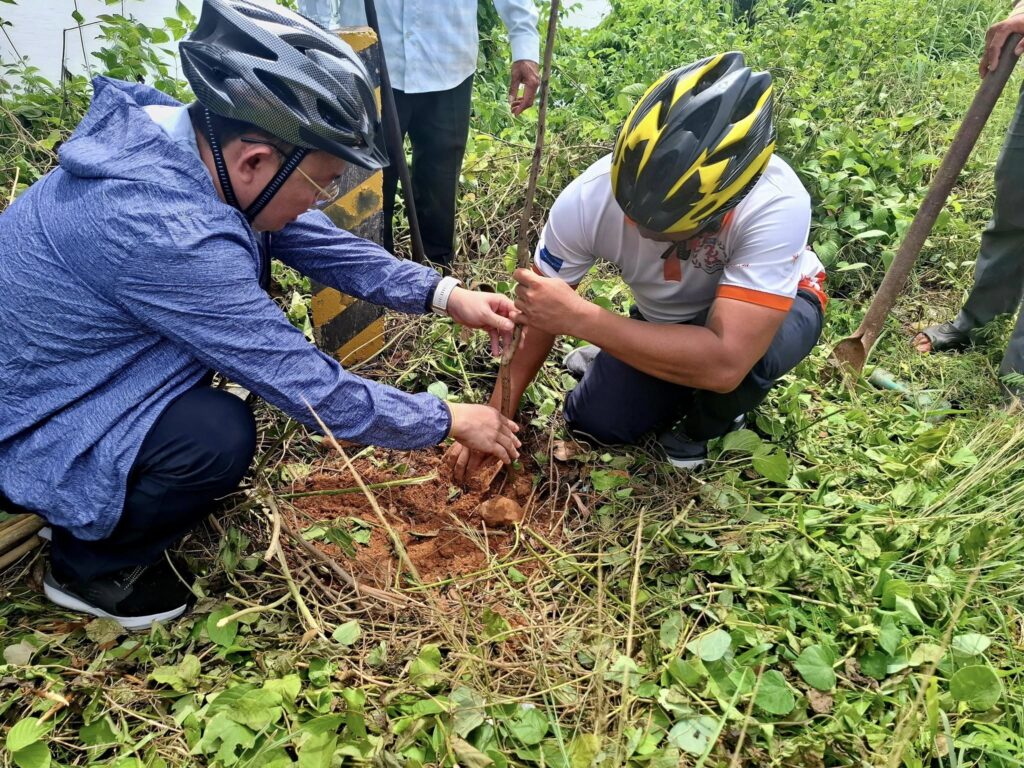
With our support, 3,000 flame trees are being planted across Teuk Chhou district. “This type of tree grows very fast, makes the town greener, and of course—it’s beautiful!” Samphors said, proudly planting one himself with the Governor. Flame trees, with their vibrant red blossoms, beautify landscapes, offer shade, and draw visitors during their stunning bloom season.
The tour concluded at a community eco-resort. AEA remains deeply committed to equitable, green development supporting communities such as Trapeang Sangkae, Kampong Samaky, and around Secret Lake—empowering local people with the skills, knowledge, and infrastructure to lead the way in eco-tourism and build sustainable, community-owned resorts.
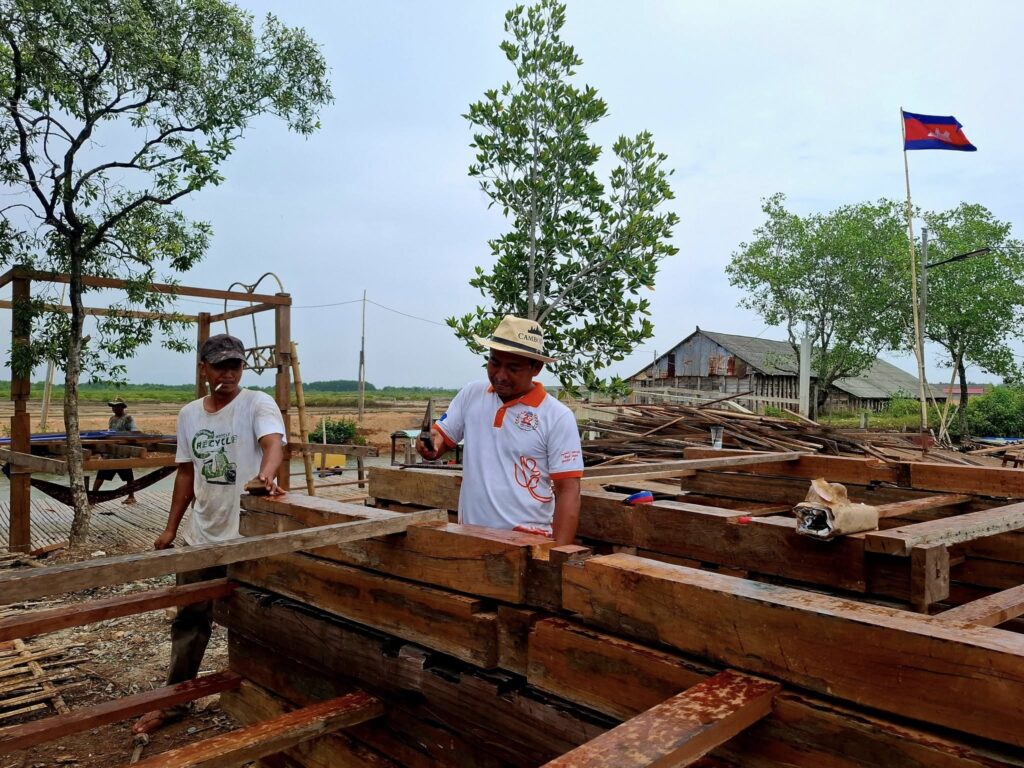
As the bicycles rolled back, their tracks marked more than just distance—they traced a rising force for progress.
The journey is far from over, but the message is clear: with shared commitment, community spirit, and care for the environment, sustainable development is not just a vision—it’s already in motion.