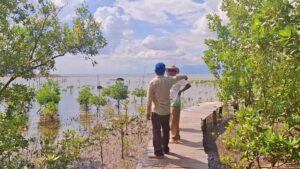
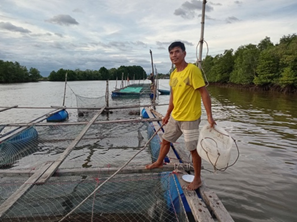

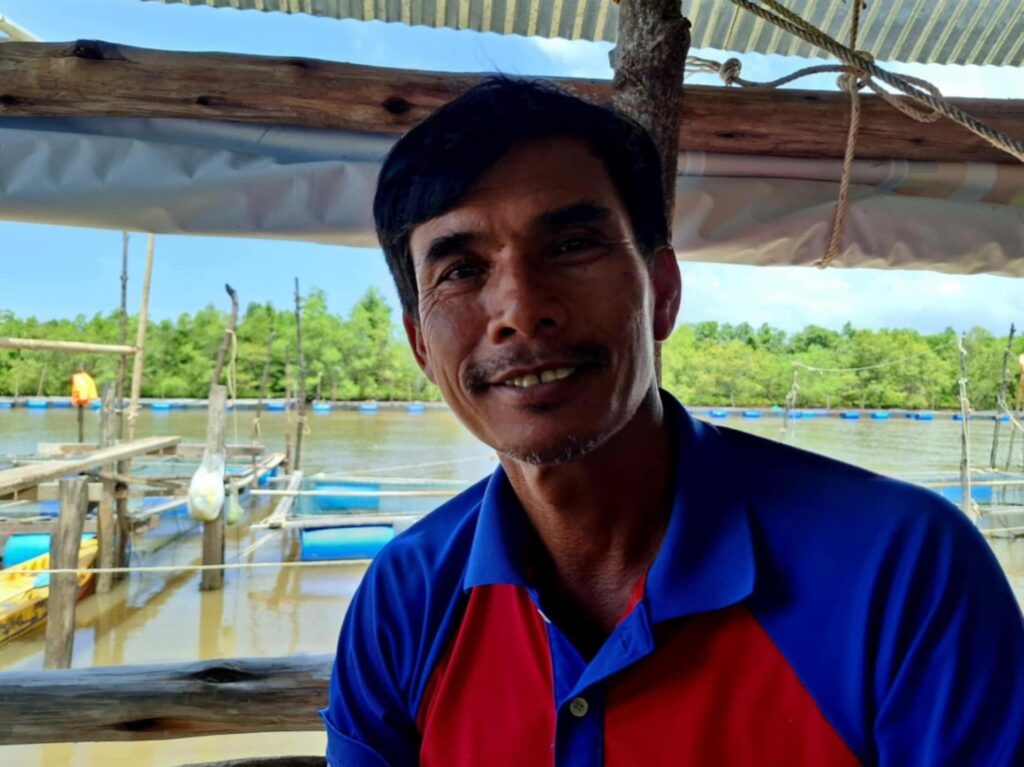
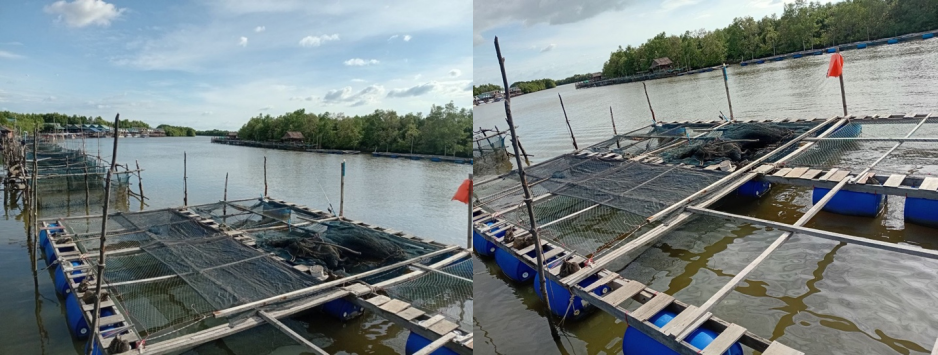
At the edge of the Kbal Romeas River, Liv Sophal checks his floating cages every morning. For the Deputy of the Trapeang Sangkae Fishery Community, Kampot province, seabass farming is more than a source of income—it is a pathway to family security, independence, and community resilience.
By November 2025, 37 families operated 164 floating cages, supported by a revolving fund to help new farmers start their own farms.
For Sophal, this work provides a stable income, reduces reliance on declining marine fisheries, and reinforces his commitment to protecting the mangroves that sustain both aquaculture and ecotourism.
Beyond NGOs: A Family-Led Expansion
Building on his first success, Sophal invited his two children to invest. Together, they built eight additional cages using family savings and earlier profits— without NGO support.
Demand soon outstripped local fingerling supply. The family began importing fingerlings from Vietnam at US$0.35 per fish. Their seabass are now sold to traders, restaurants, and buyers in Preah Sihanouk, with growing interest from Phnom Penh. Some buyers in Phnom Penh have expressed interest in formal contracts, but the community is cautious until production volumes can be guaranteed. The average price is 20,000 riels (~US$5) per kilogram.
However, seabass farming is not without challenges.
Changes in river salinity, runoff, and disease can affect survival. Sophal mitigates risks with regular cage cleaning, careful feeding, and water monitoring. These practices are widely shared, fostering collective learning and resilience.
Cycle of Empowerment: From Pilot to Opportunity
Sophal began seabass farming in 2024 with support from Action Education / Aide et Action’s COSAVED project, co-funded by the European Union. He built three cages stocked with 1,000 seabass. Feed cost around US$1,500.
After 7–10 months, he earned 16 million riels (~US$4,000). The first successful cycle showed how seabass farming could supplement family income.
The initiative started in 2023, when Heifer International, through the COSAVED project, introduced seabass farming in the Kbal Romeas River. Families received training in cage construction, feeding, and fish health, plus seed funding for cages, fingerlings, and feed. The pilot supported 14 families with Heifer and 15 with Action Education / Aide et Action, inspiring Sophal to join.
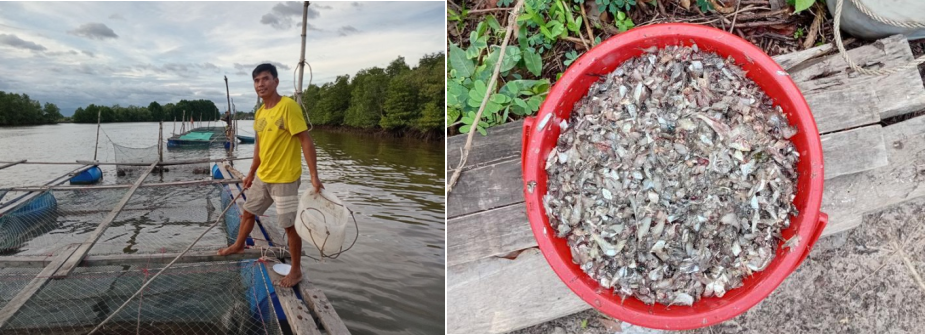
Standing by the river today, Sophal sees seabass farming as an adaptation, not a replacement of tradition. It protects the environment, secures his family’s future, and inspires the next generation of farmers at Trapeang Sangkae, blending conservation with economic opportunity.
Report by Long Sarou, edited by Cindy Cao