
Investing in digital education in Cambodia’s remote and coastal areas is investing in resilience, equity, and the future of the next generation. Digital inclusion today means stronger communities tomorrow.
The salty air drifts inland from the Gulf of Thailand, carrying the scent of the sea into the heart of Chrouy Svay commune, a coastal community in Cambodia’s Koh Kong province. Here, fishing families live between the tides, their livelihoods increasingly shaped by dwindling fish stocks and the impacts of climate change.
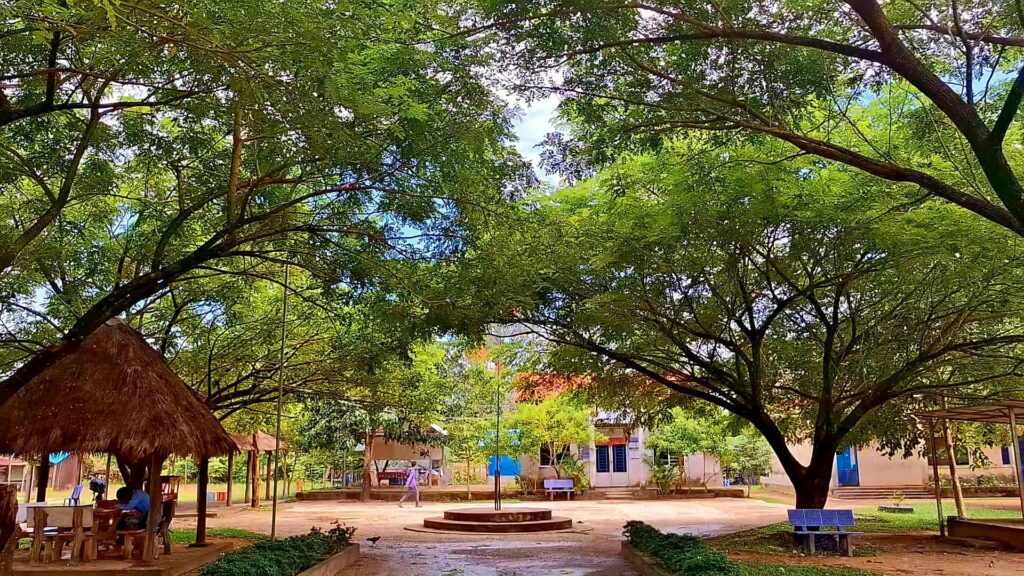
At the local Chrouy Svay Primary School, the courtyard is shaded by lush trees. Behind the walls, another quiet struggle is unfolding—not against storms, but against the digital divide.
Digital Literacy: Investing in Coastal Futures
Through its COSAVED project, co-funded by the European Union, Action Education / Aide et Action (AEA) promotes equal access to digital education, reduces inequality, and strengthens opportunities for children.
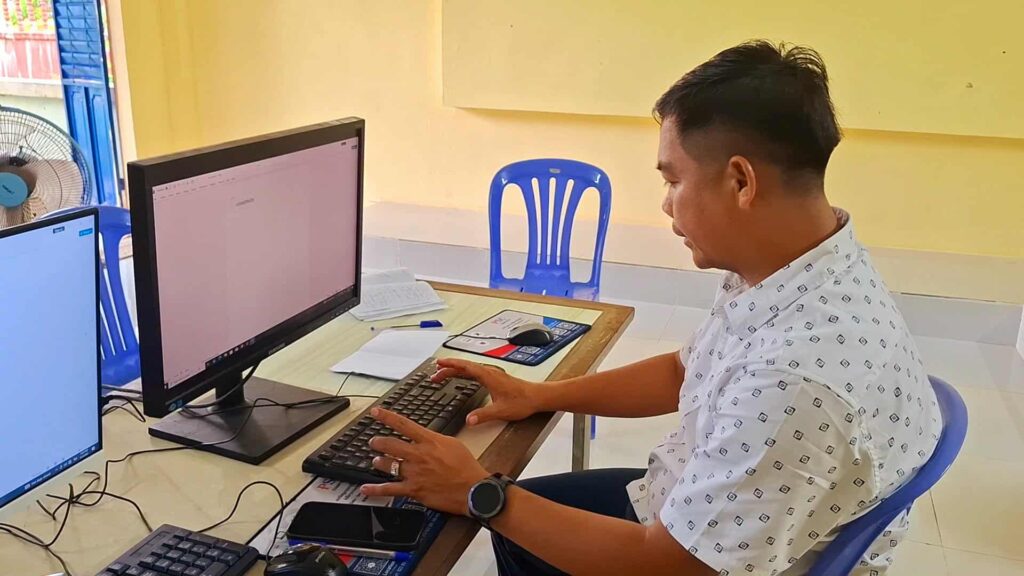
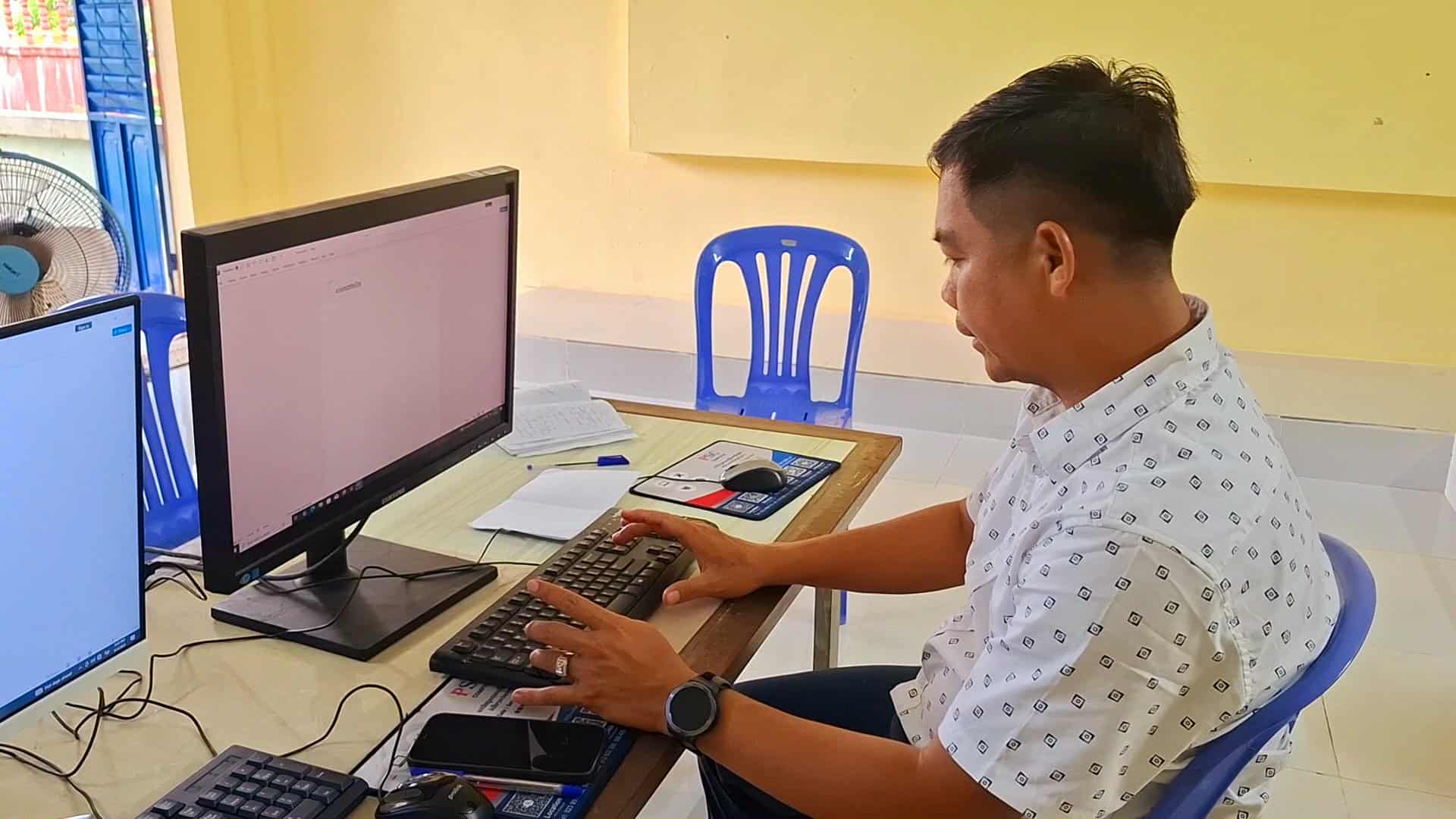
In a modest classroom transformed into a digital lab, Ren Hap, the school director, describes the school’s journey: “The digital lab started two years ago. AEA provided 10 computers this year. Students have already started computer classes. Some do not work very well, but those provided by AEA function reliably.”
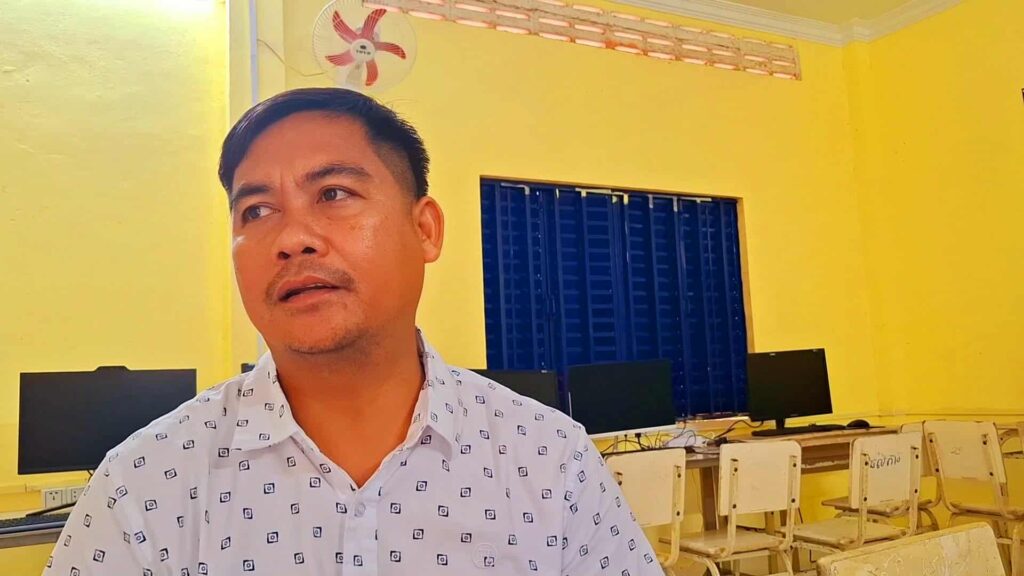
He highlights the practical challenges: “Our school is in a remote area, so it’s difficult to repair computers when there’s a problem. Right now, we also have 10 computers that are almost completely broken.”
Despite these obstacles, the school remains committed to equipping students with essential skills: “We have one teacher for computer classes, so children between nine and 12 years old can learn how to type and use a computer.”
Digital Hope: Every Click Counts
Ren Hap underlines: “Nowadays, everyone needs to learn new technologies. If children don’t start now, they will be unable to use computers in high school.”
The digital divide runs deep. While schools in wealthy countries have advanced technology, many Cambodian schools still lack the basics.
“Some schools in remote areas lack resources, and even in big cities some schools don’t have computers yet. For us, it’s the priority number one. Before AEA’s support, it was a big challenge,” Ren Hap says. “Children love these new computers because they work well! It’s a good motivation to learn. The first computers we received were second-hand.”
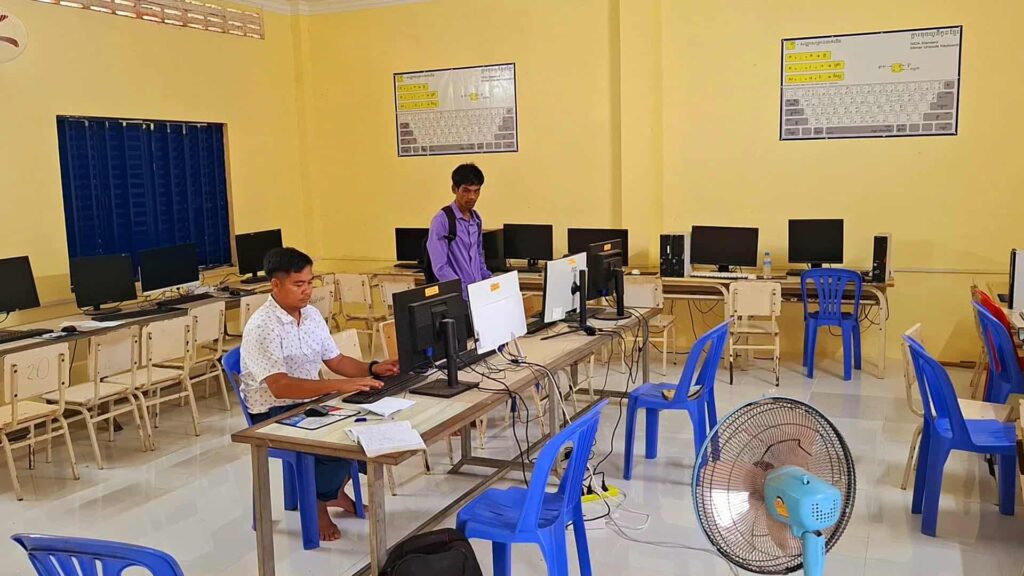
Life in a coastal commune like Chrouy Svay is often unpredictable—families face storms, floods, and the fragile balance of fishing livelihoods. Yet in the school’s digital lab, hope is being planted with every click of the keyboard.
Whether in a city classroom or a fishing village by the sea, every child deserves the chance to learn, connect, and thrive in the digital age.