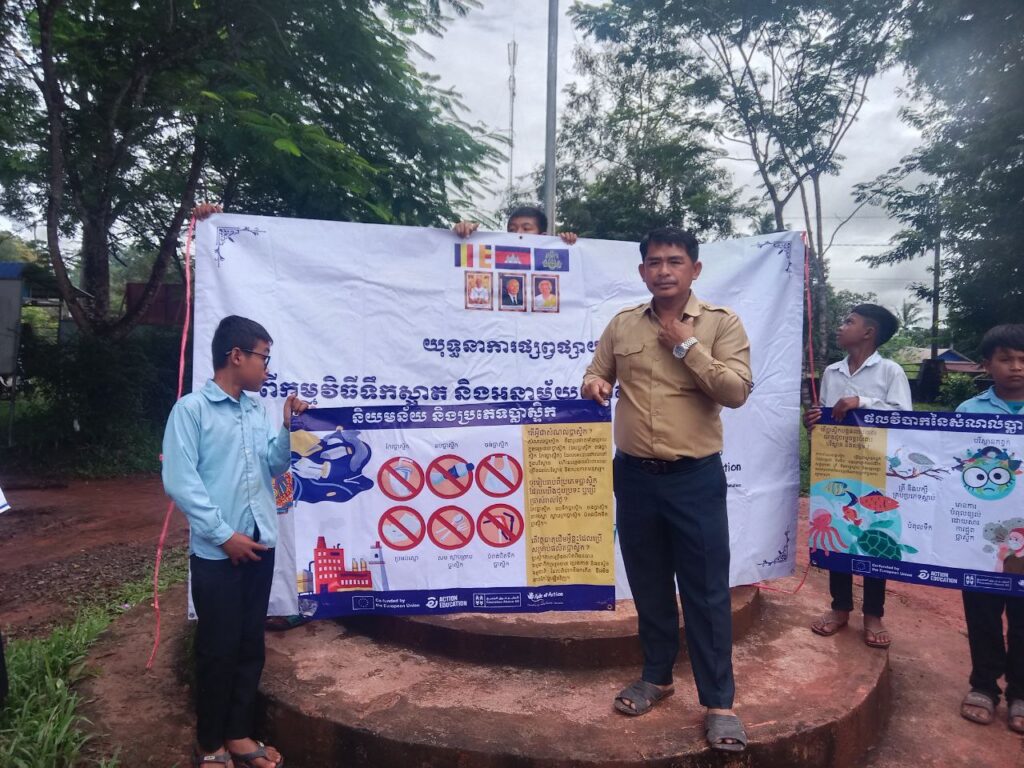
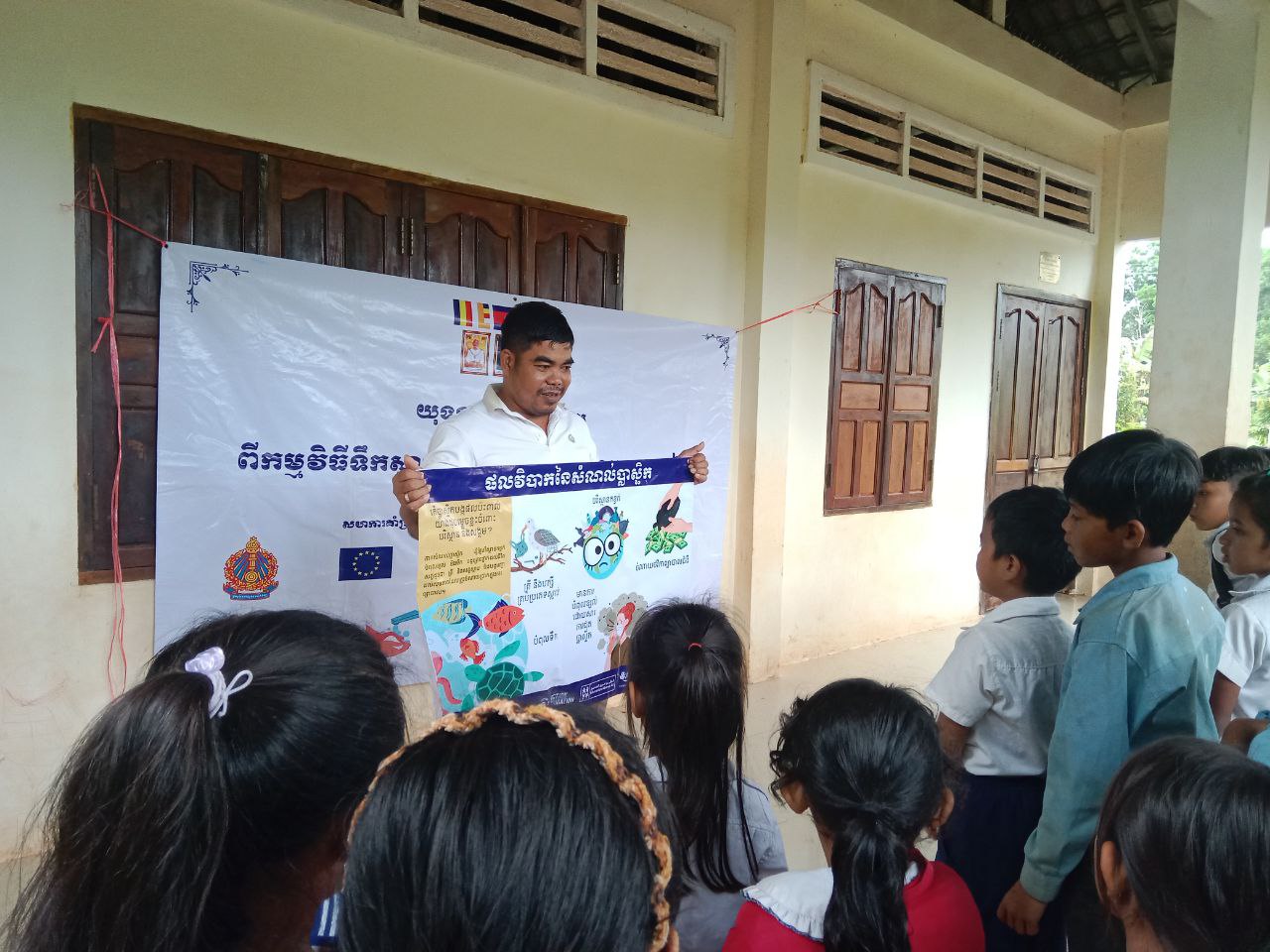

In Cambodia’s coastal province of Koh Kong, children learn the truth—plastic is suffocating the Earth. Children are becoming the generation that says: Enough. No more silence. No more plastic.
When plastic pollutes, it’s children who pay the price. This pollution isn’t something we can ignore—it invades our rivers, corrupts our soil, kills our wildlife, and now, it’s even inside our own bodies. The scale is staggering: we produce 400 million tonnes of plastic each year and, every minute, one million plastic bottles—all for the sake of “convenience.”
But let’s be clear: there’s nothing convenient about ecological collapse.
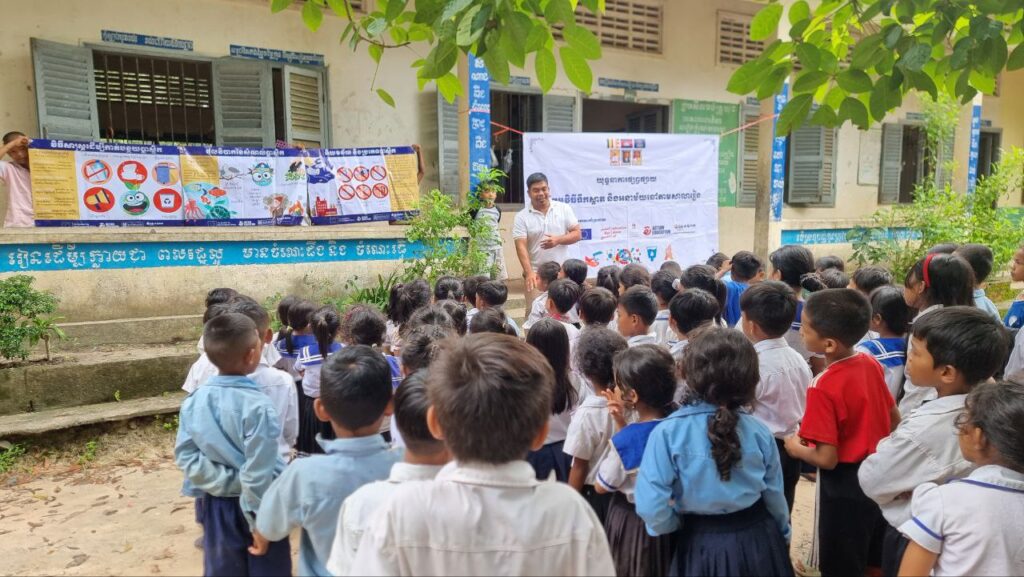
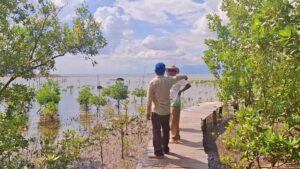
In Cambodia’s beautiful Koh Kong province—an area rich in biodiversity, mangrove forests, and coastal ecosystems—plastic pollution has seeped into even the most remote villages. And who suffers the most? Not the corporations raking in profits, but children growing up in an environment poisoned before they had a say.
Enough is enough.
Co-Action: Turning Coastal Schools into Hubs of Eco-Consciousness
Through a “No Plastic” awareness campaign across Koh Kong, teachers and local partners are bringing environmental education to the heart of primary schools—but not in the form of boring lessons or lifeless brochures.
Through our CO-SAVED project, co-funded by the EU, we supported schools with the tools to learn and speak out—vibrant, colourful posters plastered across classrooms, school walls, and community spaces.
These posters tell the truth. They inform. They warn. They advise.
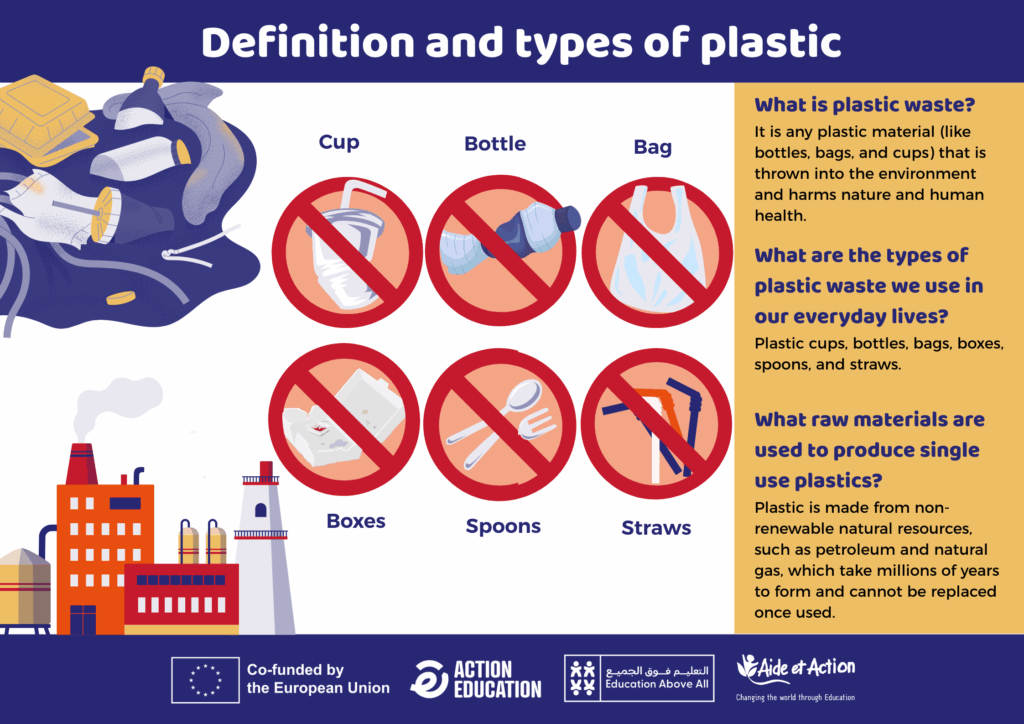
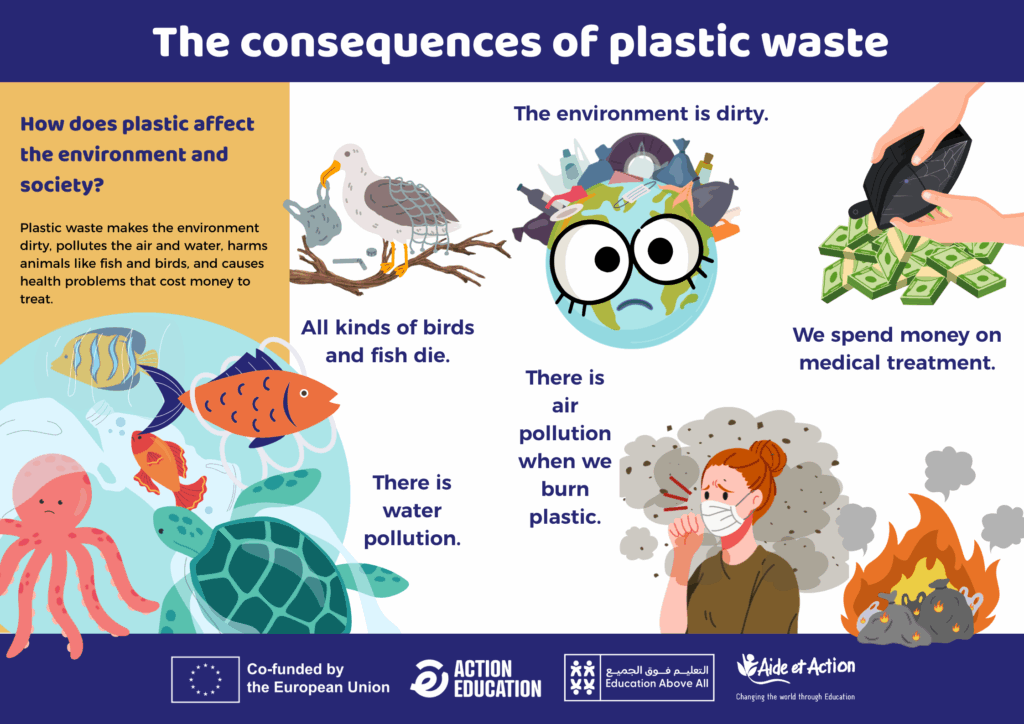
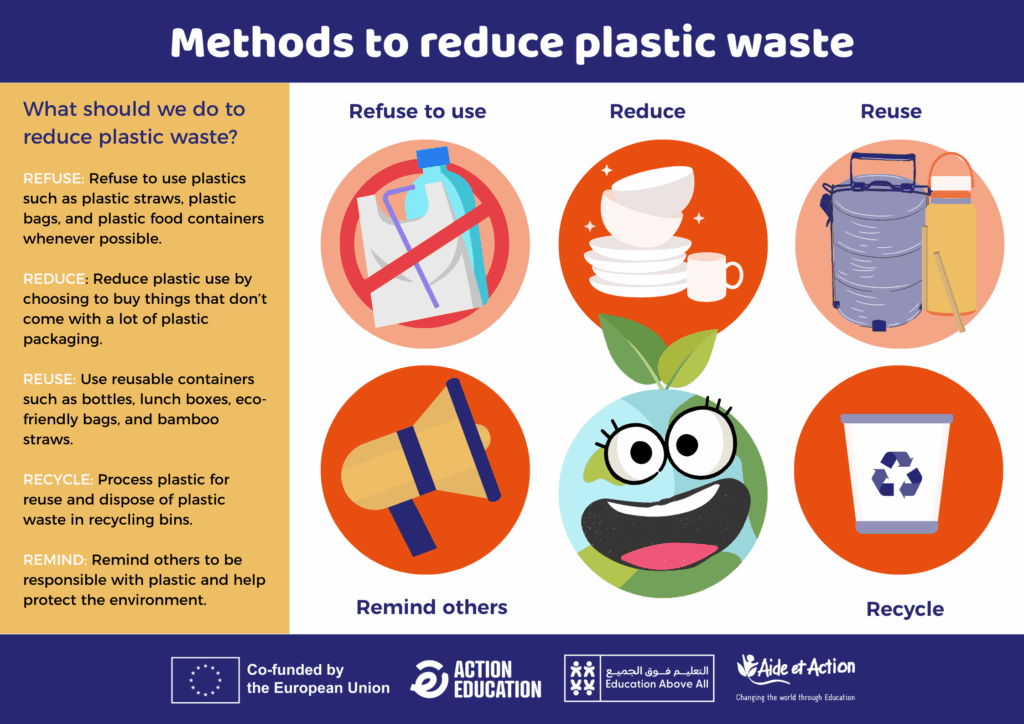
Teachers are actively involved. Communities are becoming more conscious of environmental issues. And children—who see plastic littering their playgrounds, filling their rivers, and washing up on their shores—are beginning to ask questions.
They are not just part of the conversation; they are learning to become powerful voices.
Co-Impact: A Generation That Refuses to Look Away
The result? Not just awareness—awakening.
Across coastal schools, children are becoming proactive agents of change. Some schools have initiated their own clean-up activities. We expect children to challenge adults to switch to reusable materials—and plastic use will fall.
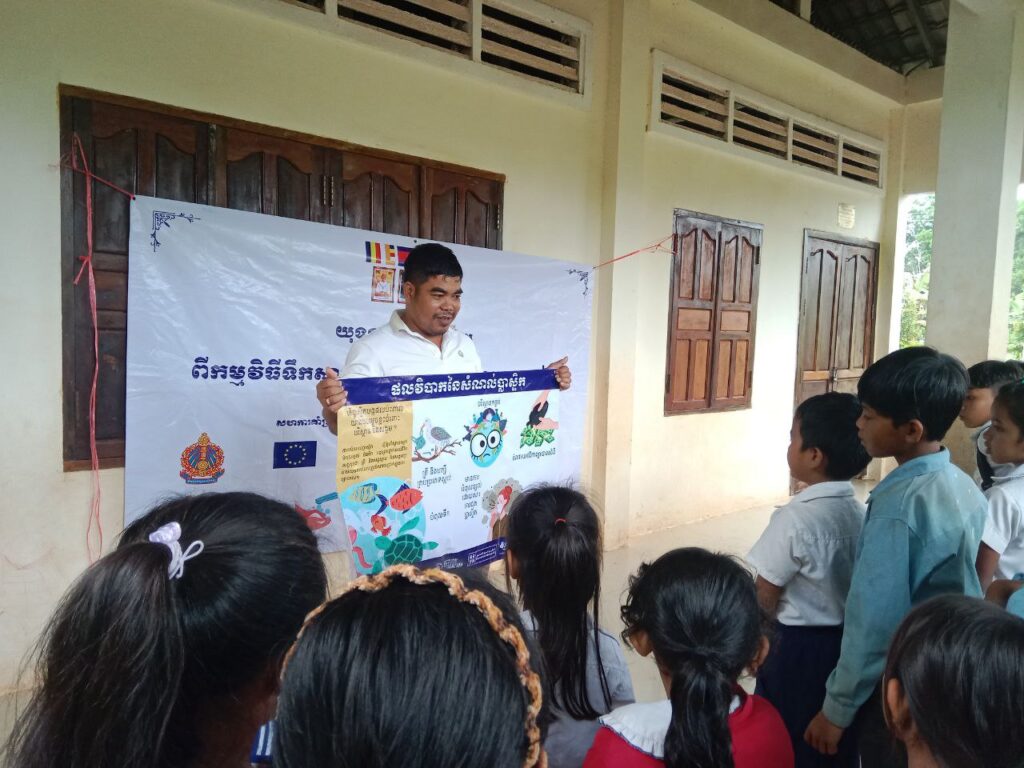
We’re empowering a generation that won’t be afraid to tell the truth. A generation Ocean that will refuse to inherit a dying planet in silence.
A generation that says: “We know the damage of plastic. We know how to prevent it.”
When children lead, the world must follow.