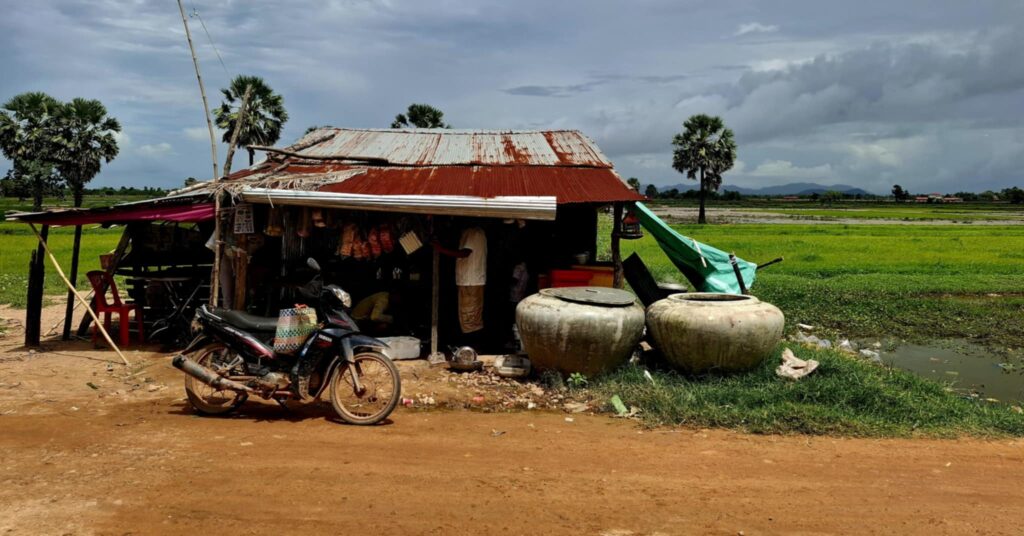


In the remote corners of Kampot province lies Slaptaon village, Svay Tong Khang, Kampong Trach, surrounded by rice fields and far from the luxury resorts where tourists unwind by crystal-clear pools. Here, families once struggled daily for access to water—a basic human right. No one should have to beg for what others waste. Today, a water pipeline is shifting the balance.
Water was once a struggle.
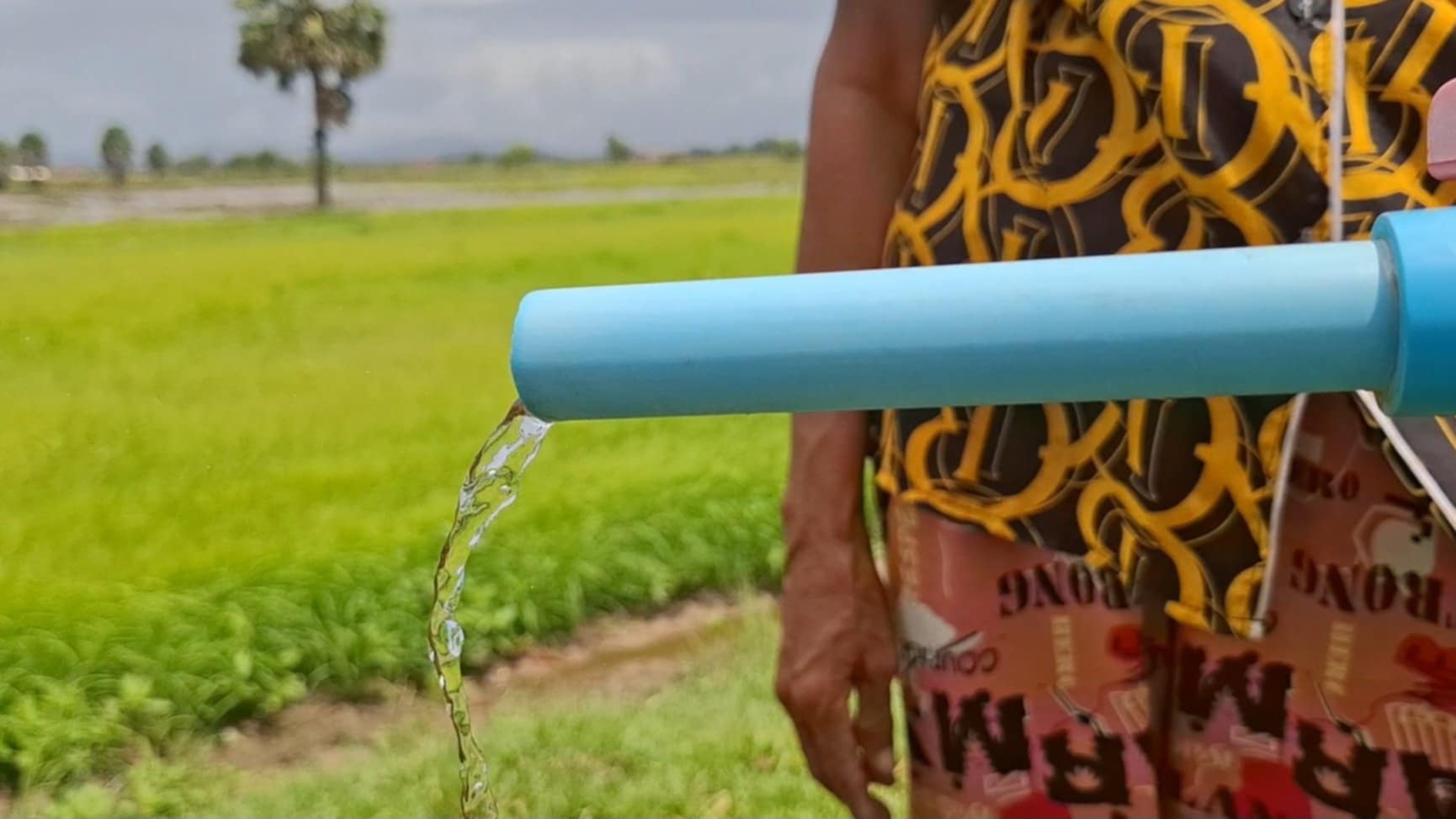
“I had to walk to the lake to bring water for my family. It’s far,” recalls Mao Meurn, a smiling grandmother whose house is nestled on the edge of the village. “Now I can wash dishes and clothes, cook, and even boil water for drinking right here.”
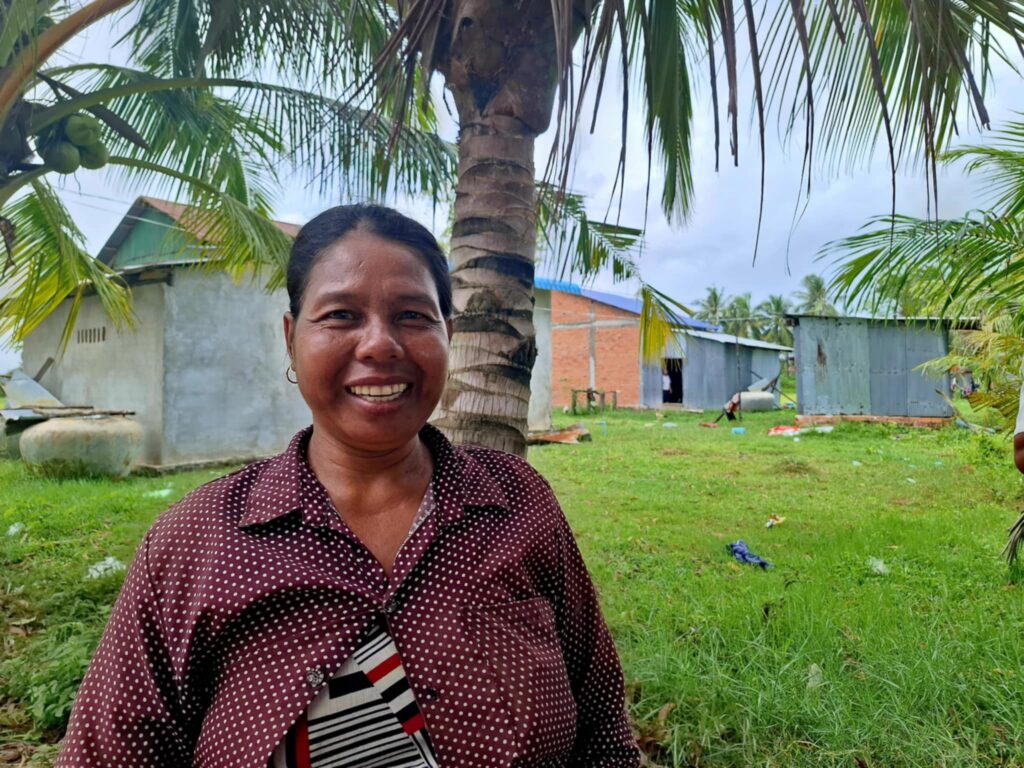
Access to clean water should never be a hardship. A world without clean water is a world without justice.
Clean Water Reaches the Forgotten: Dignity in Every Drop
Just a few dozen kilometres away, visitors enjoy waterfall showers in air-conditioned hotels. Meanwhile, in Slaptaon, villagers long relied on clay jars to collect rainwater and made exhausting journeys to distant water sources.
“I used to rely only on rainwater,” says Levy Chhry, a grandmother who runs a small shop at the village entrance. She proudly shows the tap behind her home.
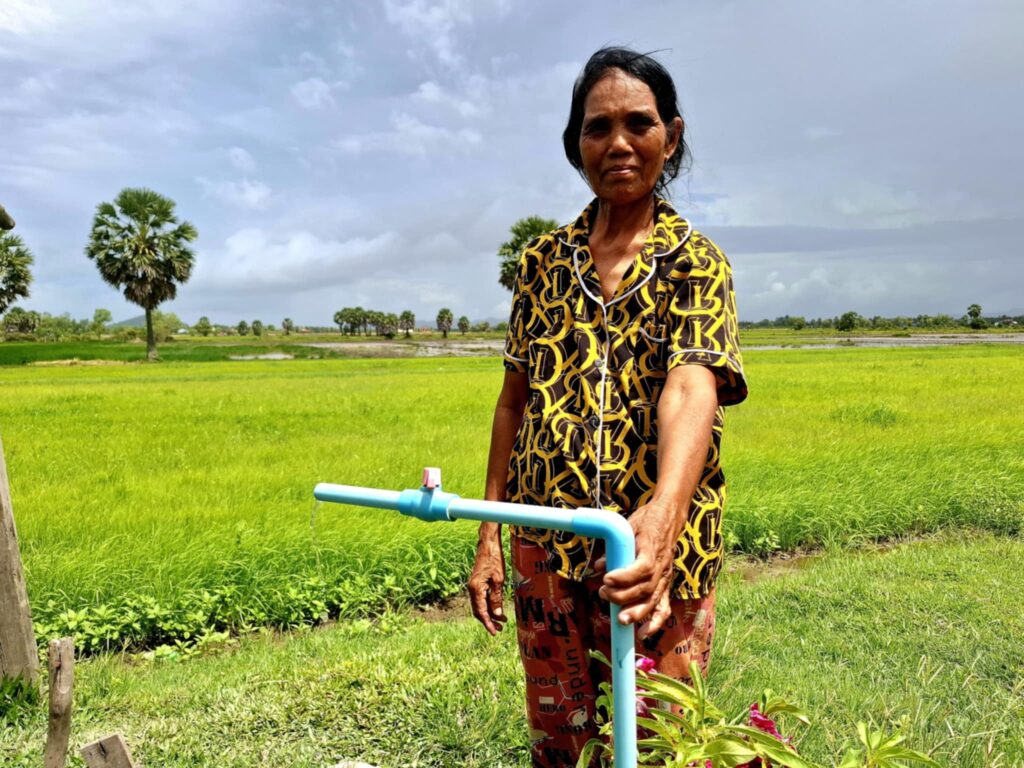
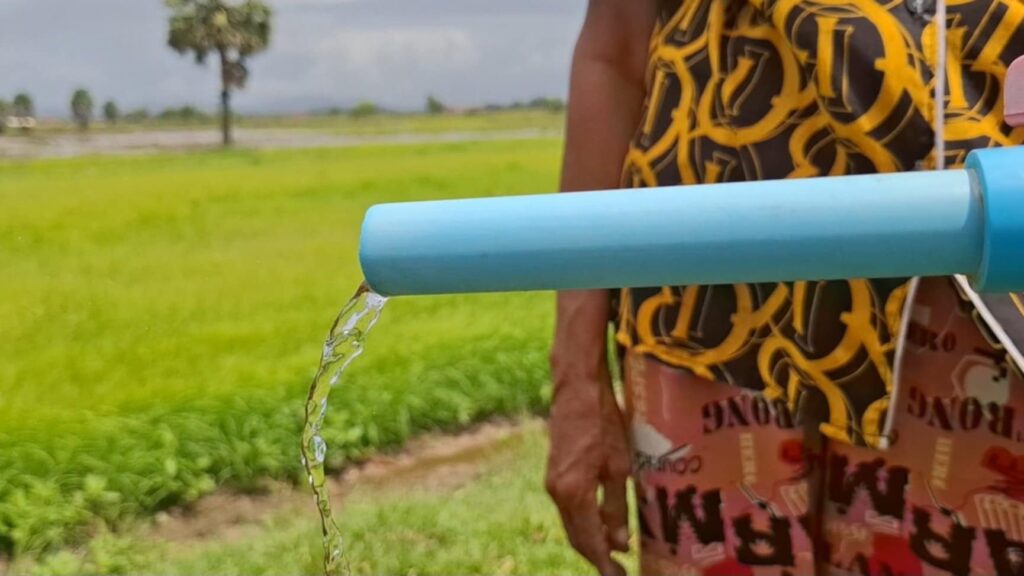
“Now it’s easy. We have water from the station. I don’t worry during the dry season anymore.”
Levy has ten children—nine are married, and one is a monk studying in Phnom Penh. Imagine needing water for all of them when they come to visit. That need, once a burden, is now relieved.
A Pipeline, A Lifeline: The Dignity of Running Water
That tap is the result of Action Education / Aide et Action’s support to the Phnom Meas water station under the Consortium for Sustainable Alternatives and Voice for Equitable Development (CO-SAVED), co-funded by the European Union.
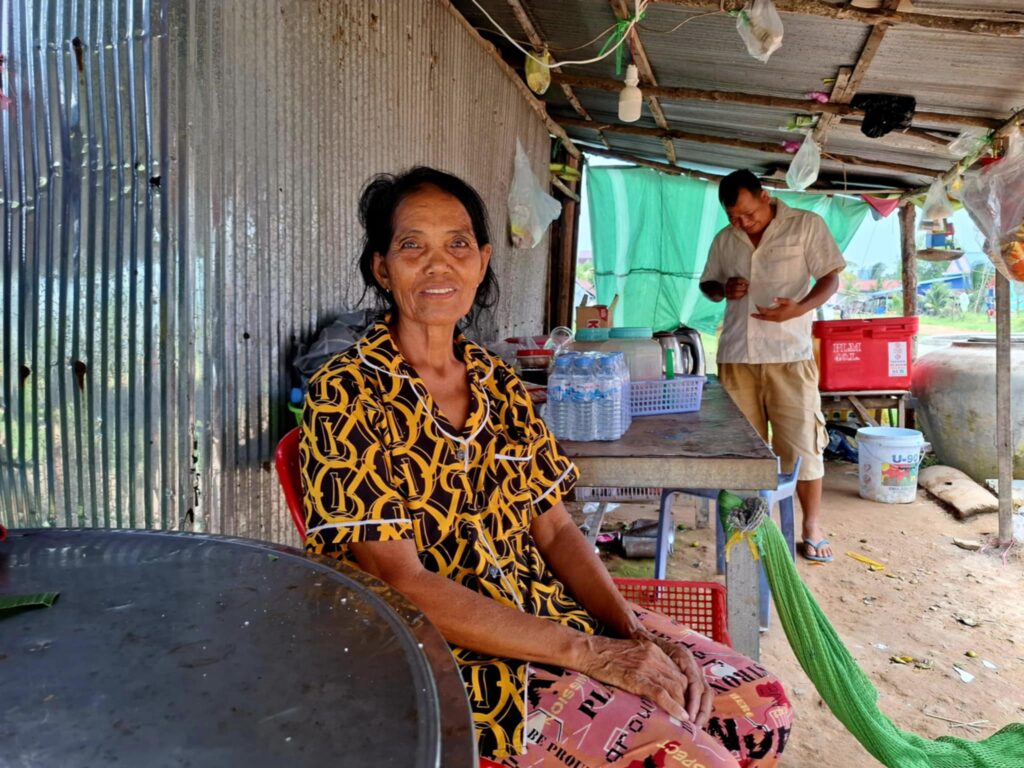
Why should one part of Kampot luxuriate in poolside privilege, while another walks kilometres for a bucket of contaminated water? Why must survival be rationed by geography and class? In a world where we debate water-saving apps and reusable bottles, many still feel lucky just to turn on a tap.
For Mao Meurn and Levy Chhry, water is no longer something to chase. It’s there—behind the house, part of everyday life.
This isn’t charity. It’s justice. And it’s long overdue.
Still, many other villages remain disconnected. This must be a wake-up call. This is not a story from the past. This is today. This was yesterday. But it doesn’t have to be tomorrow.
Our call for water justice does not end with one village. It must keep flowing—relentlessly—until every community can drink, wash, and live with dignity. Let it flow. Let it flow until the pools are no longer only for the privileged, and the taps behind every home are not symbols of luck—but of equity.
Join our call. Demand water justice for all villagers. Not someday—today.