
In schools across Cambodia, a quiet but powerful change is taking place. Children’s Councils—student-led bodies supported by the Ministry of Education, Youth and Sport (MoEYS)—are empowering young learners to speak up, participate in school life, and take active roles in shaping their learning environment.
Children’s Councils are “mini-democracies,” made up of student representatives elected by other children. Its members meet regularly to discuss issues affecting their school and fellow students. These councils give children a formal space to be heard—and to act.
A School Community Led by Students
Children’s councils are becoming a key force for inclusive, child-centred development. Under the CO-SAVED project, co-funded by the European Union and Education Above All’s Educate A Child, Action Education / Aide et Action has provided scarves and sashes to these councils. Our support reinforces the MoEYS’ ongoing efforts to advance child-friendly and inclusive education.
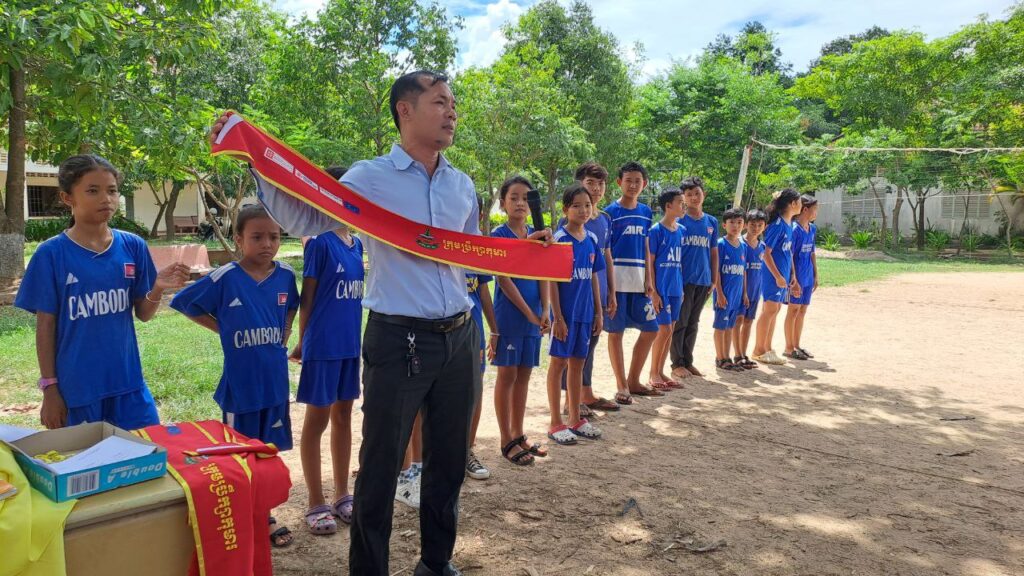
Photo: Chakryia Vong Primary School
“Children are key to leading the schools,” explained Keat Sarat from the District Office of Education (DoE) in Kep. “They make friends at school. They learn how to become leaders of their peer group. They have a role—for example, ensuring the playground is clean, checking that there’s water in the toilets, or noting the absence of a classmate. In short, they help their school.”
The councils are guided by adult facilitators, often teachers, but are fully led by students. This balance ensures both mentorship and autonomy—a combination that nurtures leadership, civic engagement, and confidence.
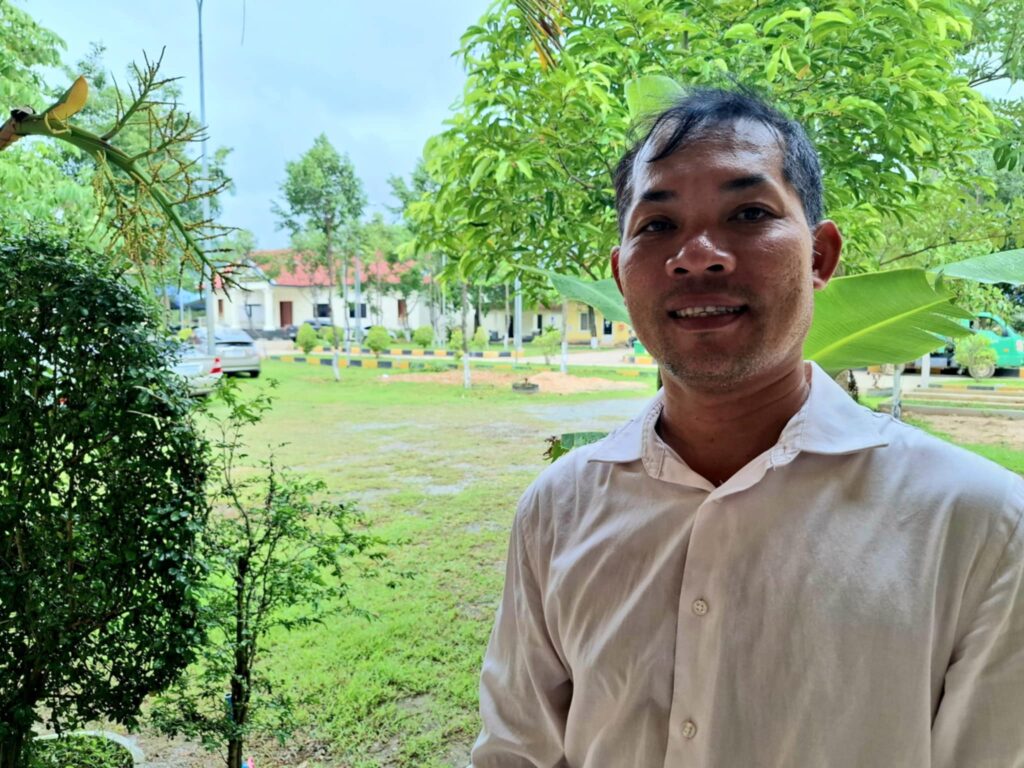
Photo: Keat Sarat, District Office of Education in Kep
Equity and Dignity: Why Participation Matters
Children’s Councils offer something that can’t be taught through textbooks: a voice. And for many students—especially girls and those from marginalised backgrounds—that voice is a game-changer.
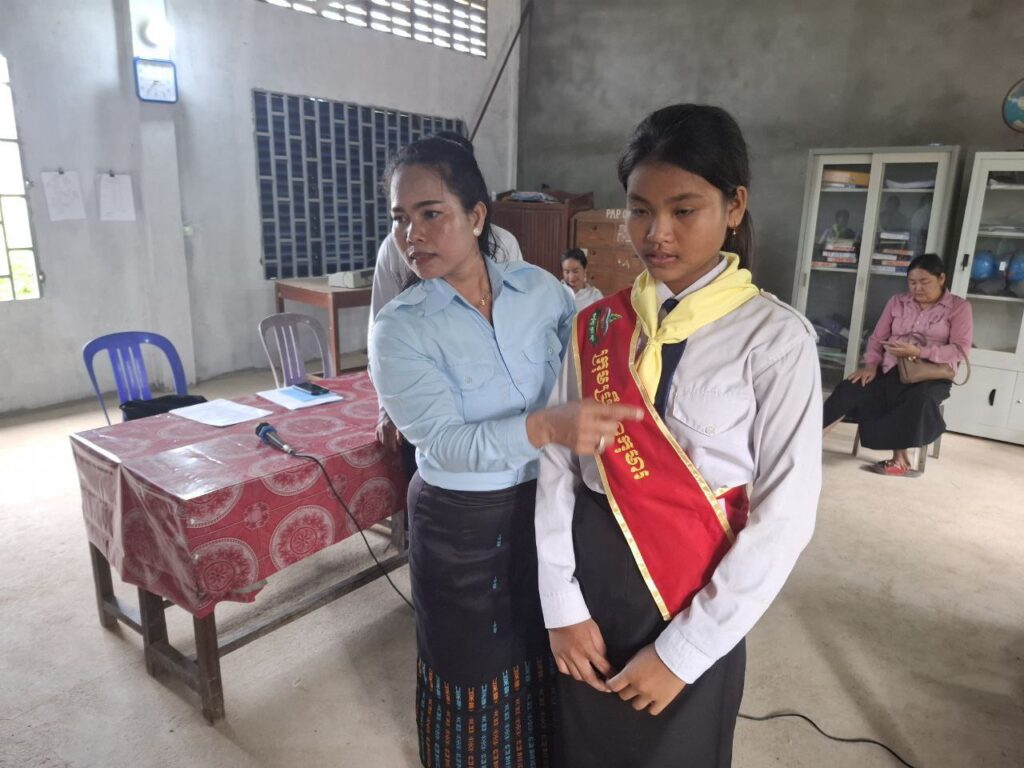
Photo: Hun Sen Kampong Tralach Primary School
By encouraging dialogue at an early age, Children’s Councils support the development of future community leaders who understand accountability, consensus, and responsibility. As Keat Sarat added, “when we empower children, it makes them happy. They enjoy becoming responsible. I go to schools to explain the roles and responsibilities of the Children’s Council members. I put their sashes and scarves on and clarify their roles to the other students.”
The local official’s hands-on engagement reflects the programme’s unique strength: combining national education policy with local ownership and grassroots energy. “We are doing this in nine schools in Kep City, and we are thankful to Action Education / Aide et Action for providing the new sashes. For the future, I hope these children will improve their leadership skills—and that they make Kep better.”
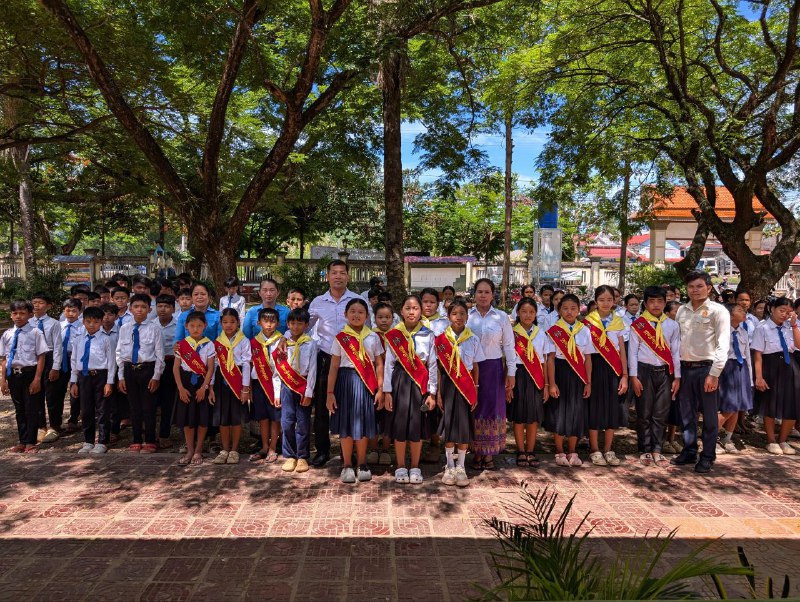
Photo: Hun Sen Damnak Chang Our Primary School
A Model for Sustainable Change
This is more than school spirit—it’s systemic impact. Empowering children can lead to real, lasting change—at both school and community levels. With our global and local partners, Action Education / Aide et Action contributes to strengthening Cambodia’s education system in a way that promotes equity, participation, and transparency.
And Children’s Councils embody these values.
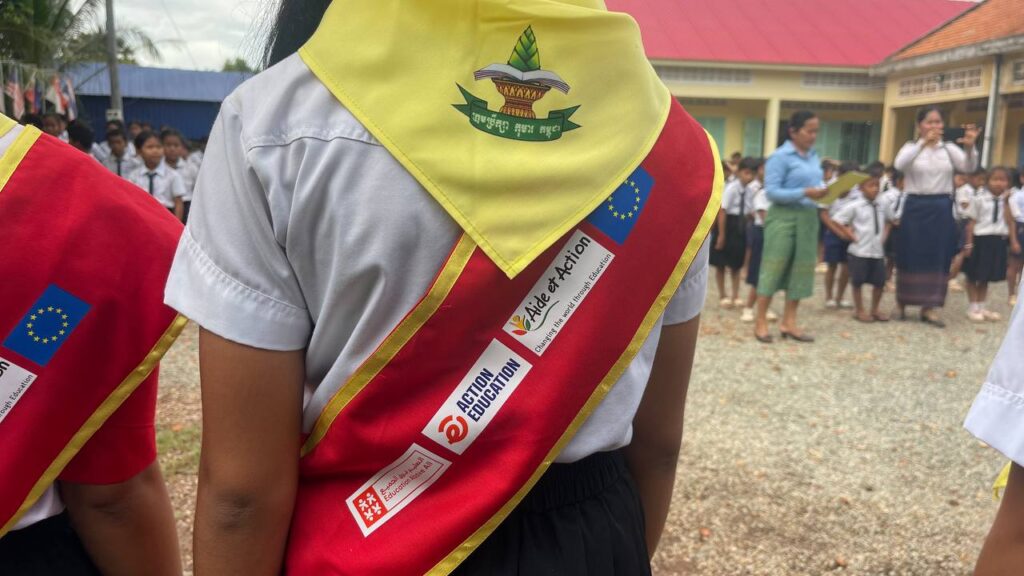
Photo: Namiko Phnom Sor Sear Primary School
They offer a model for child participation that aligns with the Convention on the Rights of the Child and the Sustainable Development Goals. As Cambodia continues to invest in quality education, Children’s Councils stand out as a cost-effective, high-impact strategy to deepen child engagement.
Together, with MoEYS and our partners, we are proud to walk alongside them. Children Councils nurture the next generation of informed, engaged citizens—starting right where it matters most: in schools.
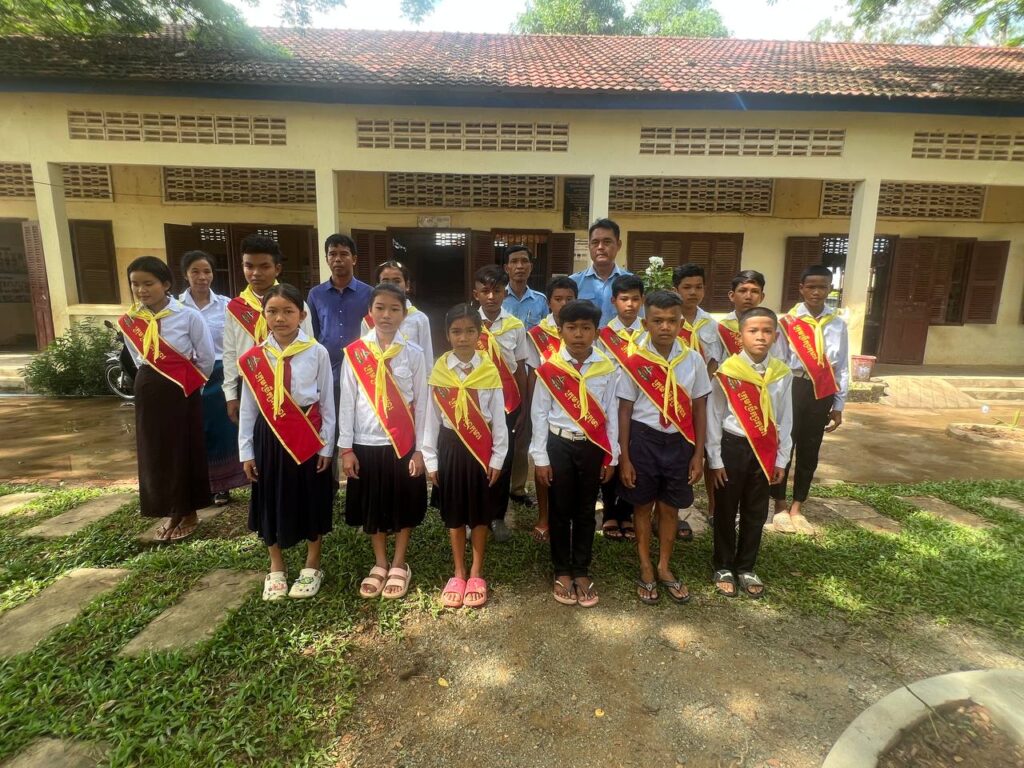
Photo: Sbaov Primary School
*Photos provided by schools, the District Office of Education and Action Education / Action Education