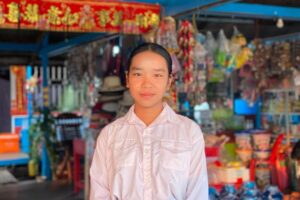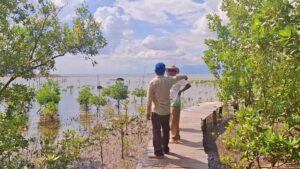

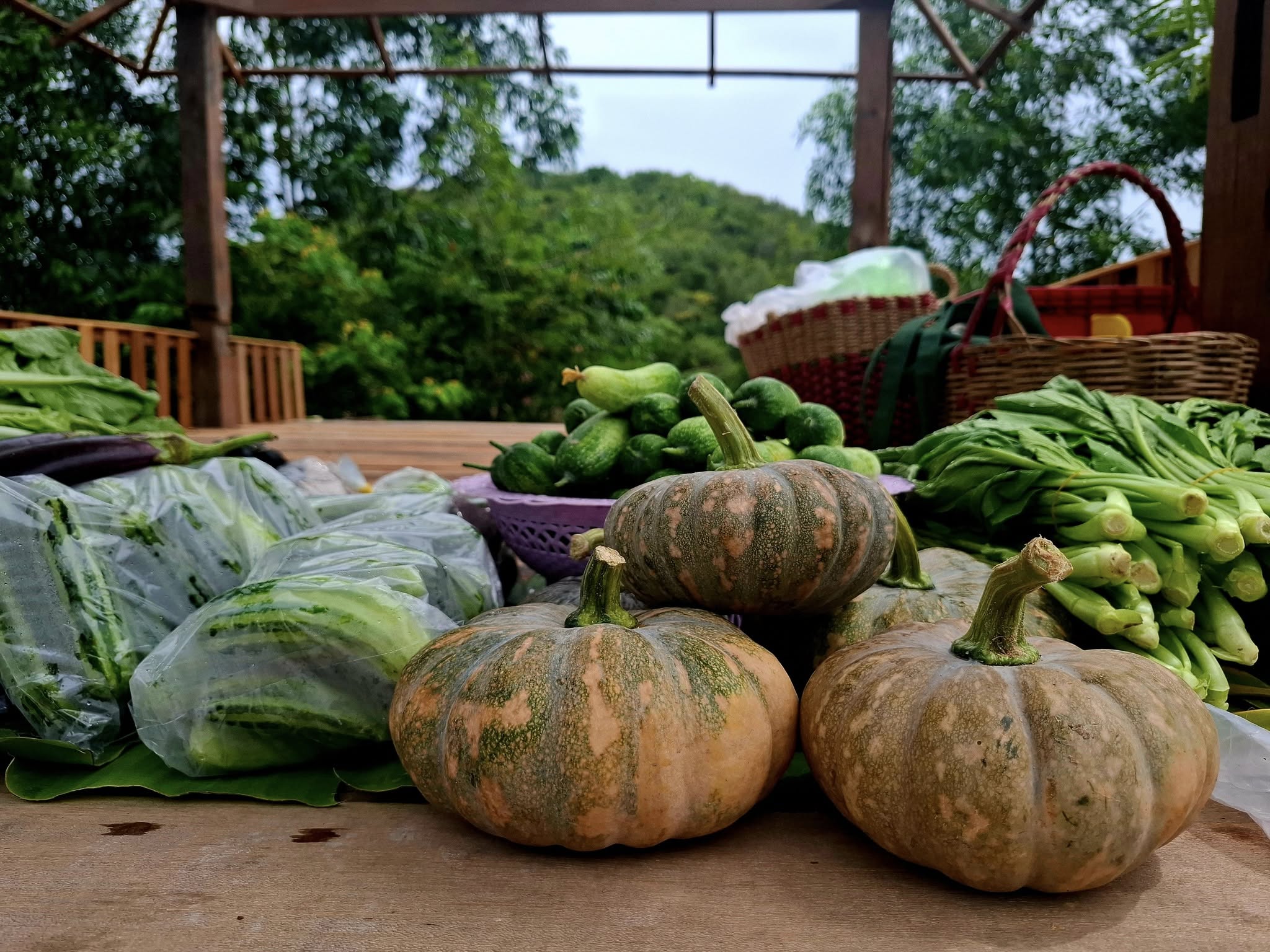

On 10 June 2025, the scenic roads of Teuk Chhou district in Kampot were alive with energy as cyclists gathered for a ride to promote eco-tourism, healthy living, and rural livelihoods. Along the way, they passed Ing Sarun’s small pop-up stall by Secret Lake, offering vegetables—fresh, full of flavour and, grown without chemicals.
Ing Sarun—a grandmother, farmer, and quiet force for sustainable change—is one of 20 members of a local producers’ group supported by Action Education / Aide et Action (AEA). This initiative is part of the Consortium for Sustainable Alternatives and Voice for Equitable Development (COSAVED), co-funded by the European Union, to strengthen climate resilience, promote rural livelihoods, and empower local producers.
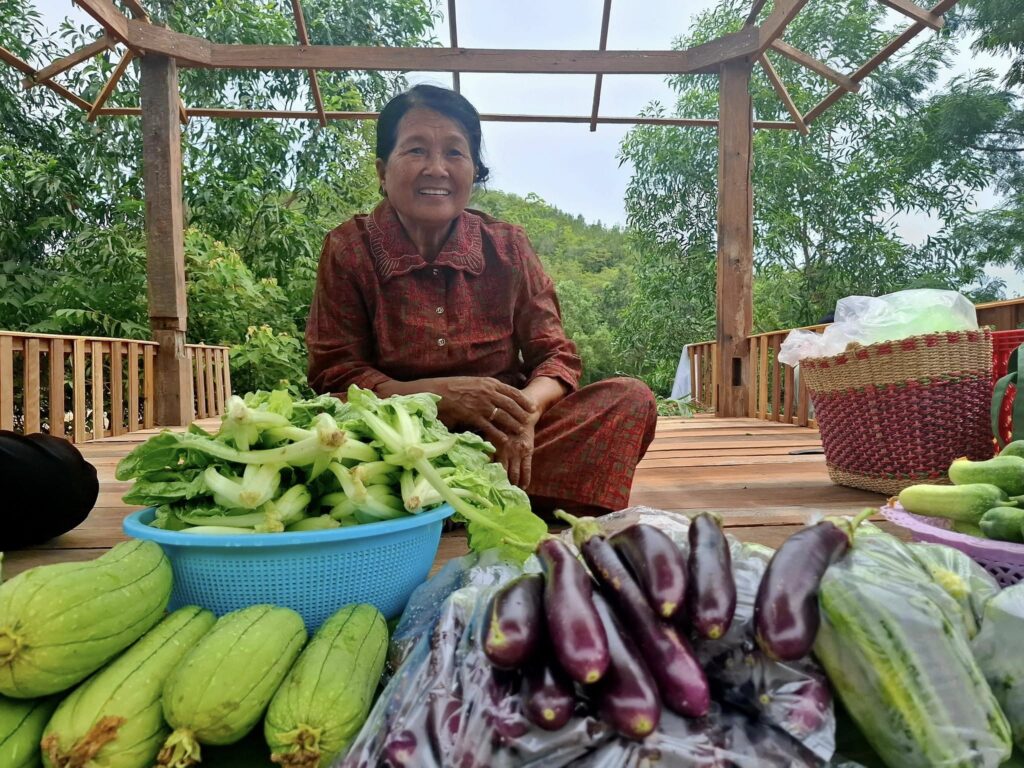
The initiative helps small-scale farmers improve their agricultural techniques, increase household incomes, and access new markets—like eco-tourists. To the cyclists, Sarun represented how local farmers can drive sustainable tourism and community-based development.
Organised in partnership with Teuk Chhou district authorities, the cycling event gave Sarun a unique opportunity to connect with visitors, share her produce, and tell her story.
Rooted in the Land: Sowing Seeds of Sustainability
Sarun has spent decades growing food to nourish her large family. “I have nine children and twelve grandchildren,” she said. “They come to pick up vegetables for their daily consumption. It’s how we live—together and from the land.”
With support from AEA, Sarun received training to help her adapt to climate change, contributing to a more resilient local food system. “I also received irrigation materials and seeds to plant vegetables,” she added. “Now that I have a better irrigation system, it’s easier to grow more vegetables.”
Just as importantly, Sarun’s farming is 100% organic.
“I don’t use pesticides or chemicals. Only natural compost. That way, the food is safe for my grandchildren—and for anyone who eats it.”
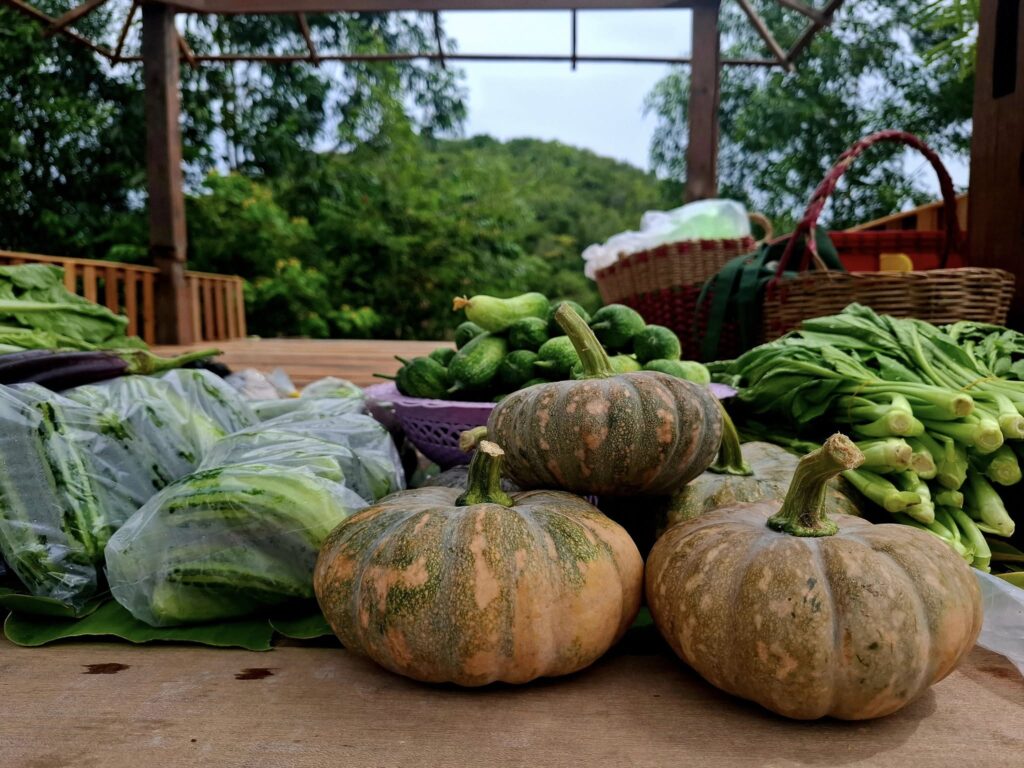
Healthy Food: Feeding Families, Fuelling Eco-Tourism
While feeding her family and community is essential, the cycling event was an opportunity to highlight her potential for something bigger: introducing tourists to locally grown, organic produce.
“I hope today people will come to know my products—and help make them known,” Sarun said, just before the group of cyclists arrived. By stopping at her stall, visitors not only enjoyed healthy, farm-fresh food—they also promoted education, health, community-based tourism, and local livelihoods.
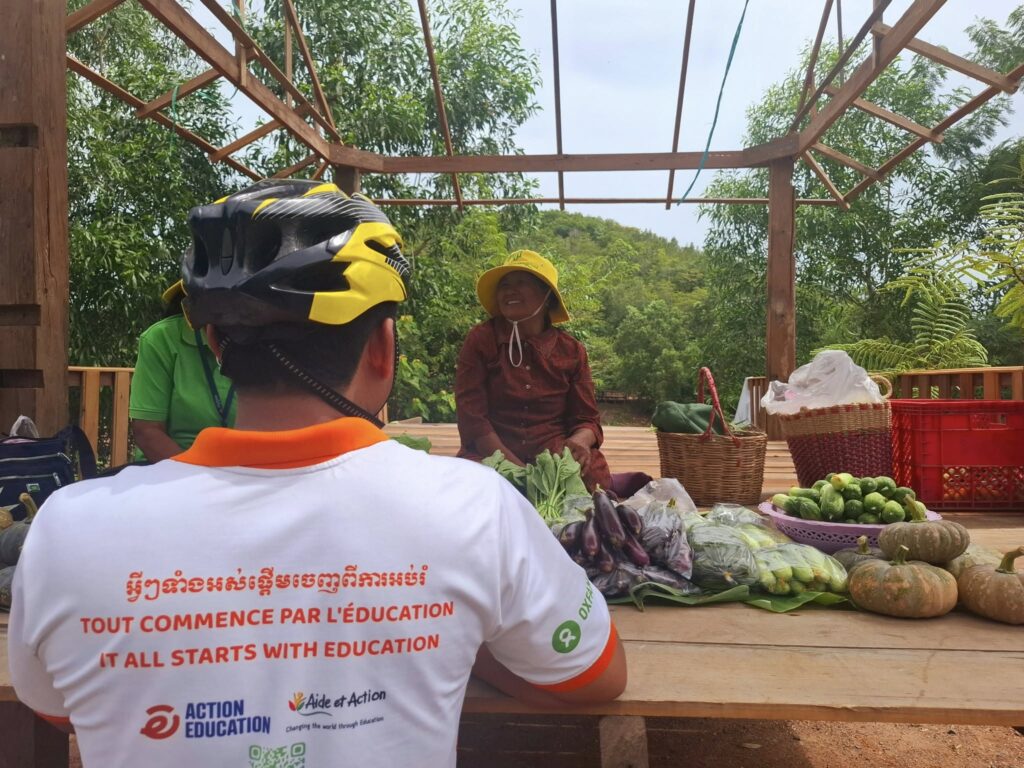
As Kampot continues to develop as a popular destination, women like Ing Sarun remind us that every bicycle ride, every purchase, and every shared conversation can contribute to a more equitable, more sustainable future for all.
Don’t forget: Your visit matters. Let’s co-create a sustainable tourism industry together.
Choose local.
Travel ethical.
Leave a positive impact.