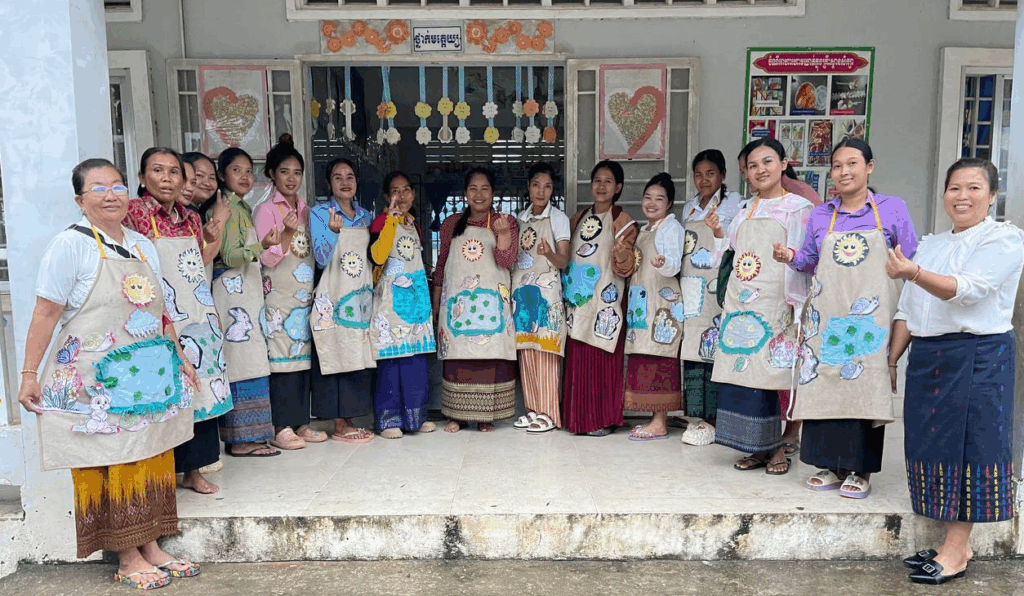
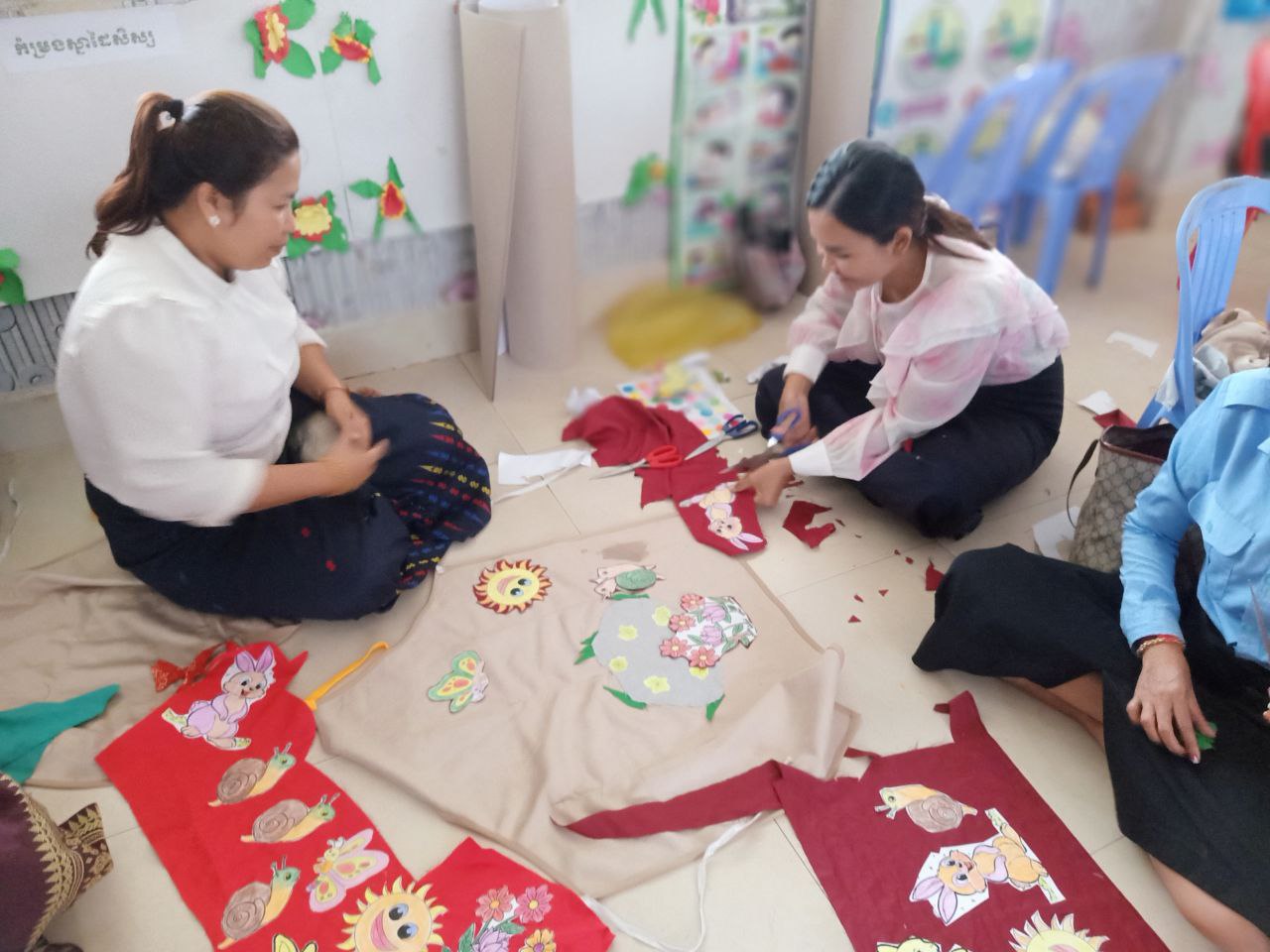

With scissors, paper, coloured fabric, and imagination in hand, Community Pre-School (CPS) teachers in Kep and Sihanoukville are becoming artisans of learning—designing and crafting their own educational games and teaching materials.
In Cambodia’s coastal and island communities, pre-school teachers often work with limited resources and few ready-made materials. Turning to creativity is their most valuable tool. Where school supplies are hard to come by, handcrafted learning tools are not just a temporary solution—they’re the expression of these women’s resilience and self-reliance.
With support from Action Education / Aide et Action (AEA) under the Consortium for Sustainable Alternatives and Voice for Equitable Development (CO-SAVED)—co-funded by the European Union (EU)—the District Office of Education (DoE) facilitates monthly technical workshops for CPS teachers.
Teaching Crafts: Creative Pathways to Unlock Potential
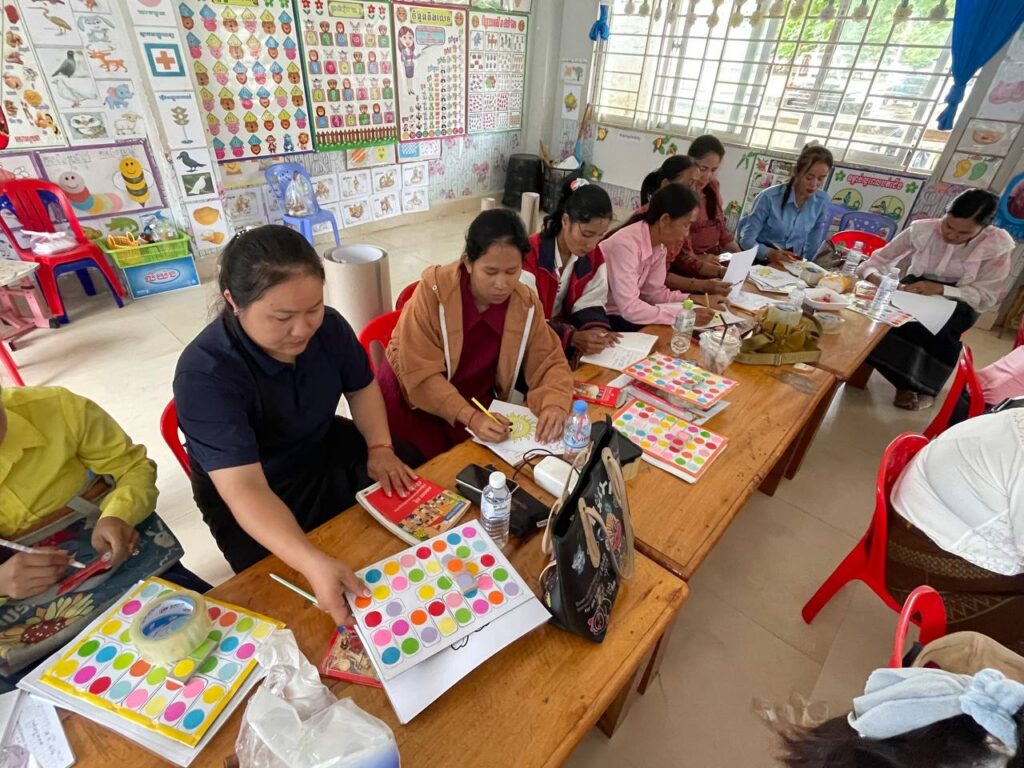
These sessions provide more than training—they are collaborative studios, where teachers learn by doing and exchange ideas. Nhem Somaly, specialist in Education and Early Childhood Care and Development (E&ECCD) at the DoE, highlighted that teachers are being trained to meet national education standards.
“At the end of the training, teachers know how to meet the indicators of quality teaching,” she explains. “These sessions are not only about reinforcing technical skills—they are about building the teachers’ self-confidence.” Through this workshop, teachers are mastering the art of transforming local and recycled materials into learning tools.
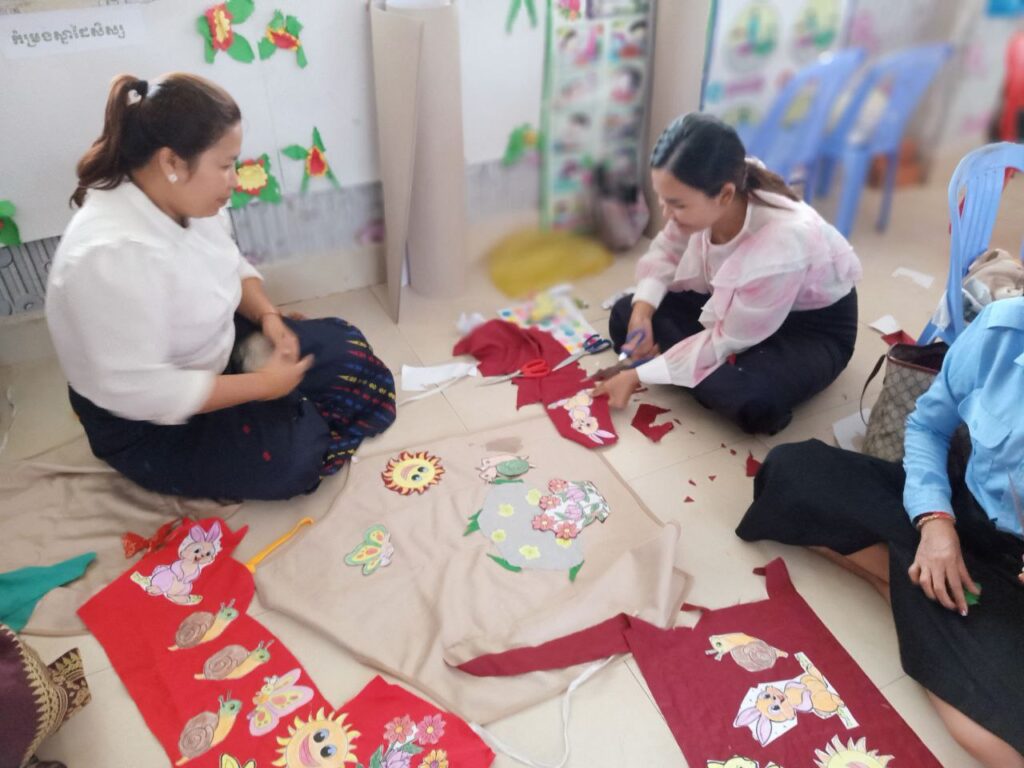
As training rooms fill with colourful creations, tactile games, and handmade storyboards, something even more meaningful is taking shape: a renewed sense of purpose and joy in teaching. The atmosphere is alive with laughter, encouragement, and the quiet confidence that comes from making something with your own hands.
Rooted in Culture: Making Learning Relevant and Engaging
This practical, creative method enables pre-school teachers infuse lessons with cultural relevance. Homemade games and teaching tools can reflect the real-life environment of children—fishing villages, rural farming communities, local markets, and natural surroundings—making learning more contextualised, familiar and engaging to early learners.
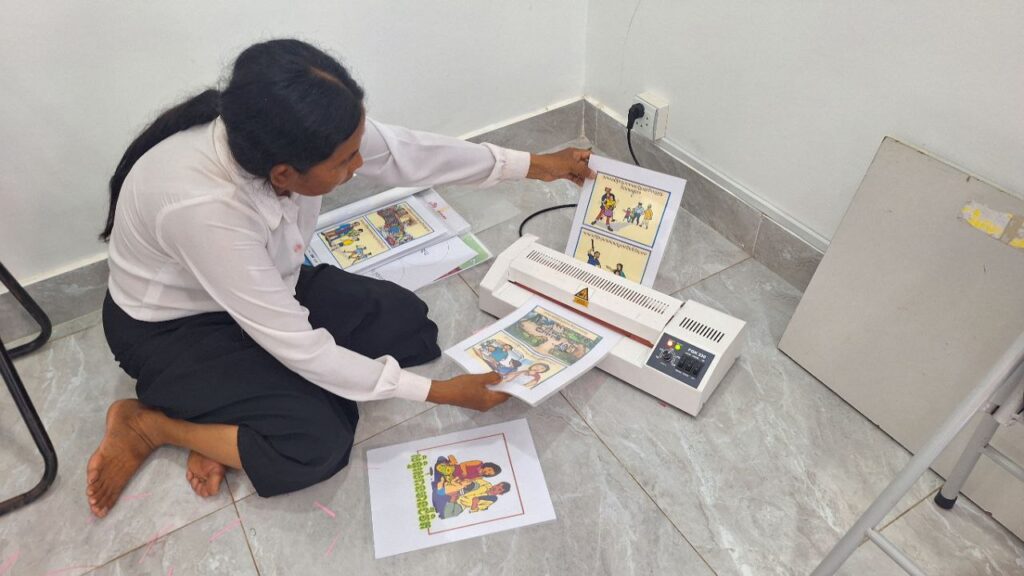
By equipping teachers with the skills to create their own resources, this approach promotes local ownership and sustainability. This strengthens the foundations of equitable, quality education—in line with Sustainable Development Goal 4 and Cambodia’s national strategy.
When teachers are empowered to create, they don’t just teach—they inspire.
And when we invest in their creativity, we nurture the artists, thinkers, and dreamers of tomorrow.