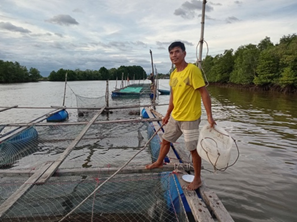


Across vibrant streets and coastal paths, small vendors are a familiar sight. But behind these everyday scenes lie the hidden struggles of Cambodia’s economy. With its local and global partners, Action Education / Aide et Action (AEA) is unlocking the potential of informal workers.
In coastal regions, where tourists enjoy the sandy beaches, a quiet struggle unfolds daily—one shaped by the uncertainty of informal work. Thousands of families depend on the informal economy to survive, with limited access to formal jobs, training, or financial services.
Many of these micro-entrepreneurs—often women—turn to vending, farming, or recycling to make ends meet. These informal workers are resilient, resourceful, and vital to their communities—but they face significant challenges. Most lack access to social protection: no health insurance, no pension, no safety net.
And many cannot afford basic equipment. Without it, even the hardest-working vendors are stuck. Their productivity and ability to grow are limited. Their income potential is restricted. This is where our work begins.
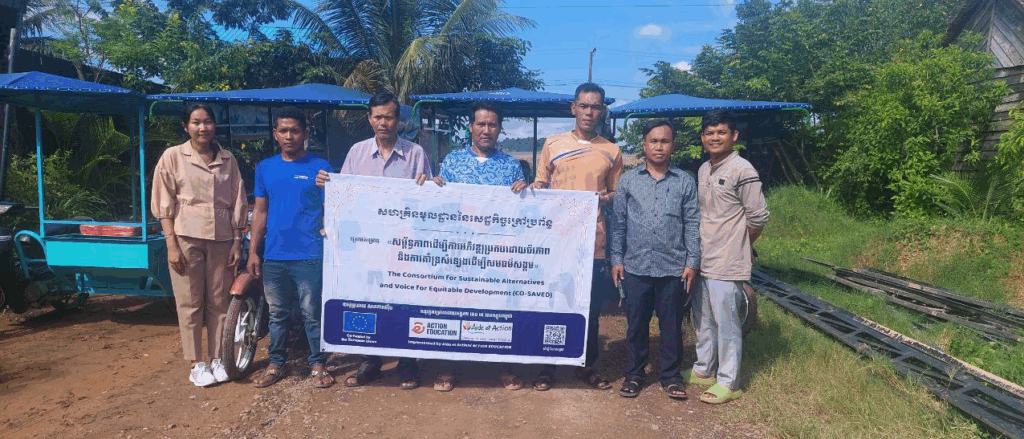
By equipping informal workers with the tools they need, we’re supporting the very backbone of Cambodia’s economy—because when informal workers move forward, entire families thrive.
Co-Investment: Small Tool, Big Solution
Under the CO-SAVED project, co-funded by the European Union (EU), AEA provides more than just material equipment—we want to create opportunities. Opportunities to earn, to expand, and to dream. Opportunities to turn economic insecurity into resilience. Opportunities to build livelihoods with dignity.
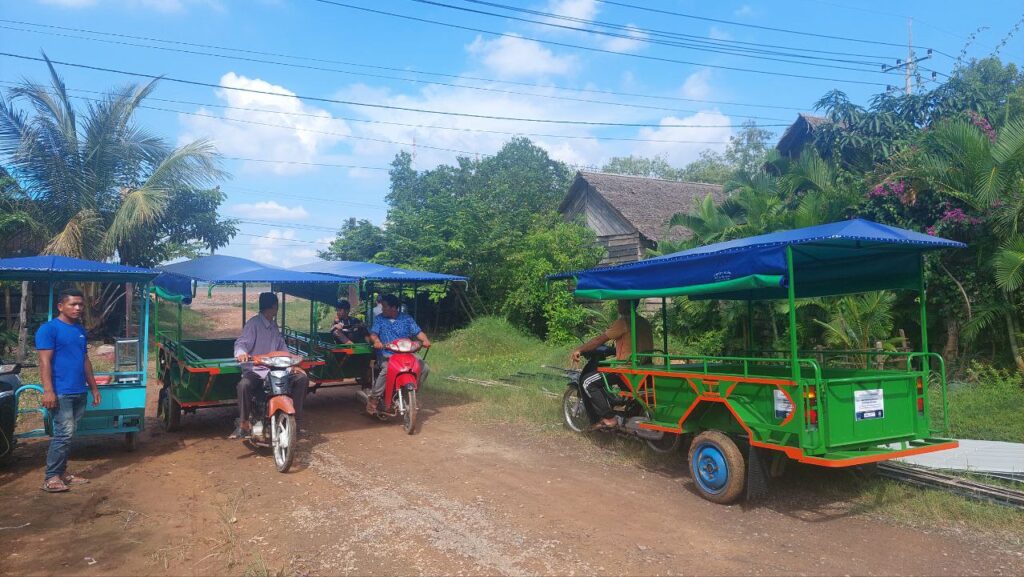
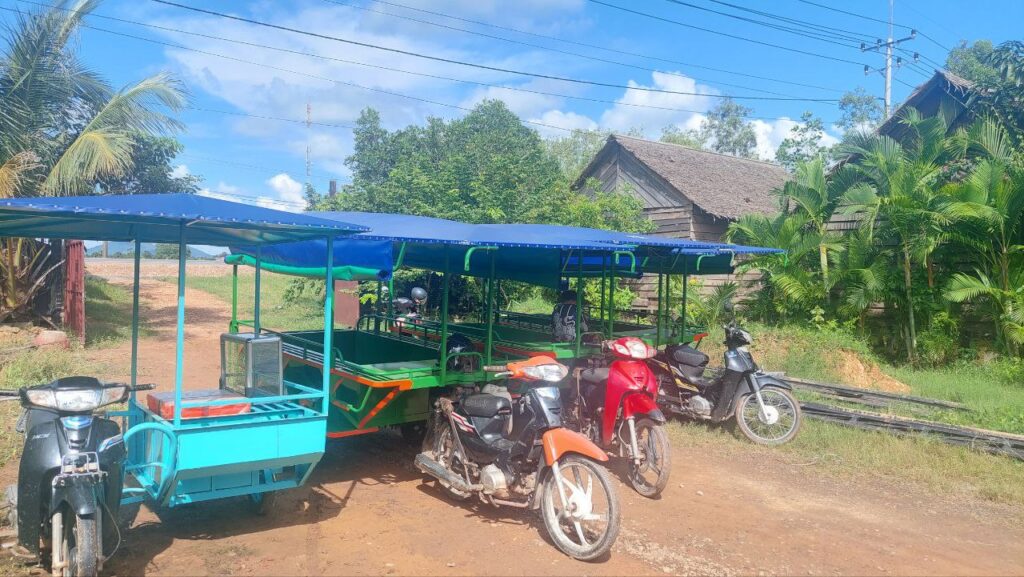
Even a modest investment in the right tools can yield significant, far-reaching change. For instance, mobile vending carts are a cost-effective solution. They allow vendors to reach more customers, carry more goods, and increase daily earnings—it’s a crucial step toward economic independence.
Although the cost is small, the impact can be big.
Co-Impact: Dignity, Opportunity, and Resilience
To date, we have successfully supported 54 informal businesses—including 20 in Kep and 34 in Kampot—by providing equipment such as carts, fridges, coffee machines, and more to help them thrive. Our ambitious target is to assist a total of 101 informal workers who lack the resources to invest in essential tools.
With new carts, vendors who once struggled can now travel farther, serve more customers, and earn better incomes. Women like Ouch Rin, or couples like Meng Hoan and Meas Tae, have already reported increased earnings and greater confidence. A cart is not just a donation—it’s an investment. It addresses immediate challenges of economic insecurity, fuels entrepreneurship, and opens the door to a brighter future.
Support livelihoods. Advocate for dignity. Strive for equitable development.